Before The Fall
Kabul's last days inside the EMERGENCY hospital
July 2021
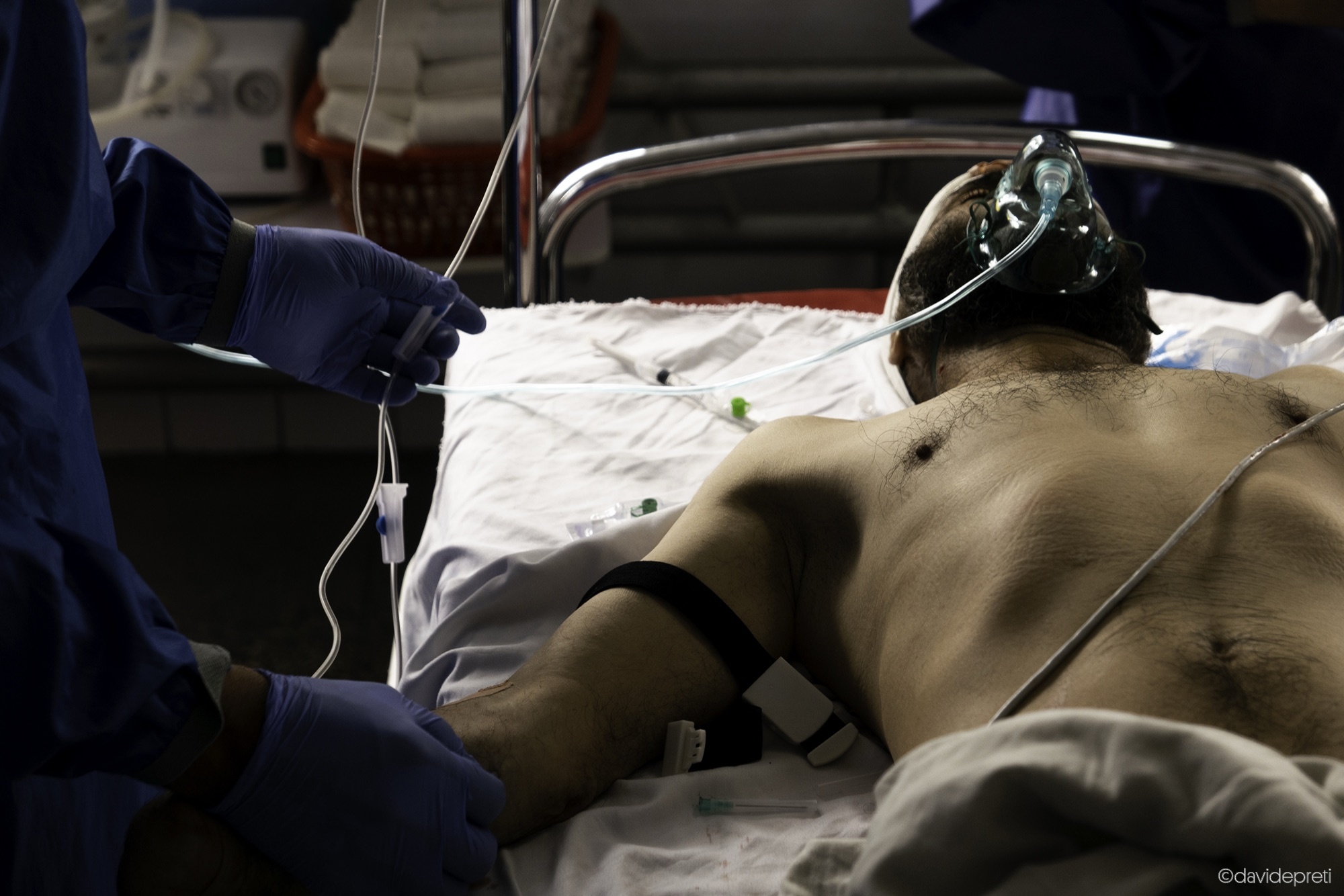
In April 2001, the EMERGENCY Surgical Centre for War Victims opens in Kabul.
Afghanistan, at that time, was under the Taliban control.
On September 11, 2001, Al Qaeda carries out a series of suicide attacks on American land. On October 7, 2001, the US military begins the war against the Taliban forces called 'Enduring freedom'. 20 years later, on May 1 2021, American troops begin their withdrawal from Afghanistan.
I land in Kabul on July 3, 2021. I'll stay inside the EMERGENCY Surgical Centre for War Victims for a month.
Taliban forces took control of Afghanistan's capital city of Kabul on August 15, 2021. At the Surgical Centre for War Victims in Kabul the EMERGENCY NGO staff provide free, high-quality healthcare to the victims of the conflict that continues to affect the country and capital city.
EMERGENCY NGO hospitals in Afghanistan have never stopped working.
In 20 years of work, EMERGENCY NGO has admitted approximately 150,000 patients to the Kabul's hospital and performed more than 80,000 surgeries.
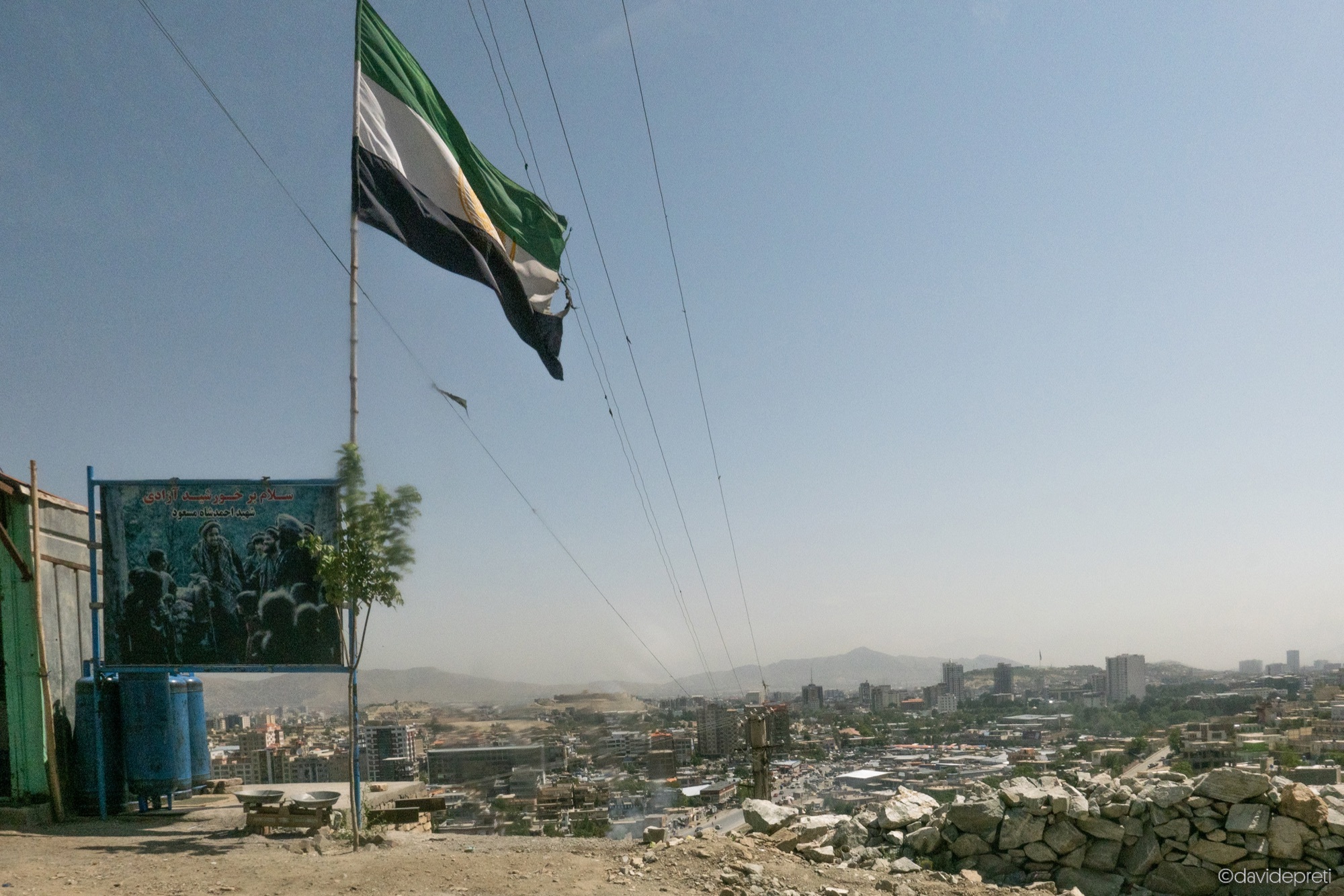
Kabul, Afghanistan — July 17, 2021.
Kabul from above. The capital of Afghanistan has approximately 5 million inhabitants, while the country as a whole has a population of around 38 million.
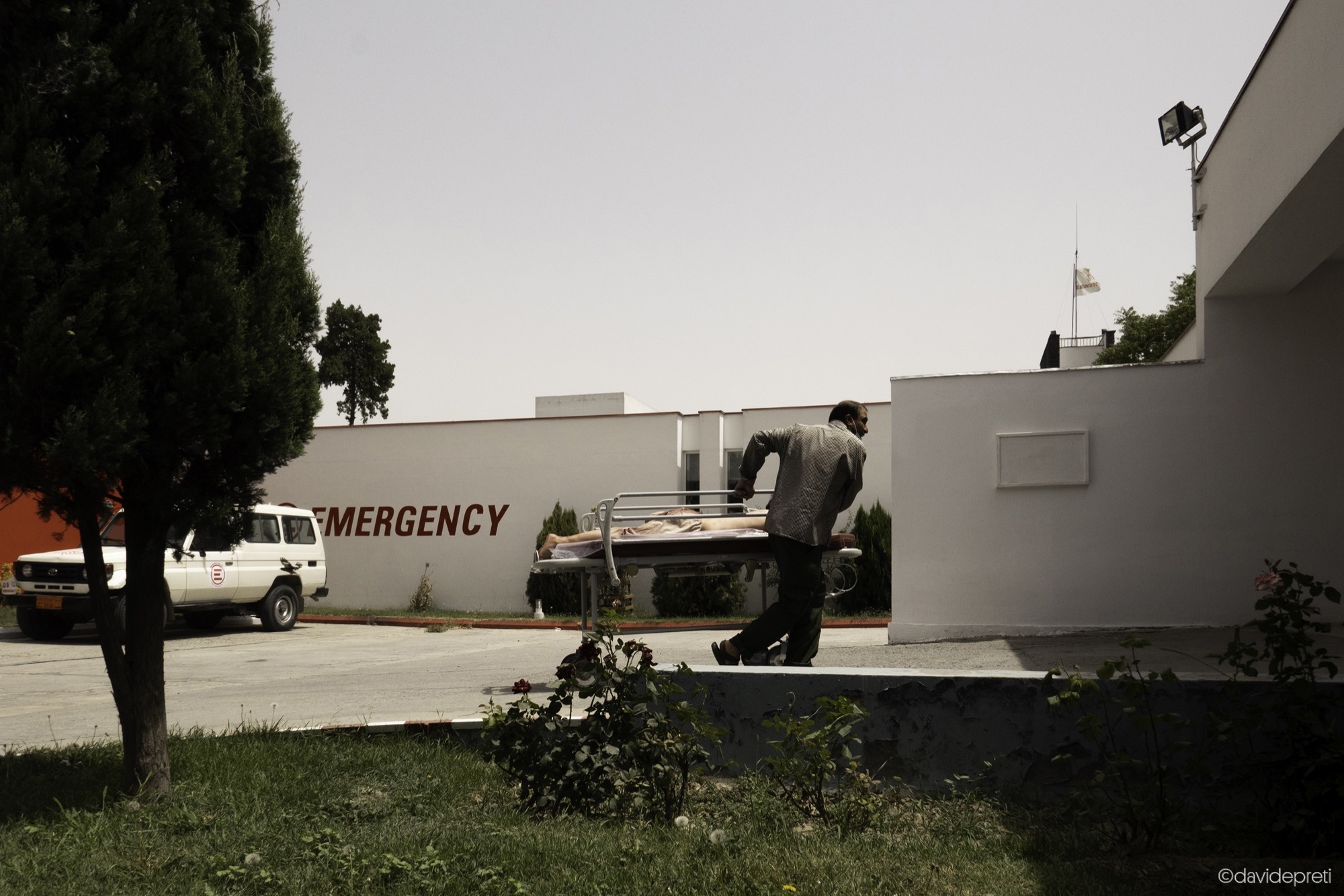
Kabul, Afghanistan — July 11, 2021.
A stretcher bearer runs to the OPD (Out Patients Department) of the EMERGENCY Surgical Centre for War Victims of Kabul. Between 15 and 20 patients are admitted every day.
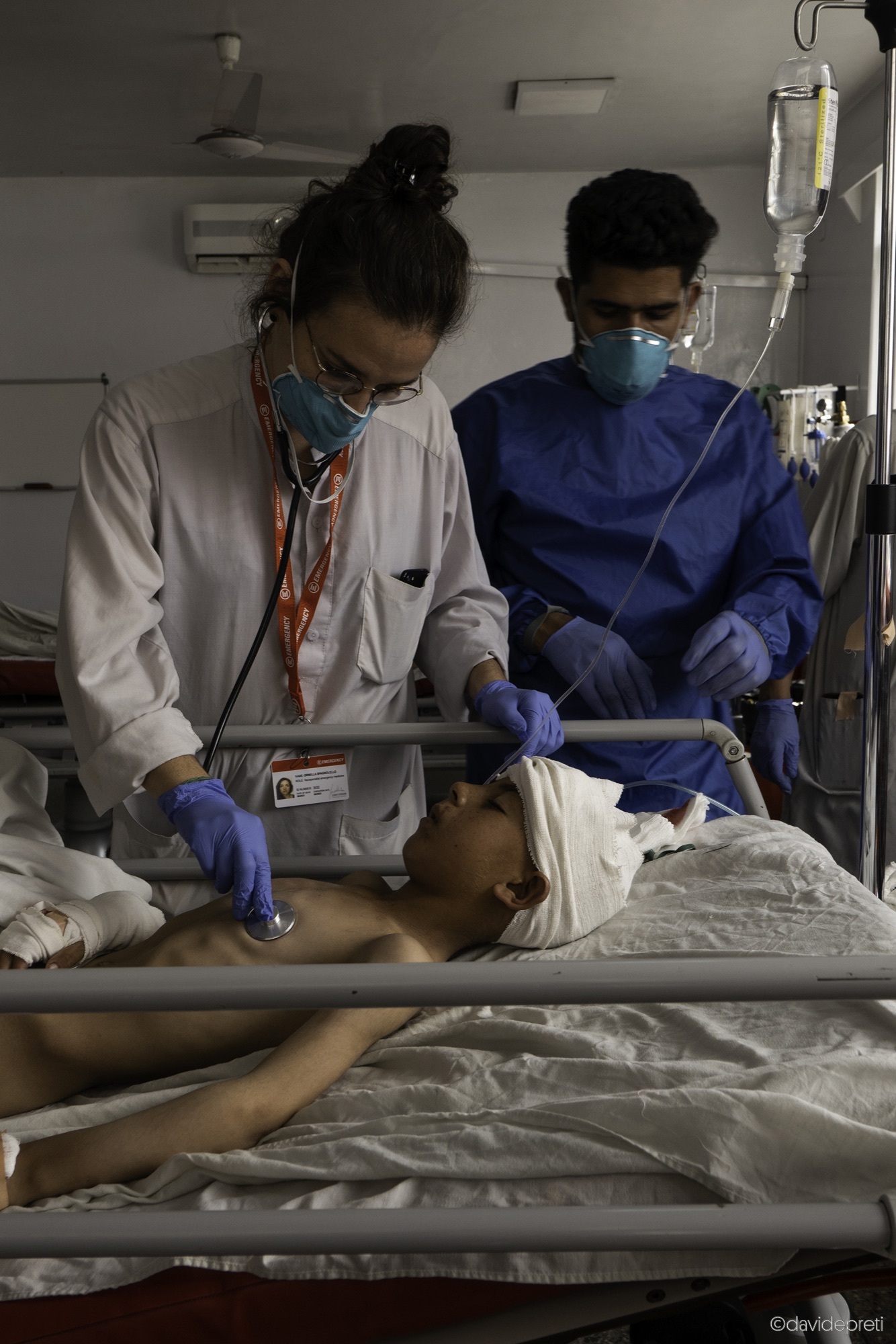
Kabul, Afghanistan — July 19, 2021.
WAAHID - 11 yo
'He's my only son. I would like to have another child but I can't, I'm too old,' Muhammad tells me crying. His 11-year-old son Waahid is inside the operating theater. Muhammad, 65 yo, is sitting in front of the OPD (Out Patients Department) of the EMERGENCY Surgical Centre for War Victims in Kabul.
That same morning his wife called him 'They shot Waahid! They shot Waahid!' she yelled. Waahid is their only son. Like every morning he was taking the sheep to pasture, close to home. Together with his two sisters and his parents he lives in the Zanakhan district, one of the poorest and least populated in the Ghazni province.
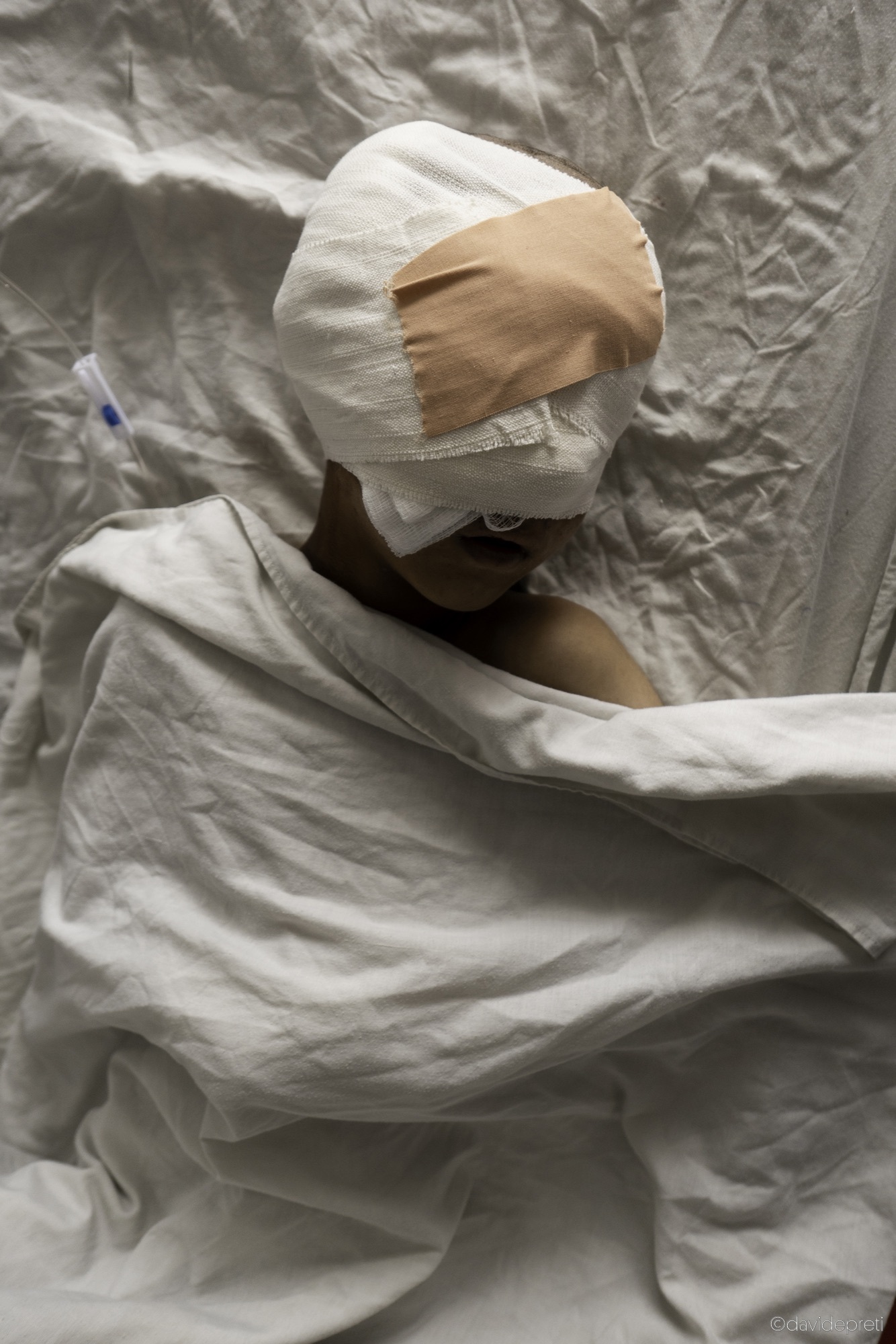
Kabul, Afghanistan — July 19, 2021.
WAAHID - 11 yo
Waahid's family home sits on top of a hill. He was a few miles downstream when he was shot.
Muhammad, his father, could never have imagined that the clashes between the Taliban and the Afghan army, which had begun two days earlier, would reach their village. "Otherwise, I wouldn't have let him go out with the sheep," he told me.
That morning, Muhammad was working the land when gunshots rang out. Alerted by the shooting, Waahid's mother went into the backyard. Below her, less than a kilometre away, she saw her son lying on the ground. A bullet had entered Waahid's left eye and exited through the back of his skull. She ran to him and then called her husband. "They shot Waahid! They shot Waahid!"
Muhammad arrived shortly afterwards, picked up his son and carried him to the nearest road, where they waited for a car to take them to hospital. More than forty minutes passed before a vehicle stopped. They eventually reached a private hospital in Ghazni, the provincial capital. Waahid was stabilized and immediately referred to the EMERGENCY hospital in Kabul.
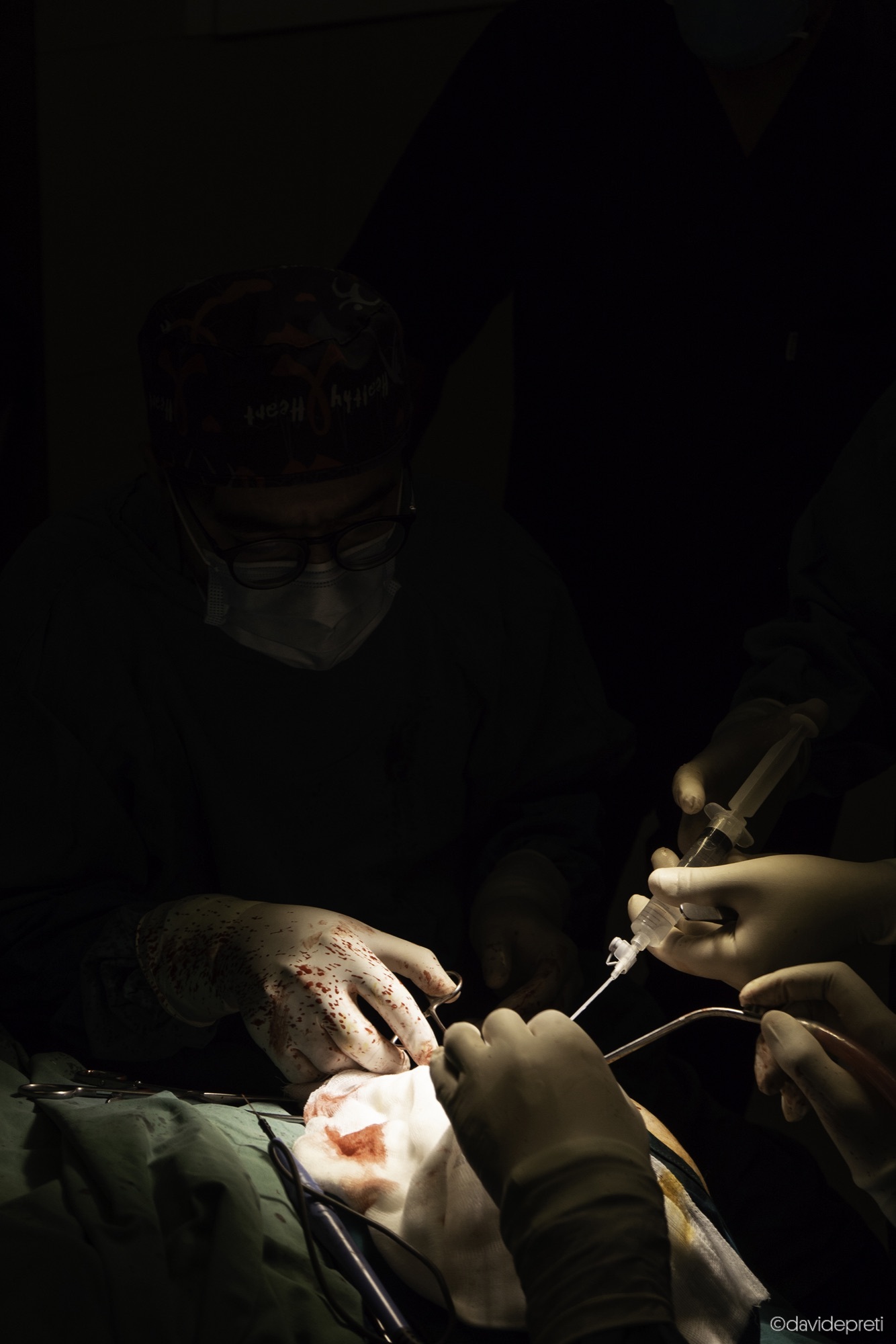
Kabul, Afghanistan — July 19, 2021.
WAAHID - 11 yo
Because of the danger along the road connecting Ghazni to Kabul, where clashes between the Taliban and the Afghan army were continuing, Muhammad had to pay 1,300 Afghanis for the journey, about 15 euros, equivalent to roughly four days' work for an Afghan farmer.
At the EMERGENCY hospital in Kabul, Waahid was examined, underwent CT scans of his head and chest, and was rushed to the operating theatre.
Muhammad sits outside the hospital's OPD, holding a tasbih in his hand, a string of prayer beads used by Muslims during prayer. He is waiting for the surgeon to tell him about the condition of his only son.
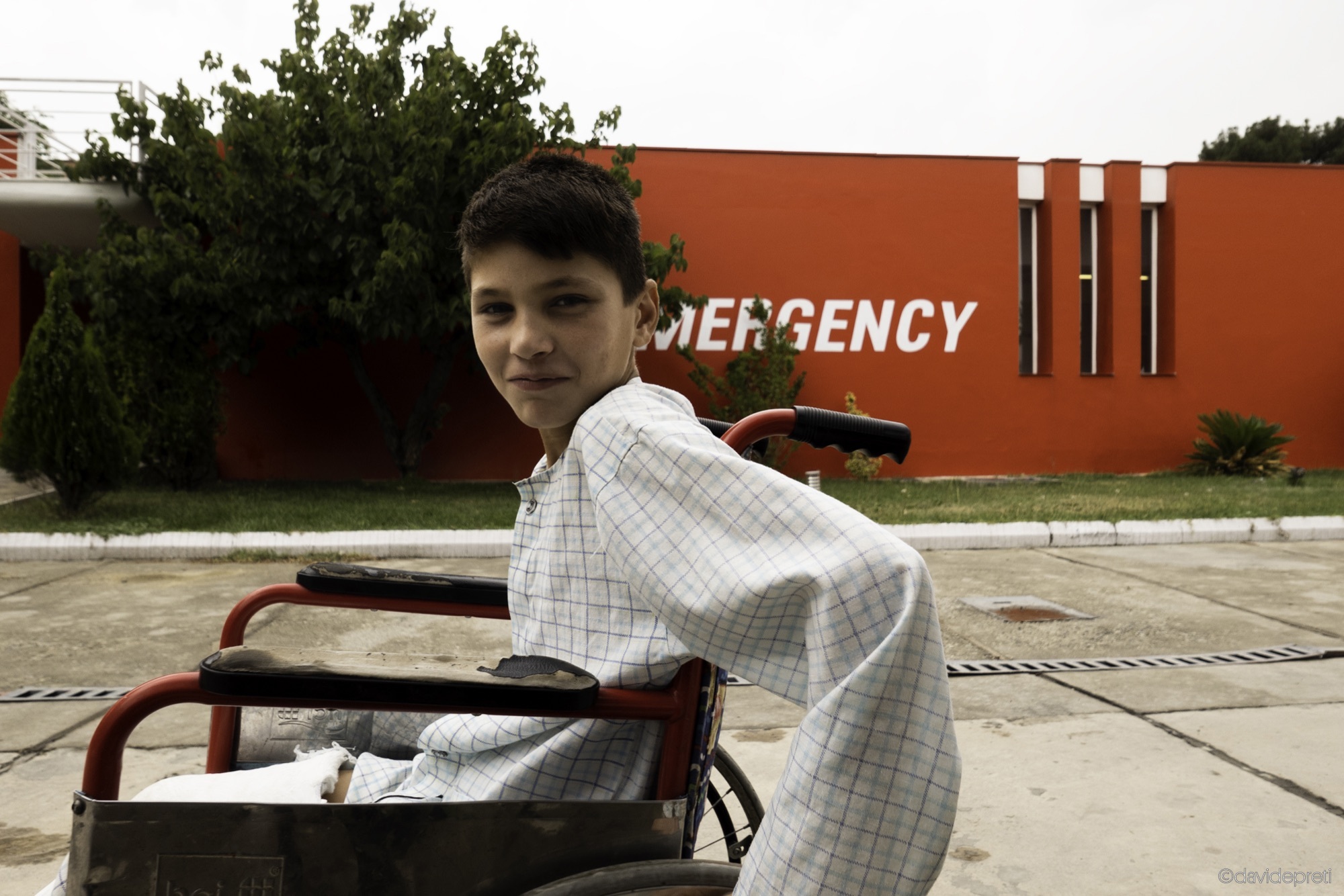
Kabul, Afghanistan — July 13, 2021.
NOORALLAH - 16 yo
Noorallah was wounded by a bullet in his right leg while returning home in Jalalabad. In the hospital ward, he met Shamsullah, 12, from Jowzjan province, who had also been shot in the leg. The two have become close friends. They love racing each other in wheelchairs through the hospital garden.
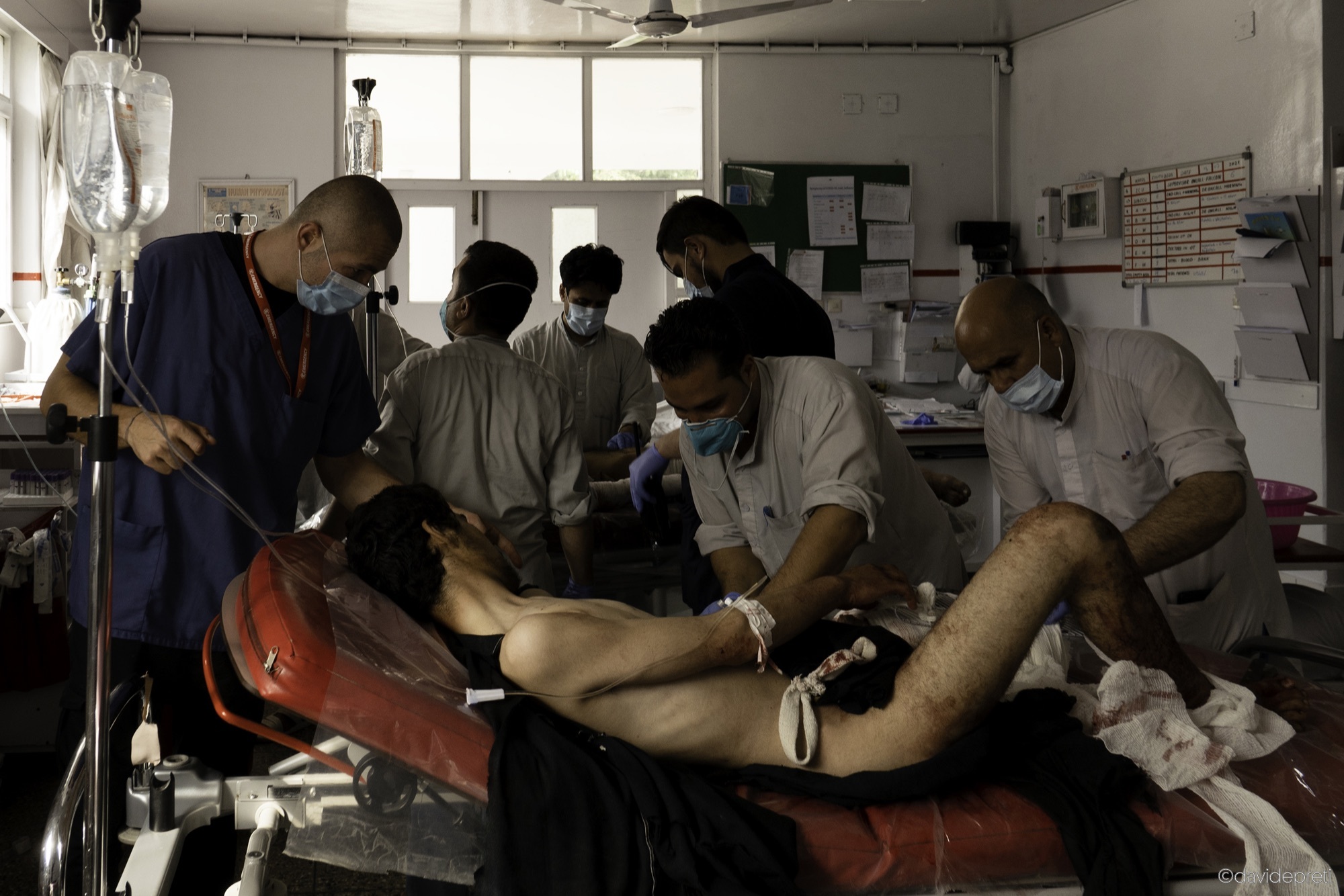
Kabul, Afghanistan — July 13, 2021.
Inside the OPD (Out Patients Department) after the arrival of three patients injured by the explosion of an IED (Improvised Explosive Device) in the PD6 district of Kabul.
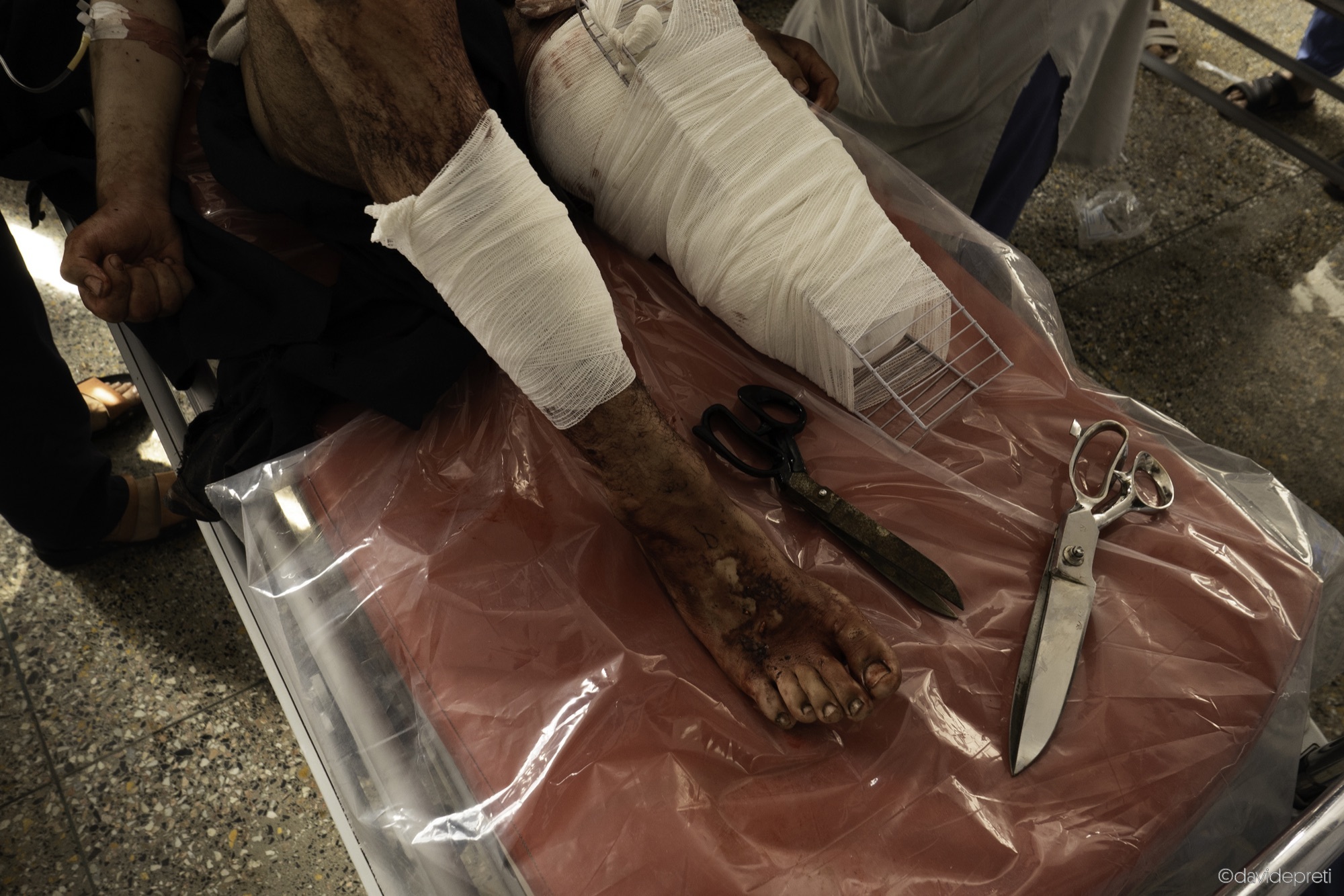
Kabul, Afghanistan — July 13, 2021.
EMERGENCY NGO doctors and nurses stabilize a patient who has suffered numerous injuries including traumatic amputation of the left leg.
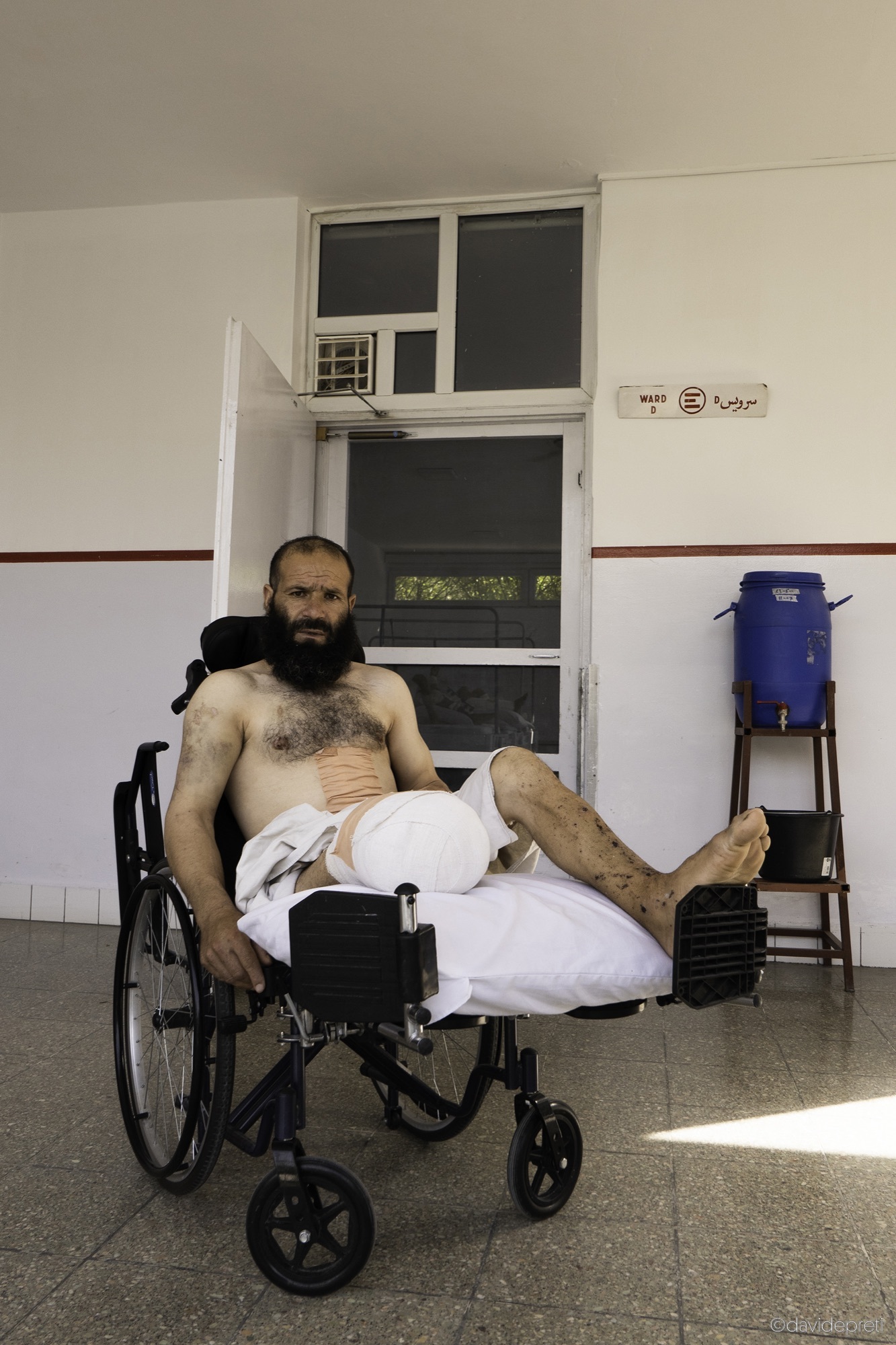
Kabul, Afghanistan — July 12, 2021.
JALAD KHAN - 39 yo
"I told my children not to leave the house," says Jalad Khan, sitting in his wheelchair outside the hospital ward where he is being treated. He is worried about his wife and seven children, who live in Darkh, in Logar province, where violence has become a daily occurrence. He has experienced its consequences firsthand.
"In the last 20 years, there have been no incidents like the one I was involved in in my village. But in the last month, three bombs have exploded and five people I knew have been killed. Some of my friends fled with their families; others decided to stay in the village."
Jalad Khan is a farmer. Together with his two brothers, he grows tomatoes, onions and potatoes in the fields around their village. As they were returning home for lunch, an IED exploded near their car. Jalad Khan suffered severe injuries to his lower limbs and abdomen. His older brother carried him on his shoulders to the nearest clinic. After receiving initial treatment, he was immediately transferred to our hospital in Kabul, where he arrived in critical condition. Because of the extent of his injuries, we had to amputate his right leg.
Jalad Khan does not want to leave his homeland. But today, he cannot imagine a future there for himself and his family.
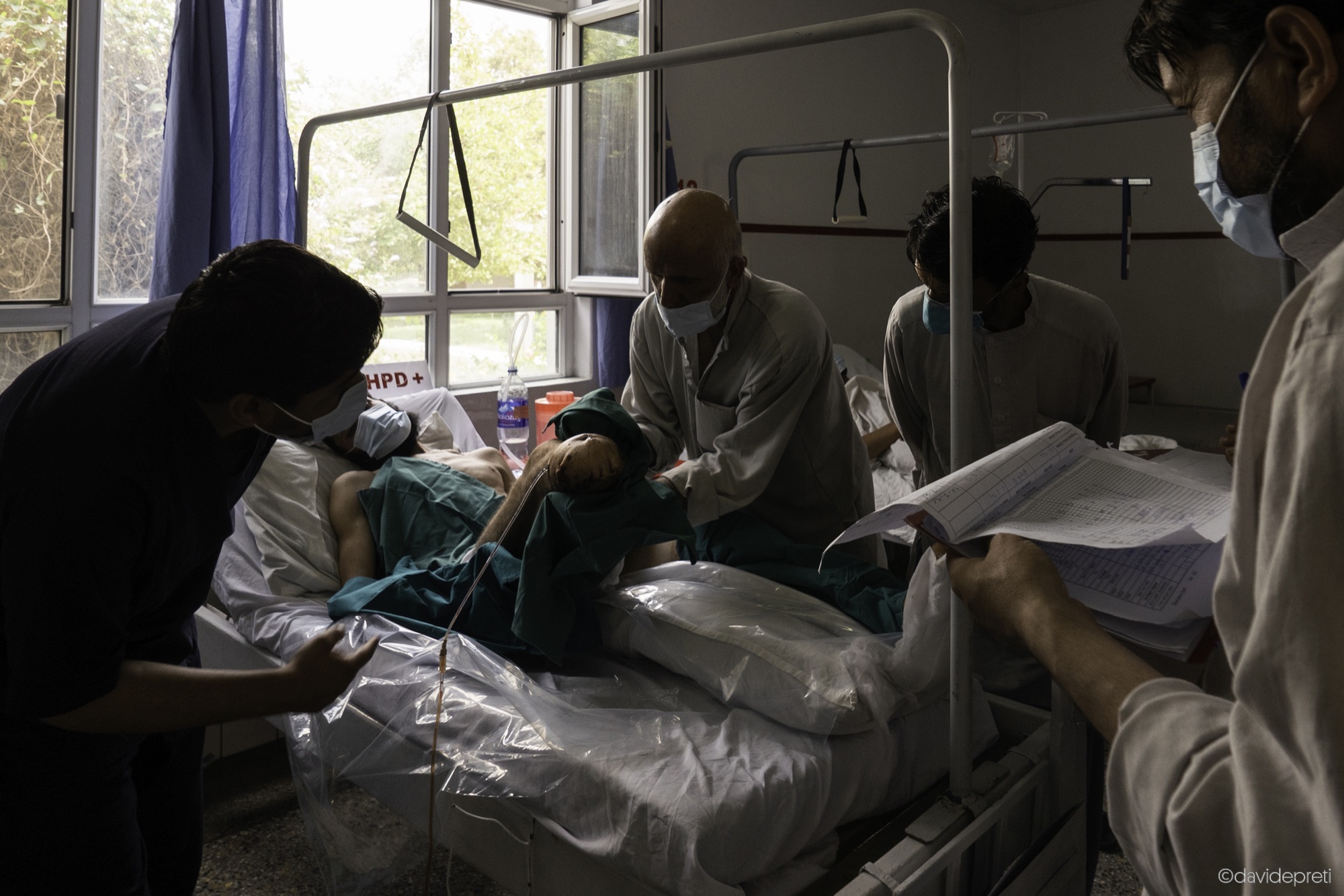
Kabul, Afghanistan — July 14, 2021.
Nurses dressing a patient's wounds inside the ward of the EMERGENCY's Surgical Centre for War Victims in Kabul.
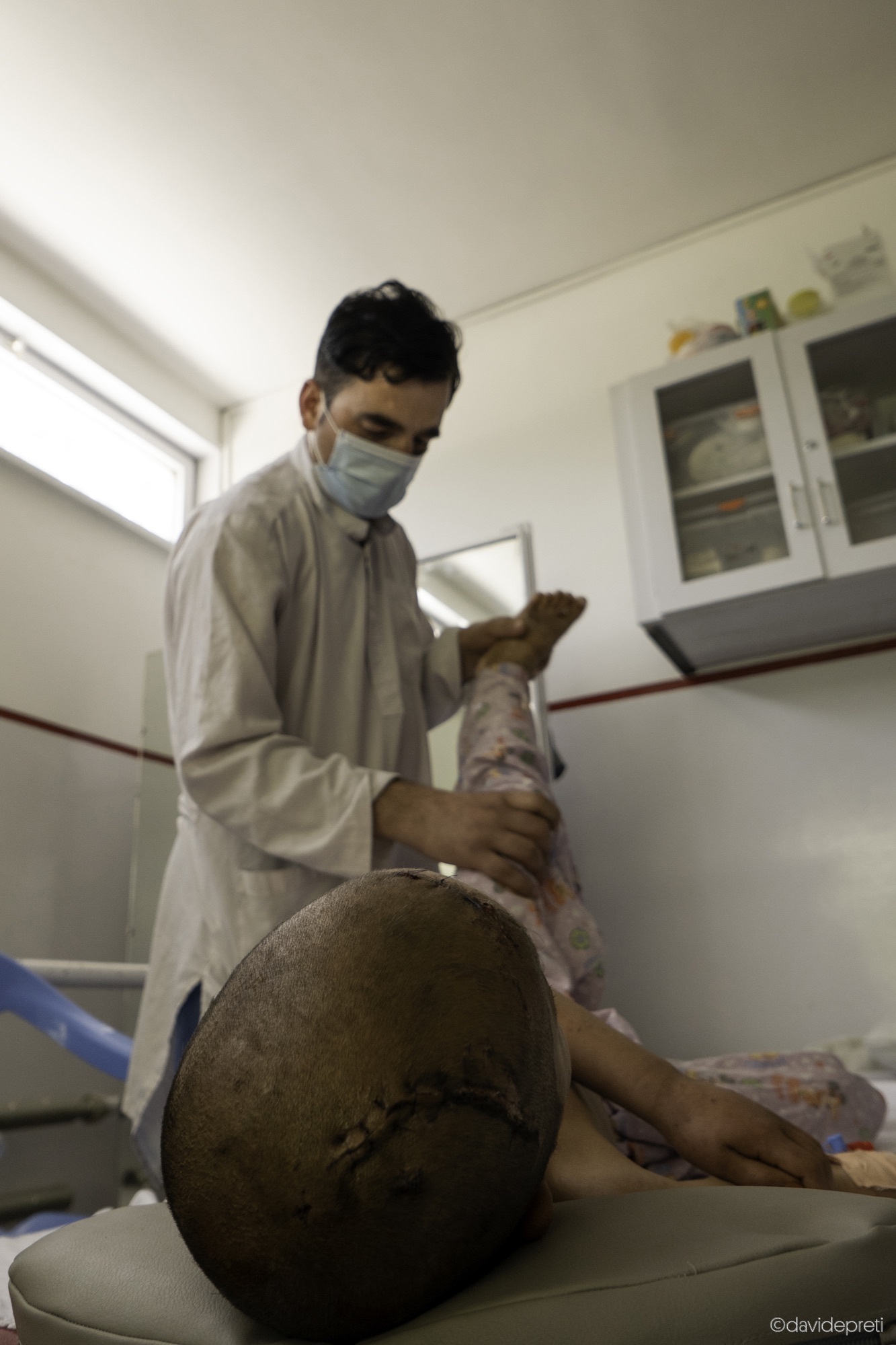
Kabul, Afghanistan — July 6, 2021.
RASHAD - 9 yo
Maidan Shahr is a town about 50 km from Kabul, along the main road connecting the capital to Kandahar. It is where Rashad, 9, comes from. A few weeks ago, he was playing in his courtyard when shrapnel from a mortar explosion struck him in the head. After being stabilized at the First Aid Post in the city, he was transferred to the EMERGENCY hospital in Kabul, where he underwent emergency surgery.
A week later, he began his rehabilitation with Hashim, one of the hospital's physiotherapists.
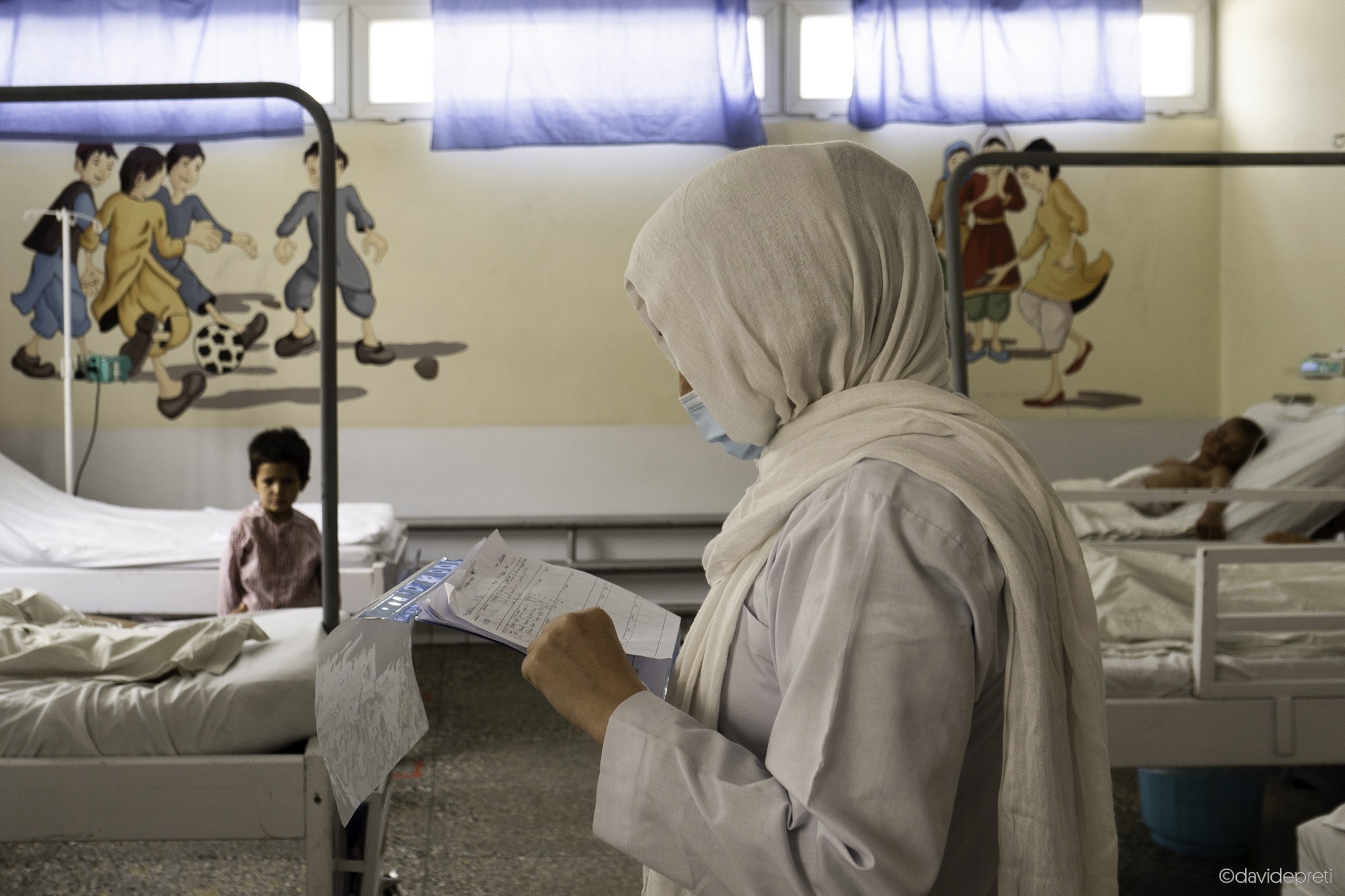
Kabul, Afghanistan — July 14, 2021.
Nurse Laila checks the patient files inside the C-ward (Children ward) EMERGENCY's Surgical Centre for War Victims in Kabul.
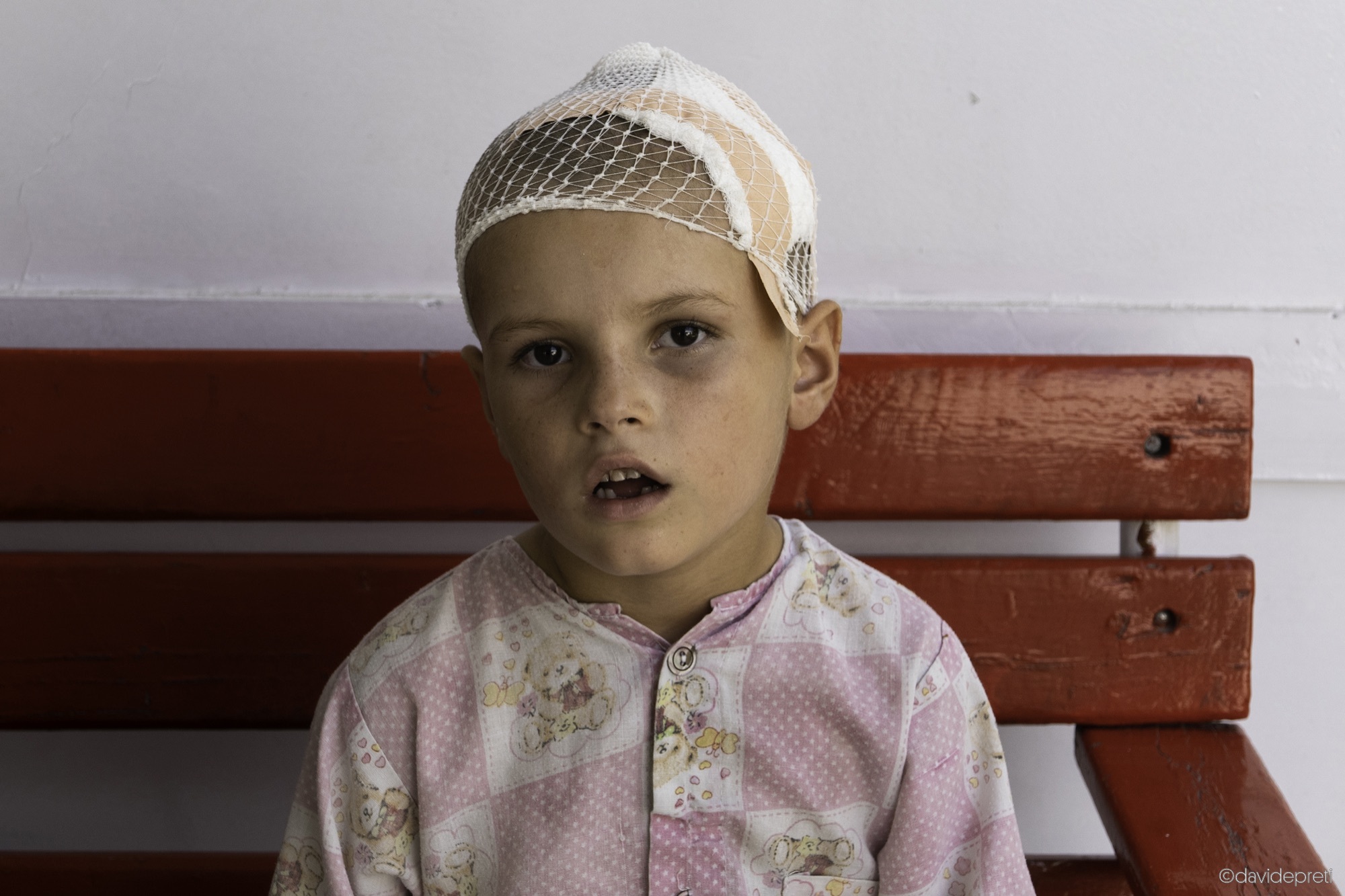
Kabul, Afghanistan — July 17, 2021.
ABDULLAH - 7 yo
Abdullah was wounded by a bullet while at home in Ghazni province. The province is strategically important because it is crossed by Highway 1, also known as the Ring Road, which connects Kabul to Kandahar and continues to Herat.
Although Ghazni is only about 100 km from Kabul, it took the ambulance more than five hours to reach the EMERGENCY Surgical Centre for War Victims in the capital, due to numerous checkpoints and the rough road, damaged by the fighting.
Abdullah is now recovering in the C-Ward (Children's Ward). If his follow-up examinations show that he is recovering well, he is expected to be discharged in the coming weeks.
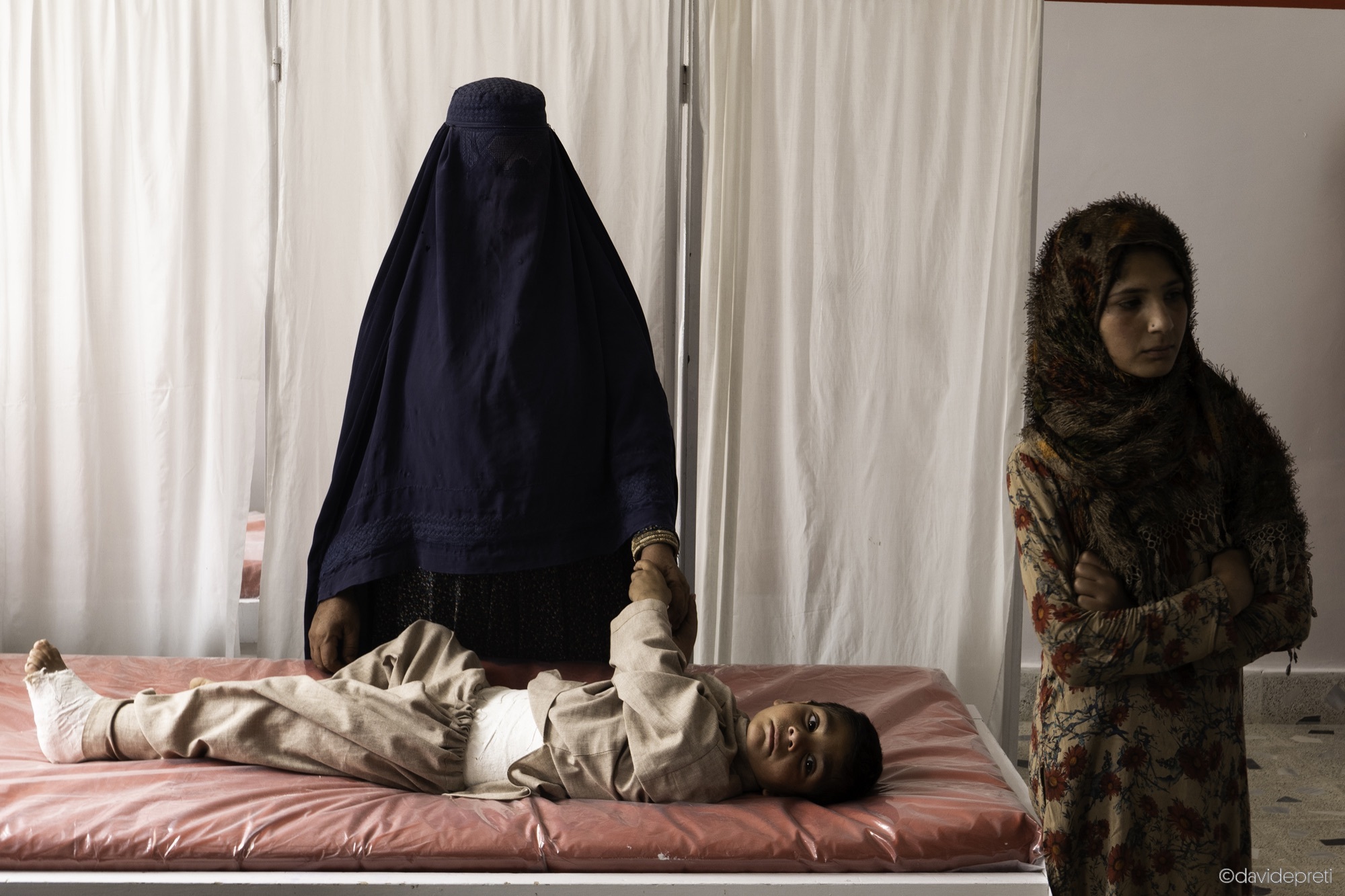
Kabul, Afghanistan — July 19, 2021.
A family waits for the doctor to arrive for a dressing at EMERGENCY's FAP (First Aid Post) in Mirbachakor. Access to healthcare is extremely difficult for much of the Afghan population: there are few free healthcare facilities, and the country's geography can make travel to medical centres challenging. EMERGENCY has established a network of FAPs connected to its hospitals through a 24-hour ambulance service.
Scroll to continue →