Inside the World's Most Dangerous Migration Route
Aboard EMERGENCY's Life Support Search and Rescue vessel
May 2024
The Central Mediterranean Sea remains the world's most perilous migration route. According to the International Organization for Migration (IOM), over 23,000 people have died or vanished in these waters since 2014—with drowning accounting for more than 90% of fatalities, averaging six lives lost every day.
On December 13, 2022, EMERGENCY's Search and Rescue (SAR) vessel, Life Support, set sail from Genoa on its maiden voyage. Over more than three years of continuous operations in the Central Mediterranean, the ship has carried out over 40 missions and rescued more than 3,500 survivors. Visual journalist Davide Preti documents this ongoing human reality, embedding with the crew during key milestones of the project, including its 1st, 4th, and 19th missions.
Central Mediterranean Sea — March 25, 2023.
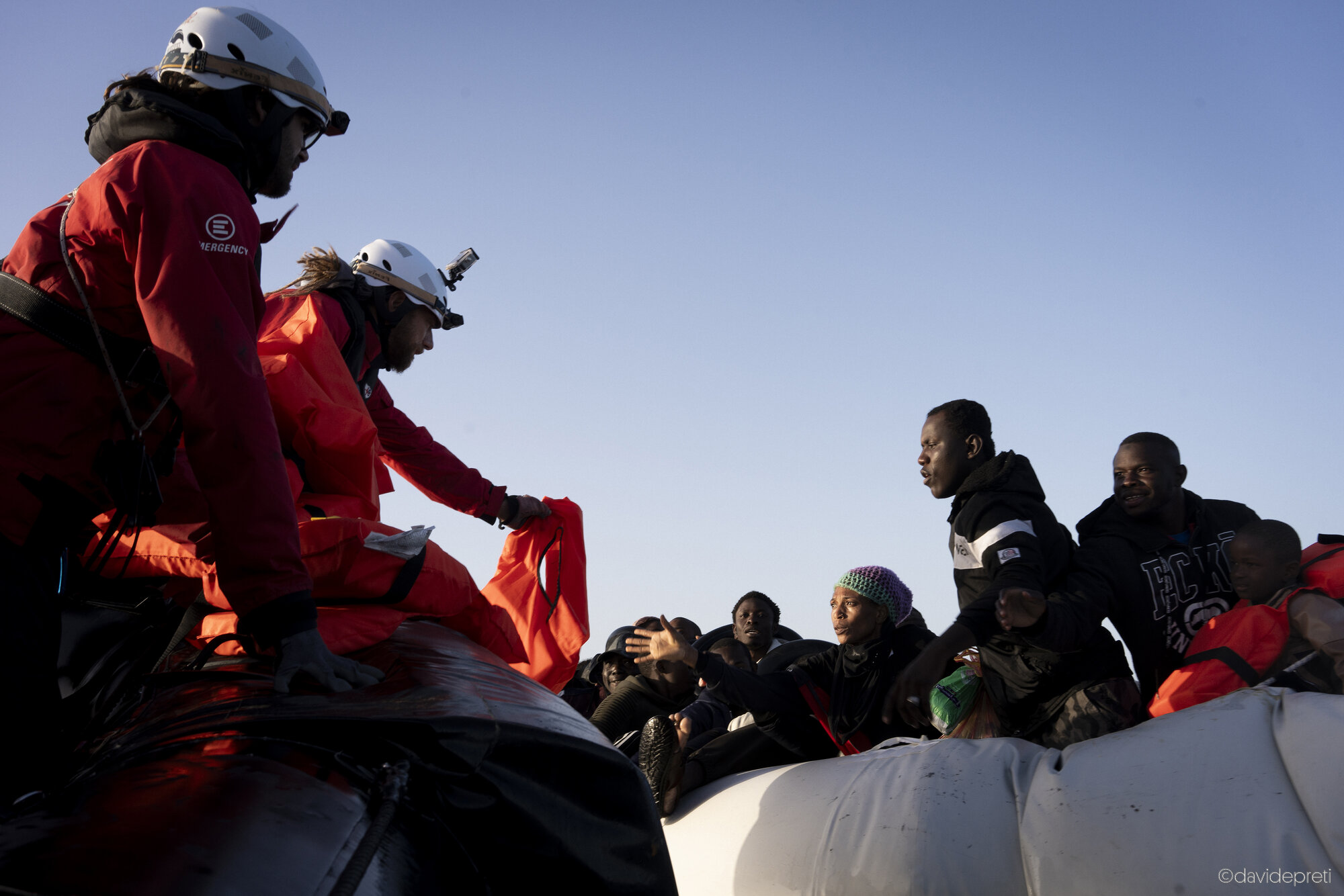
The castaways upon arrival of EMERGENCY Life Support's RHIB-01 (rigid-hulled inflatable boat).
Central Mediterranean Sea — March 24, 2023.
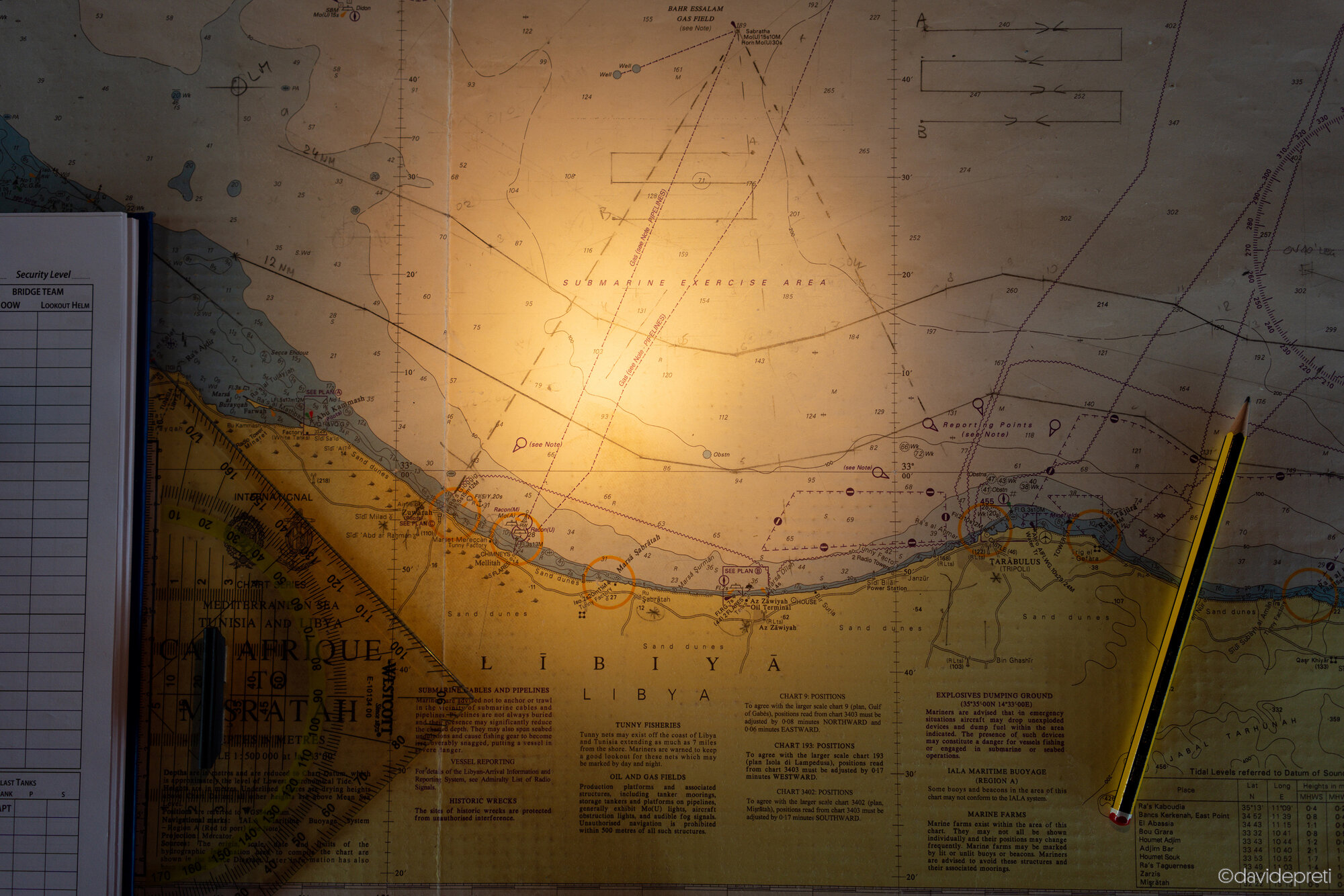
On the 13th of December 2022, LIFE SUPPORT, the EMERGENCY ship for Search and Rescue (SAR) sails from Genoa for its first mission in the Central Mediterranean sea.
Central Mediterranean Sea — May 3, 2024.
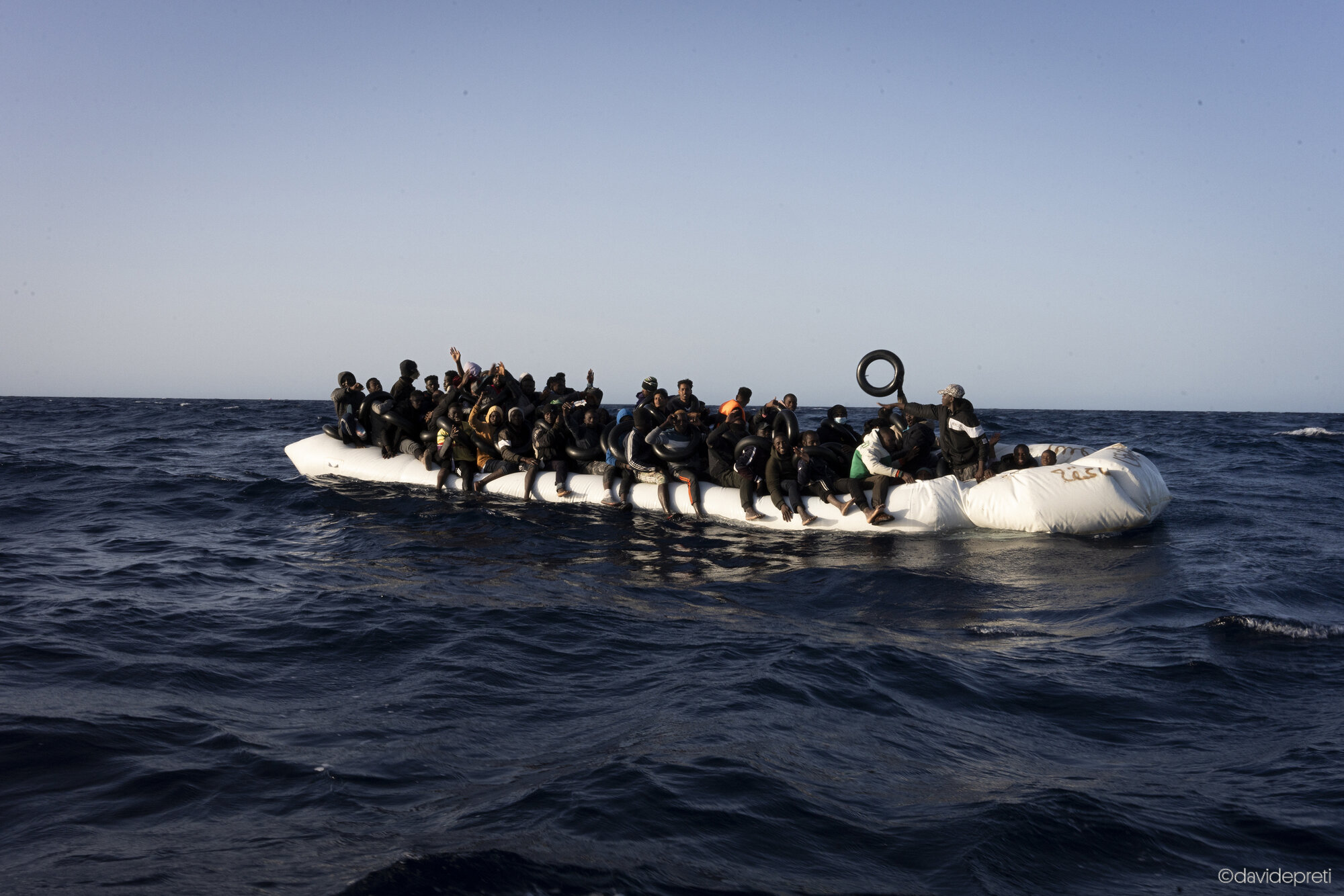
A boat in distress with nearly one hundred people on board.
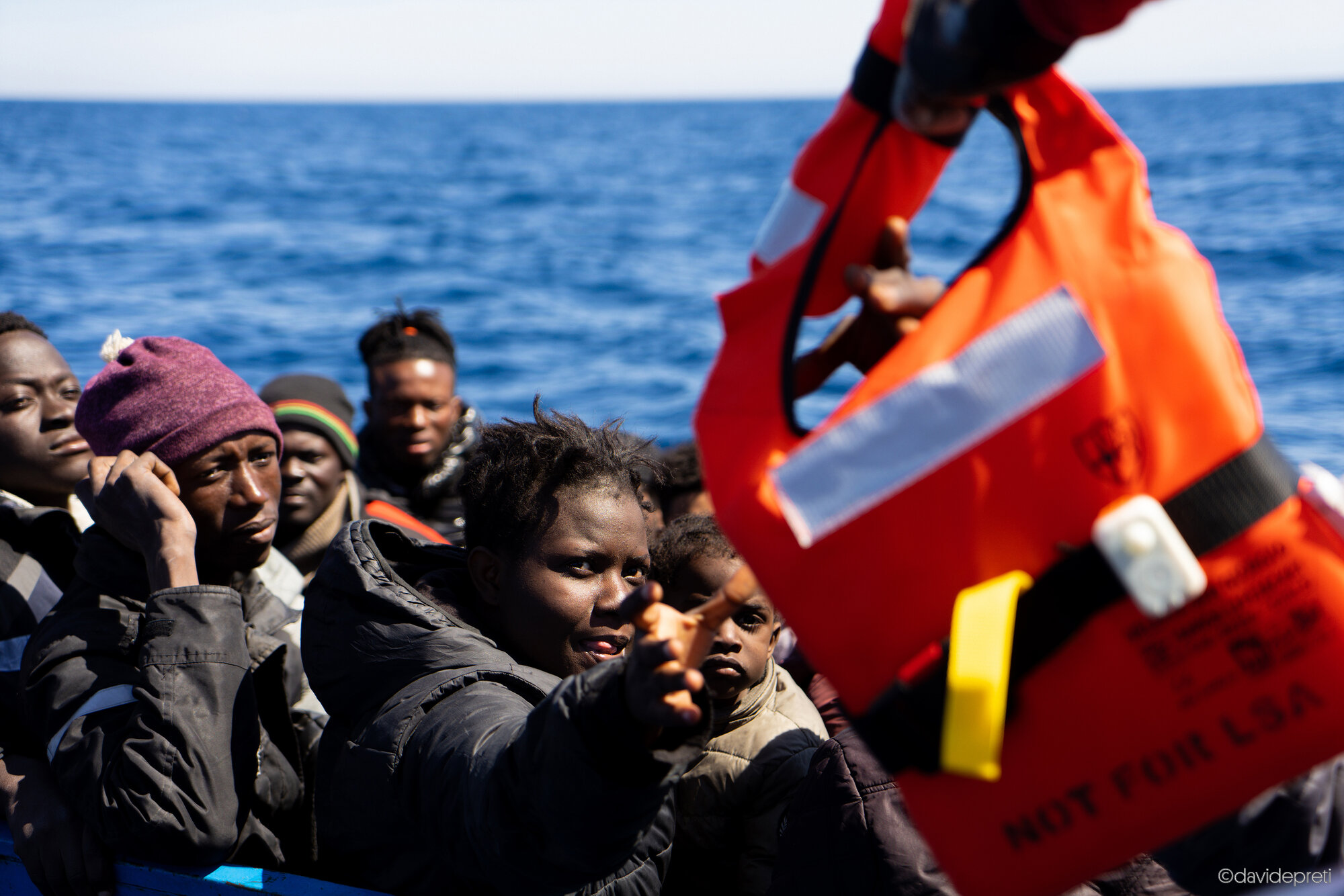
Central Mediterranean Sea — March 25, 2023.
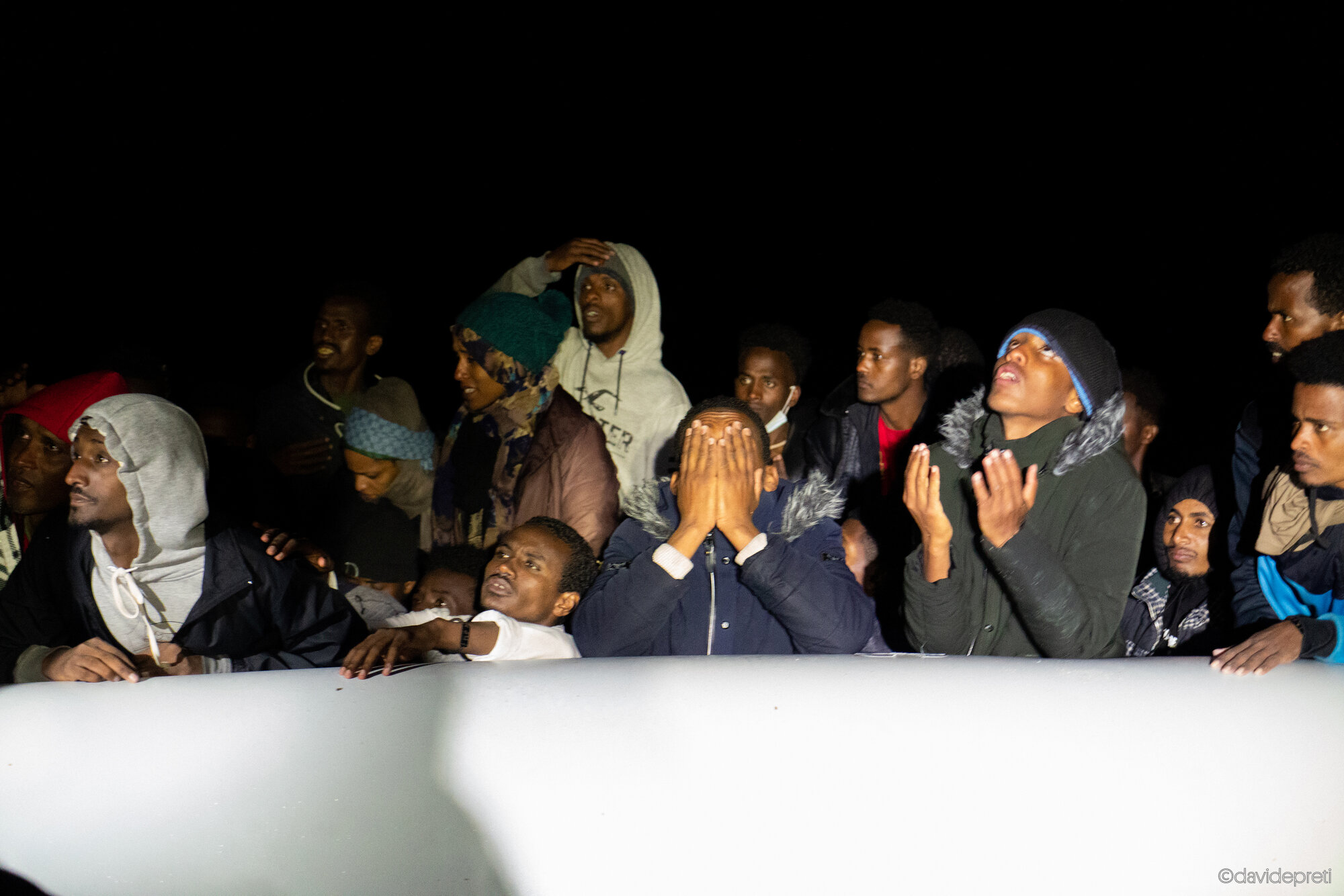
The boat is crammed with 39 people: 4 women, one of whom was four months pregnant, one 3 years old child, 19 unaccompanied minors and 15 adult males. They are all of sub-Saharan origin and had left from Sfax, Tunisia, on Thursday the 22th of March.
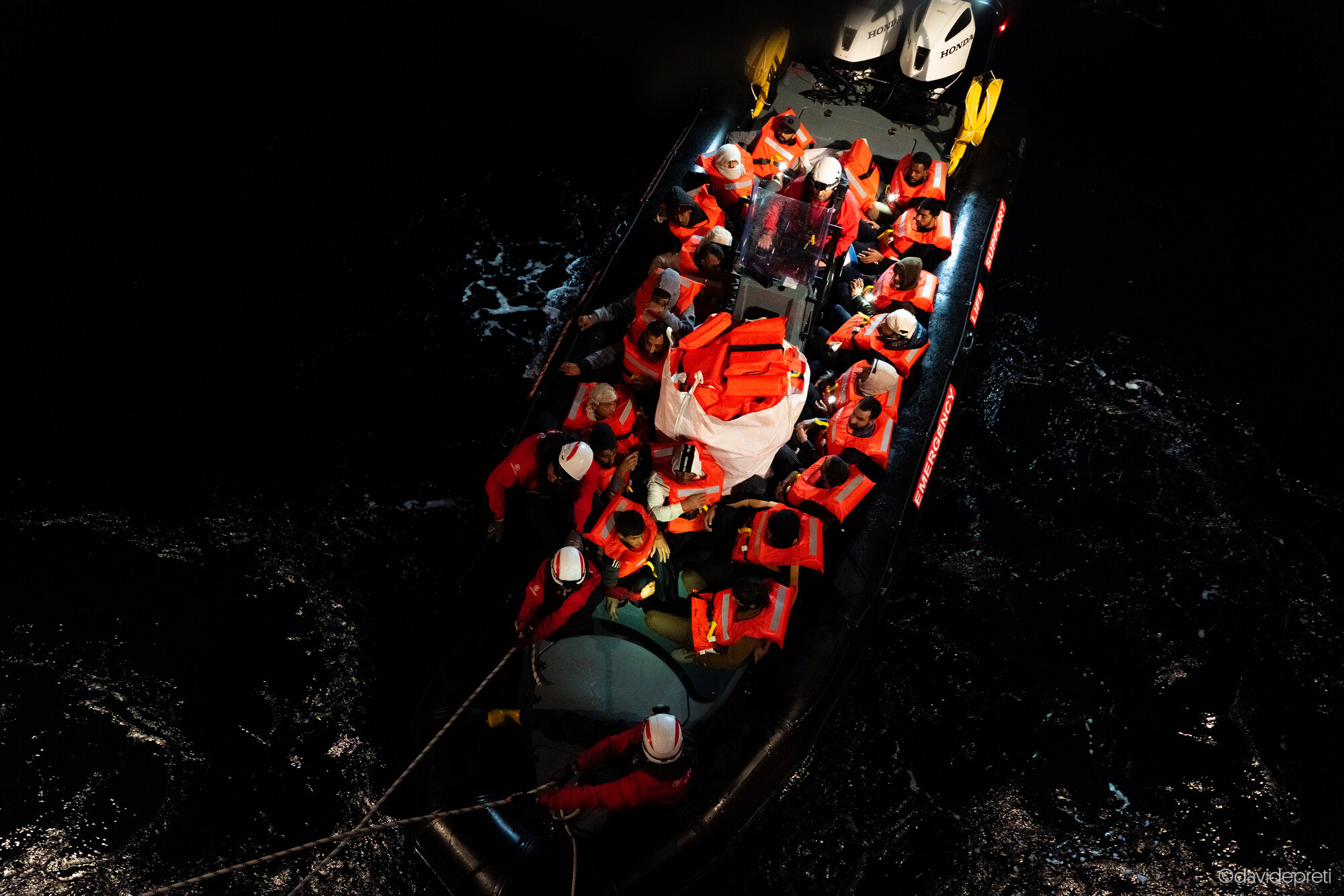
Central Mediterranean Sea — December 19, 2022.
At 2.00 AM Life Support carries out the first sea rescue. Seventy people are squeezed into a wooden boat. They had left the village of Al-Zawiyah, Lybia, five hours earlier.
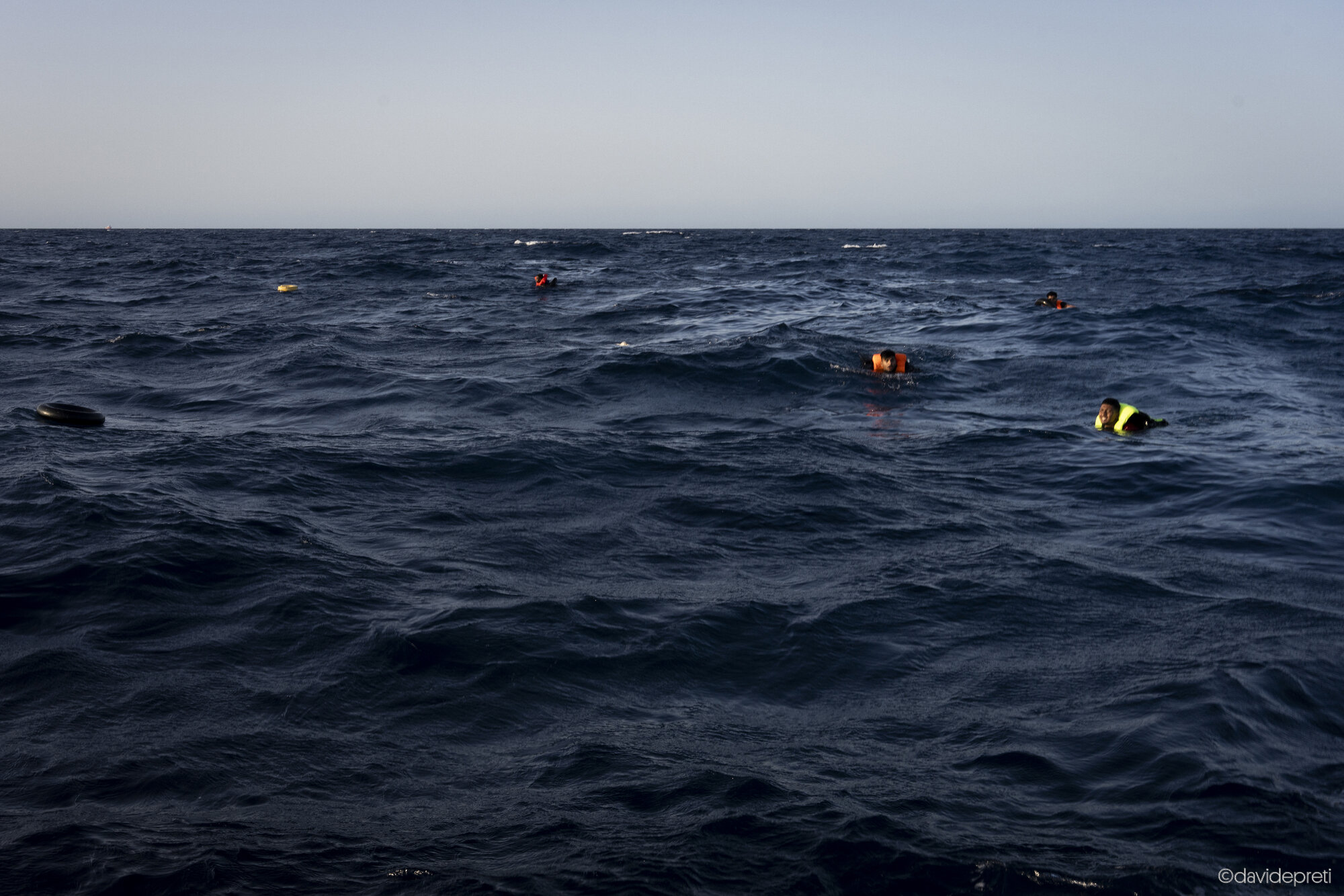
Central Mediterranean Sea — May 3, 2024.
Survivors in the water during rescue operations.
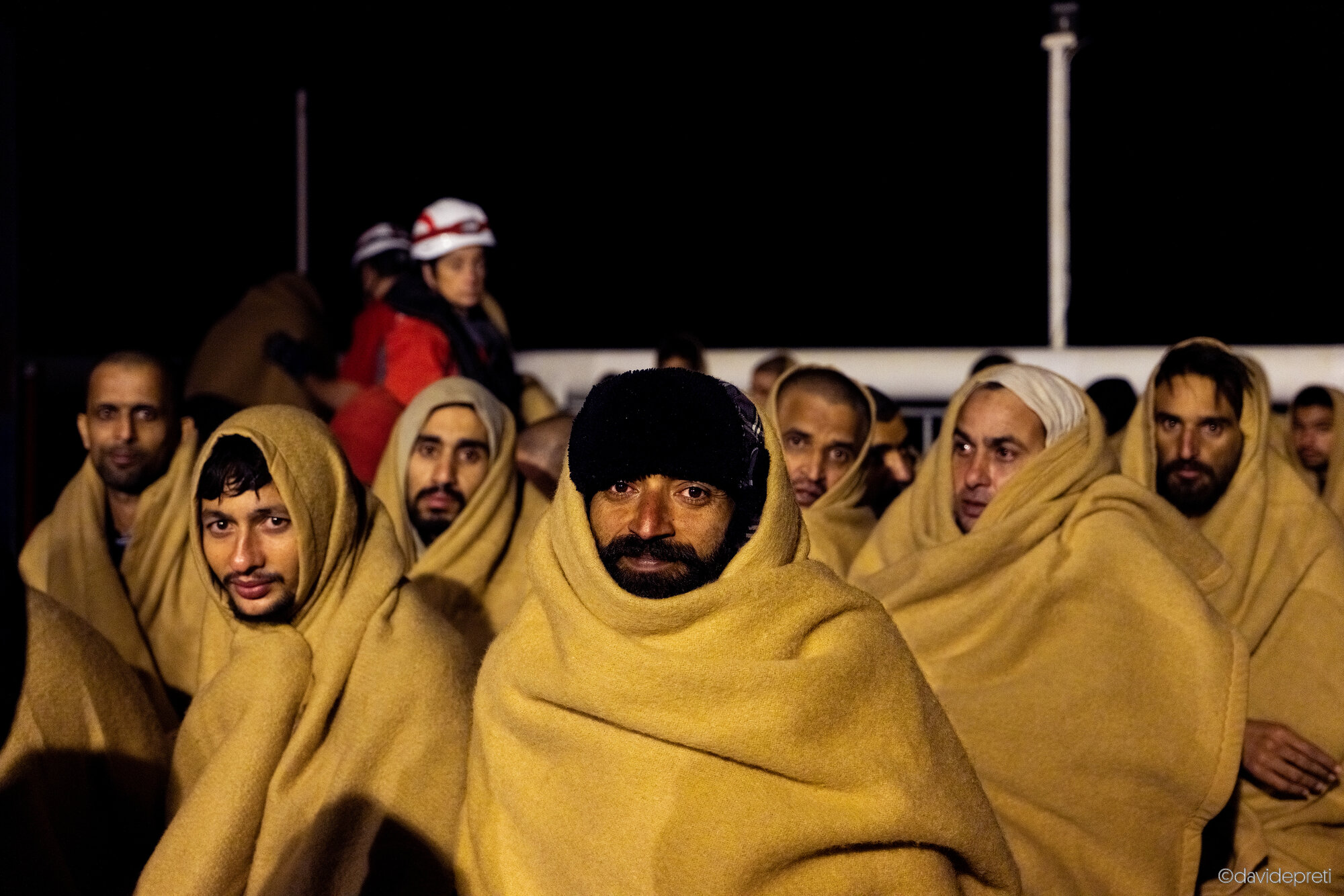
Central Mediterranean Sea — December 19, 2022.
After 32 hours at sea, most of the migrants arrive in a poor sanitary condition. They struggle to walk due to their position on the boat, many are hypothermic, everyone is dehydrated and hungry.
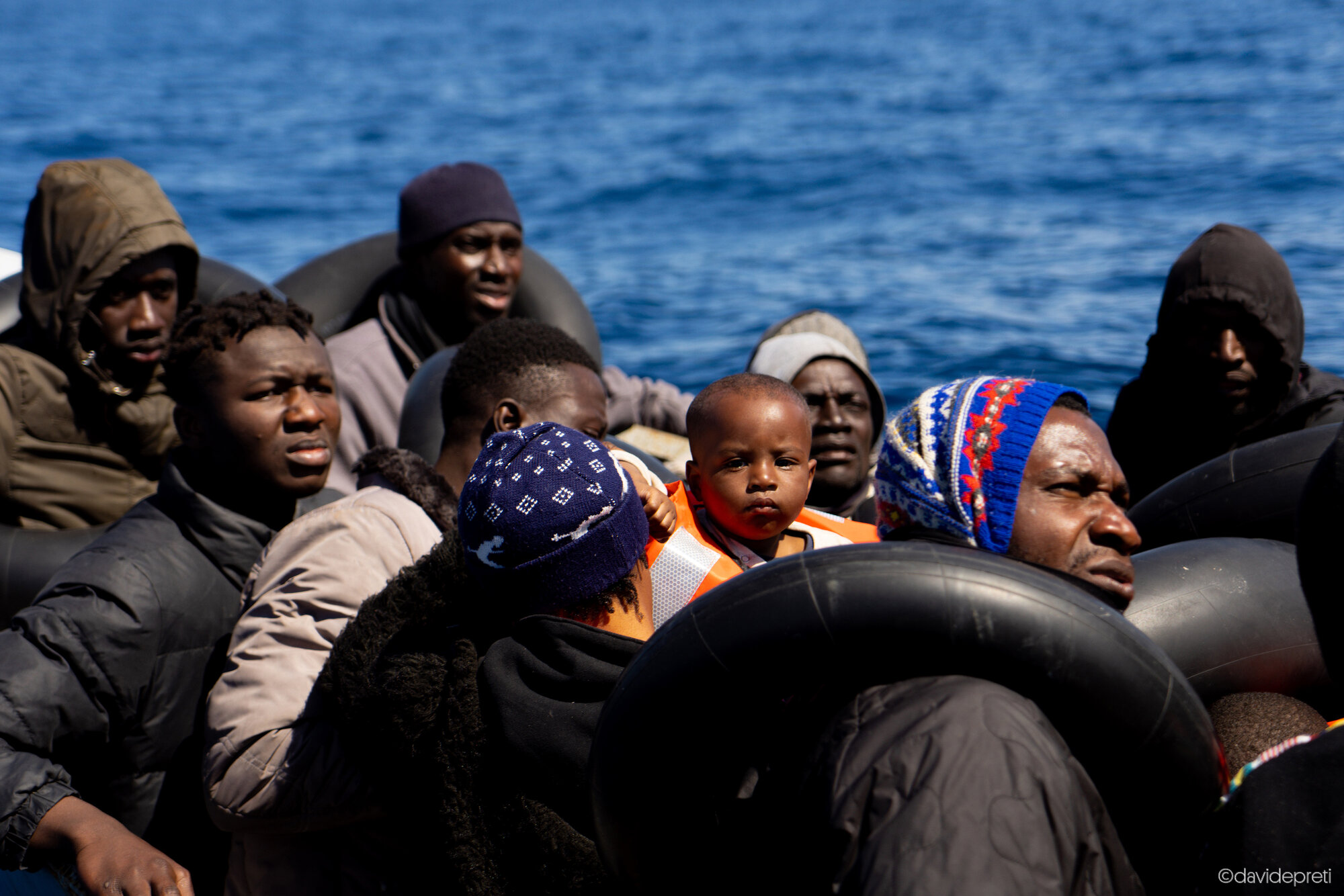
Central Mediterranean Sea — March 25, 2023.
On the morning the report of a cluster of boats in distress some tens of nautical miles from the position of Life Support arrives. In agreement with the Italian Coast Guard, EMERGENCY's SAR vessel heads towards the reported position. On board the distressed boat were 44 people: 17 women, one of whom is 3 months pregnant, 5 children under the age of 3, 4 unaccompanied minors and 18 adult males. All are of sub-Saharan origin. The boat had left Sfax, Tunisia, three days before.
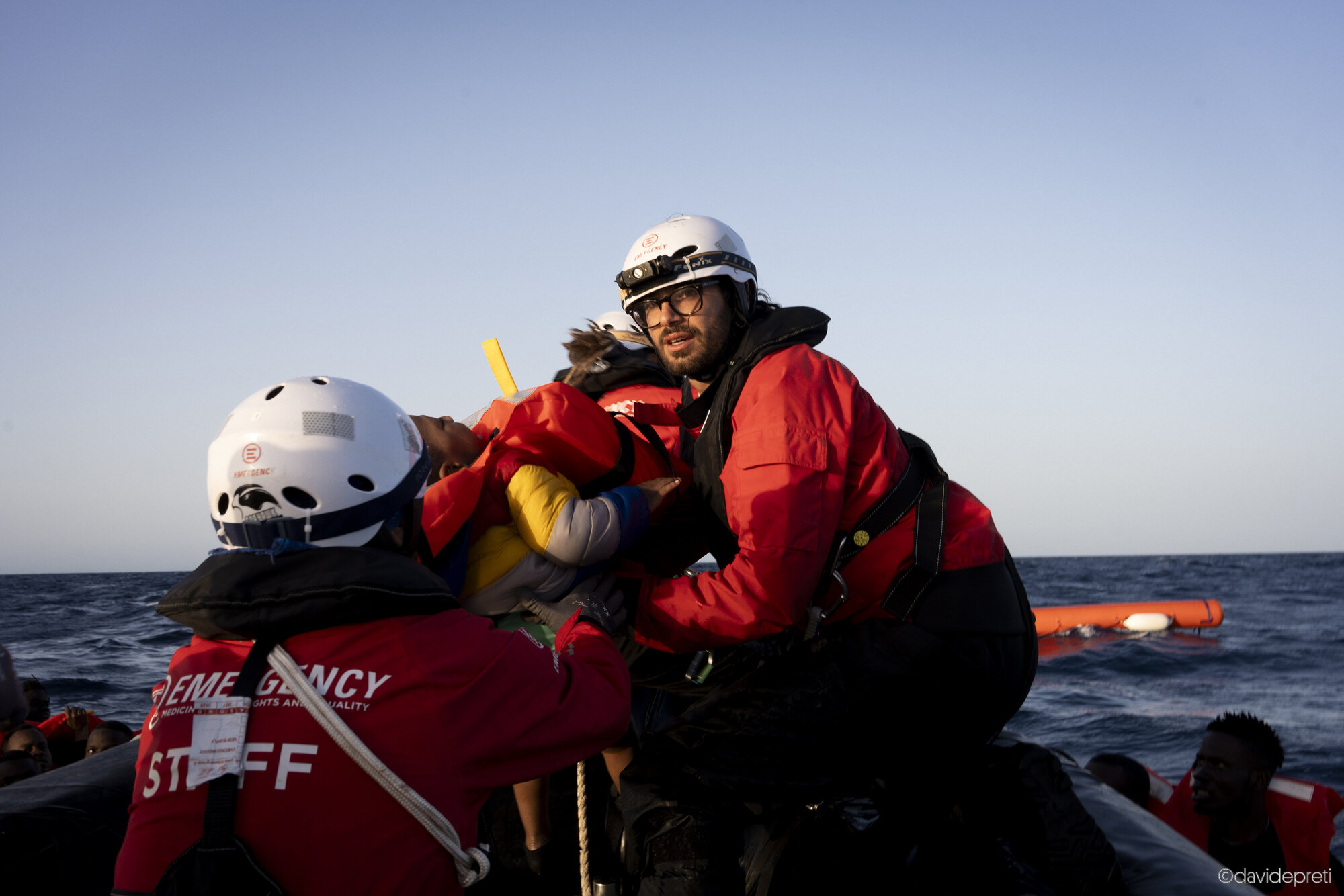
Central Mediterranean Sea — May 3, 2024.
Andrea, a member of the Search and Rescue (SAR) team, during operations to rescue people aboard a boat in distress in the waters between Libya and Lampedusa.
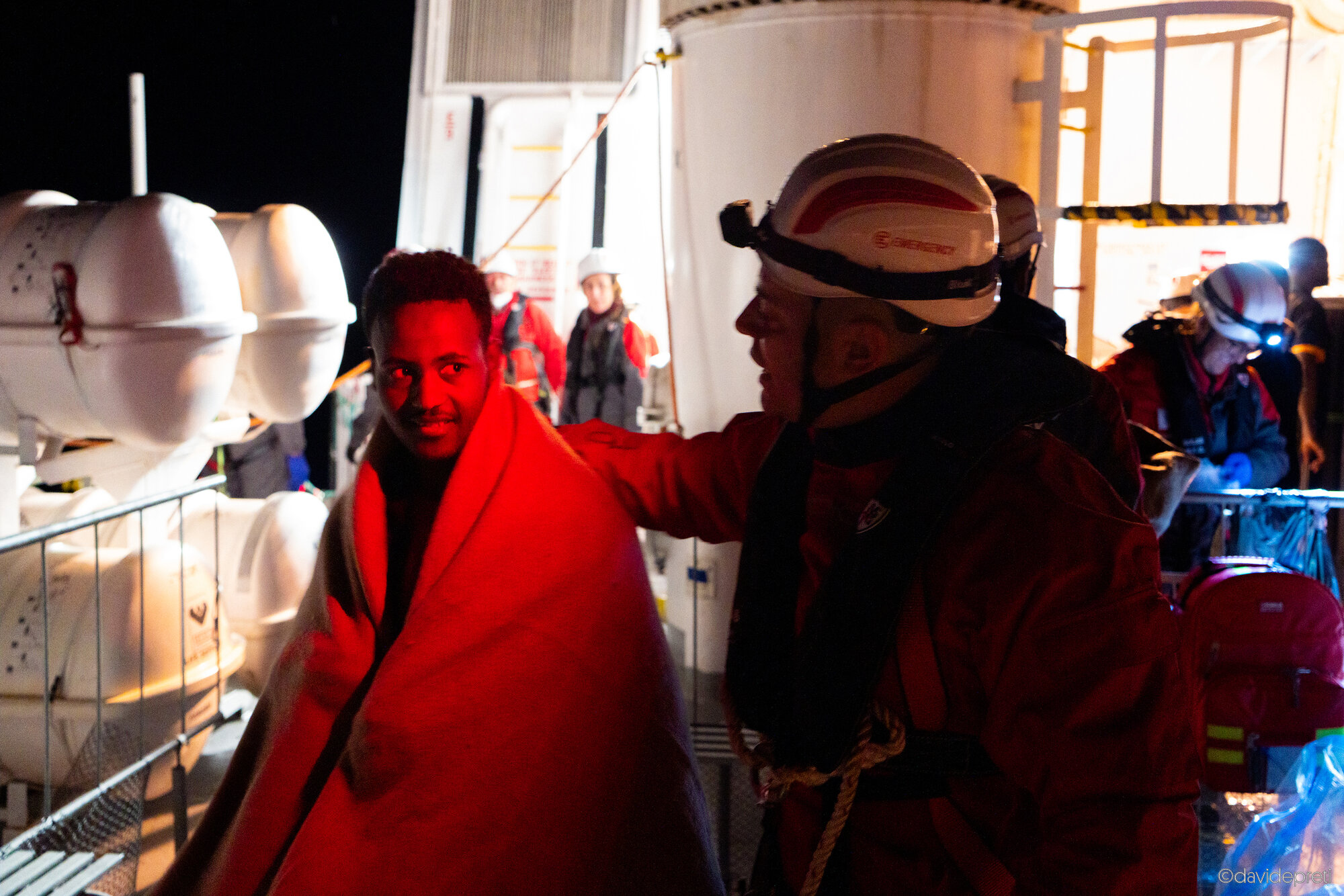
Central Mediterranean Sea — March 25, 2023.
In the Welcome Area, the doctor, together with nurses and cultural mediators, ascertains the castaways' medical conditions. The most common conditions found in the rescue are hypothermia, dehydration, muscle pain caused by the inability to move for more than 24 hours and burns from the mixture of sea water and petrol created inside the boat.
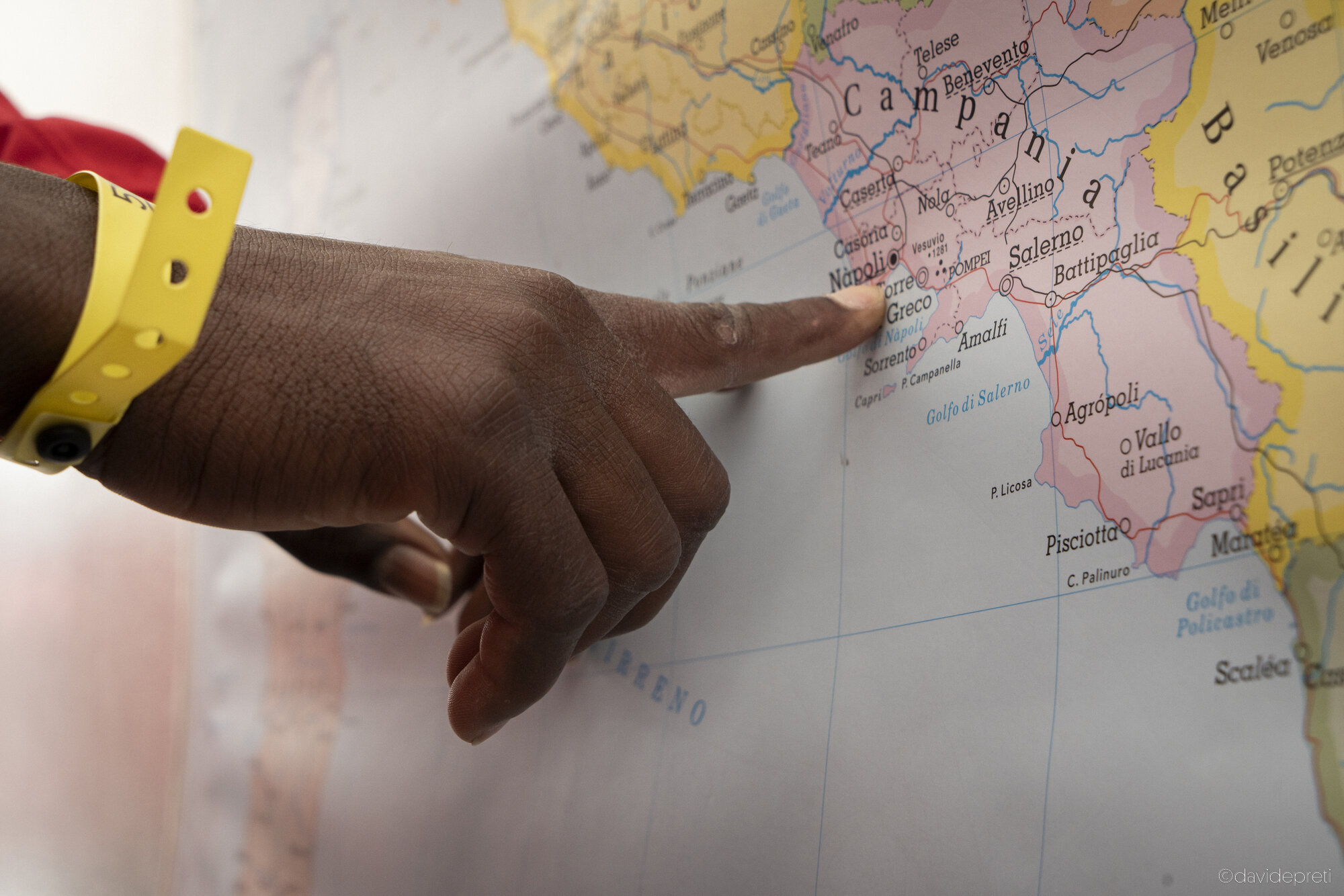
Central Mediterranean Sea — May 5, 2024.
A survivor points to Naples on a map of Italy located on the ship's covered deck.
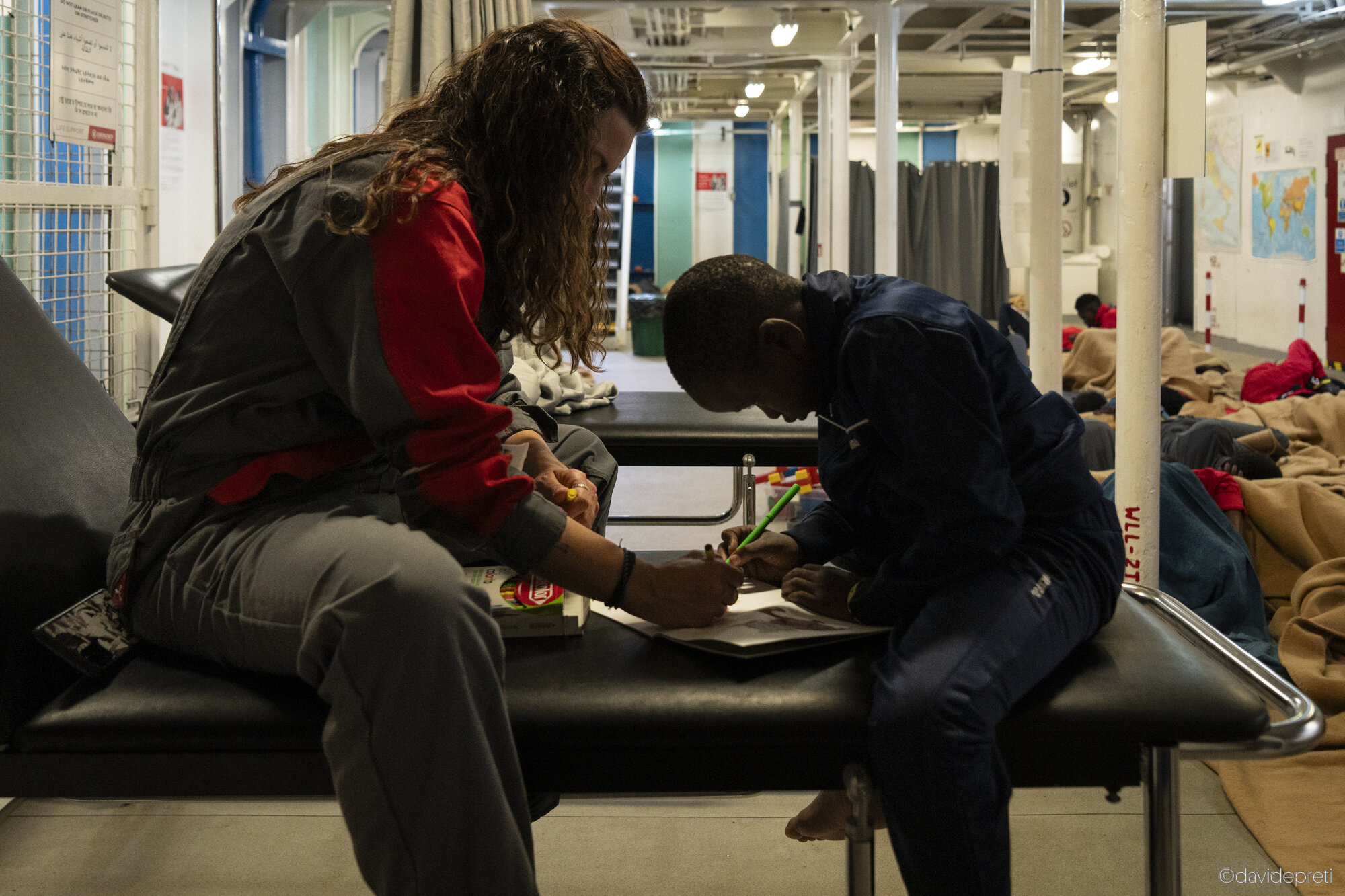
Central Mediterranean Sea — May 4, 2024.
Sara, a nurse aboard the vessel, and M. pass the long hours of the voyage drawing together as they head toward the designated Place of Safety (POS).
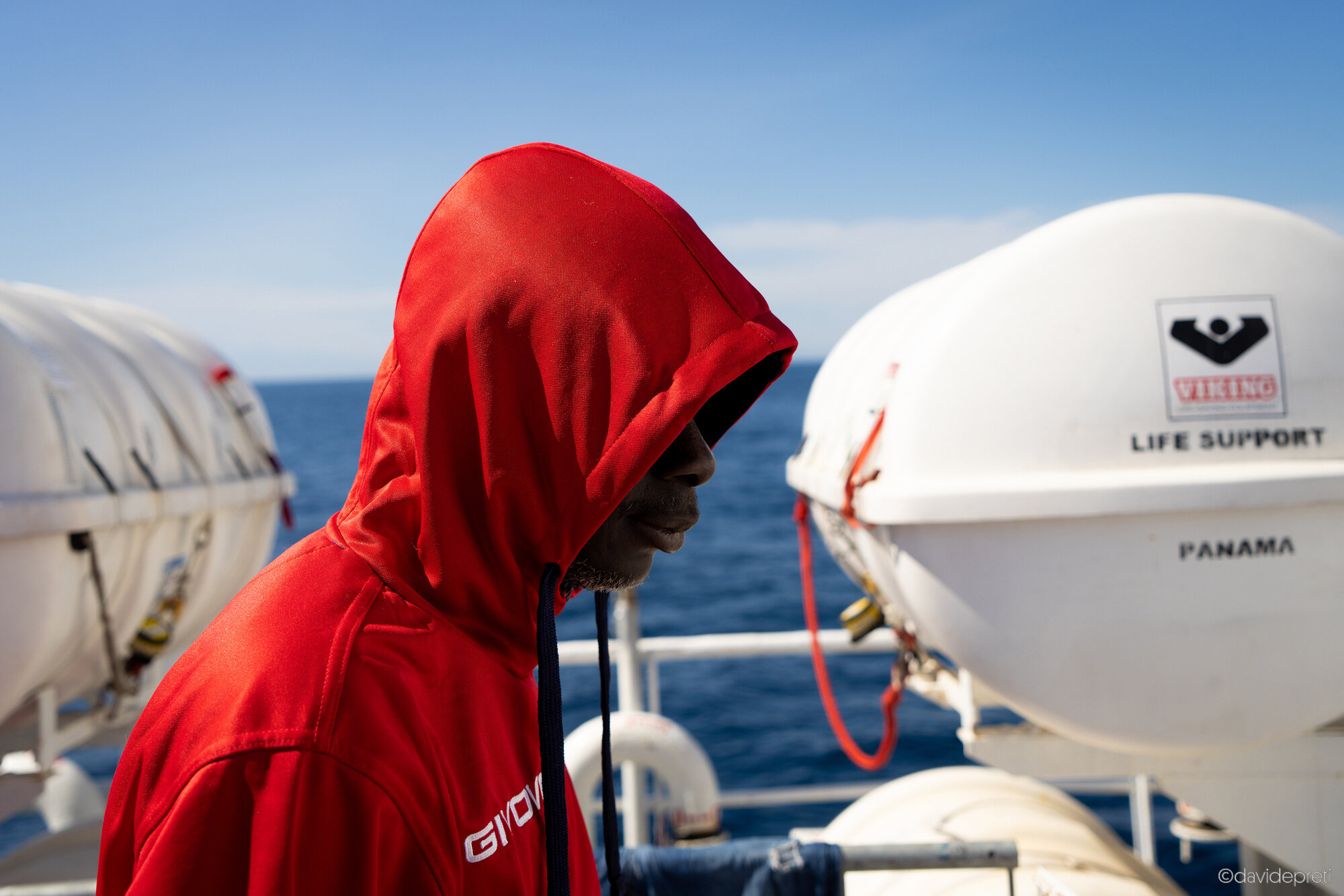
Central Mediterranean Sea — March 26, 2023.
"In 2019 I arrived in Tunisia with my partner. Shortly afterwards little M. was born, now she is one year and three months old," O., 39, from the Ivory Coast, tells me. "I come from the north of my country and if by 30 you are not married with at least three children it is a big problem. My parents started threatening me with 'black magic', they wanted to decide my future wife. So, in 2019 I was forced to leave my country." O. and his future wife A. travelled to Mali, then Niger, Algeria and finally Tunisia. Twenty of them had left but many stopped in Algeria. "We decided to continue to Tunisia, where we got married shortly afterwards. As soon as I became aware of the Ivorian Union in Tunisia, I immediately joined. I was a very active member in the association, I was the delegate in my neighbourhood. We used to map useful services for Ivorians in the area, helping them find work or housing and we use to meet often. I don't remember when, but at some point I started to get stopped on the street by Tunisians. They would ask me if I was a terrorist and if I was planning an attack with the people I was meeting. One evening, on my way home, I was stopped by a group of about 15 people. Firstly they started to provoke me, then to beat me, they broke glass bottles and hit me on the back. I decided to leave immediately with my wife and our little M.. They are now in Genoa and have recently been granted subsidiary protection. I can't wait to hold them in my arms again."
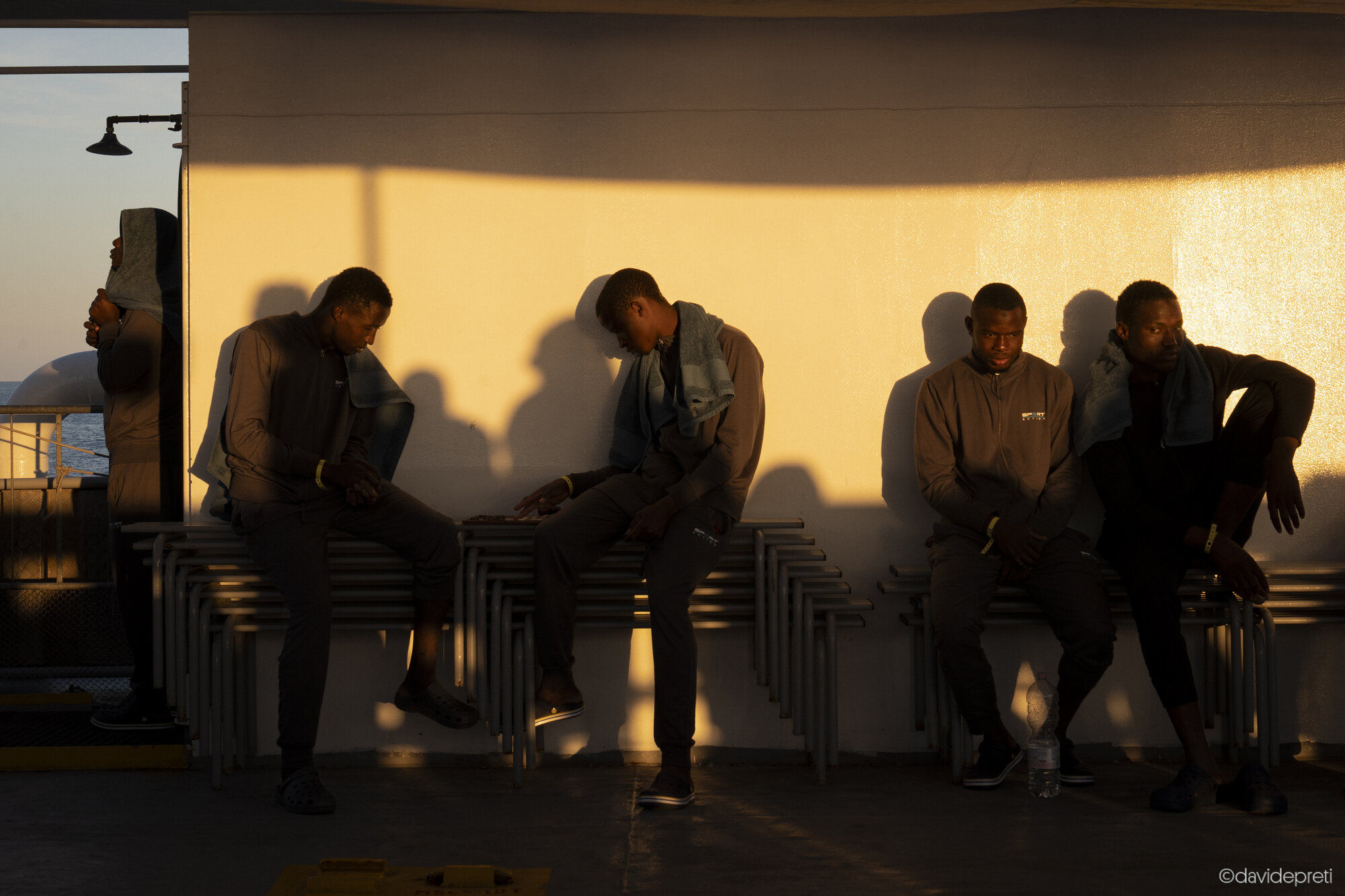
Central Mediterranean Sea — May 5, 2024.
Survivors play chess on the deck of the Life Support during the voyage toward the Place of Safety (POS) assigned by the Italian Navy.
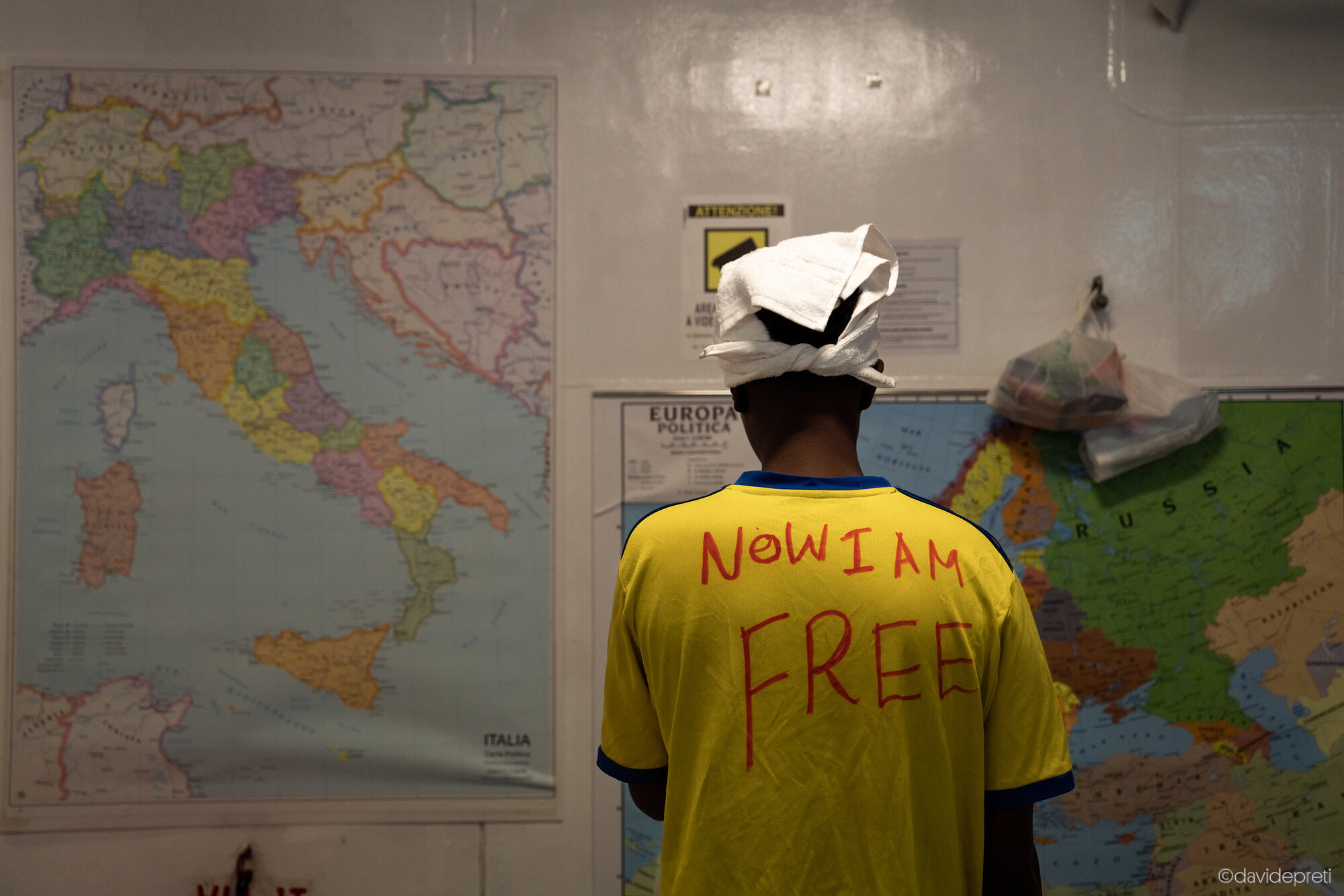
Central Mediterranean Sea — December 21, 2022.
S. is 16 years old. He is Somali. In 2020, he left Mogadishu, crossed Ethiopia, reached Khartoum and then headed for Libya. He wanted to go to England, where he has relatives. He stayed in Libya for two years. Two years in which he was kidnapped, imprisoned, tortured. That is why the day after his arrival he asked for a marker to write on his t-shirt: "Now I'm Free".
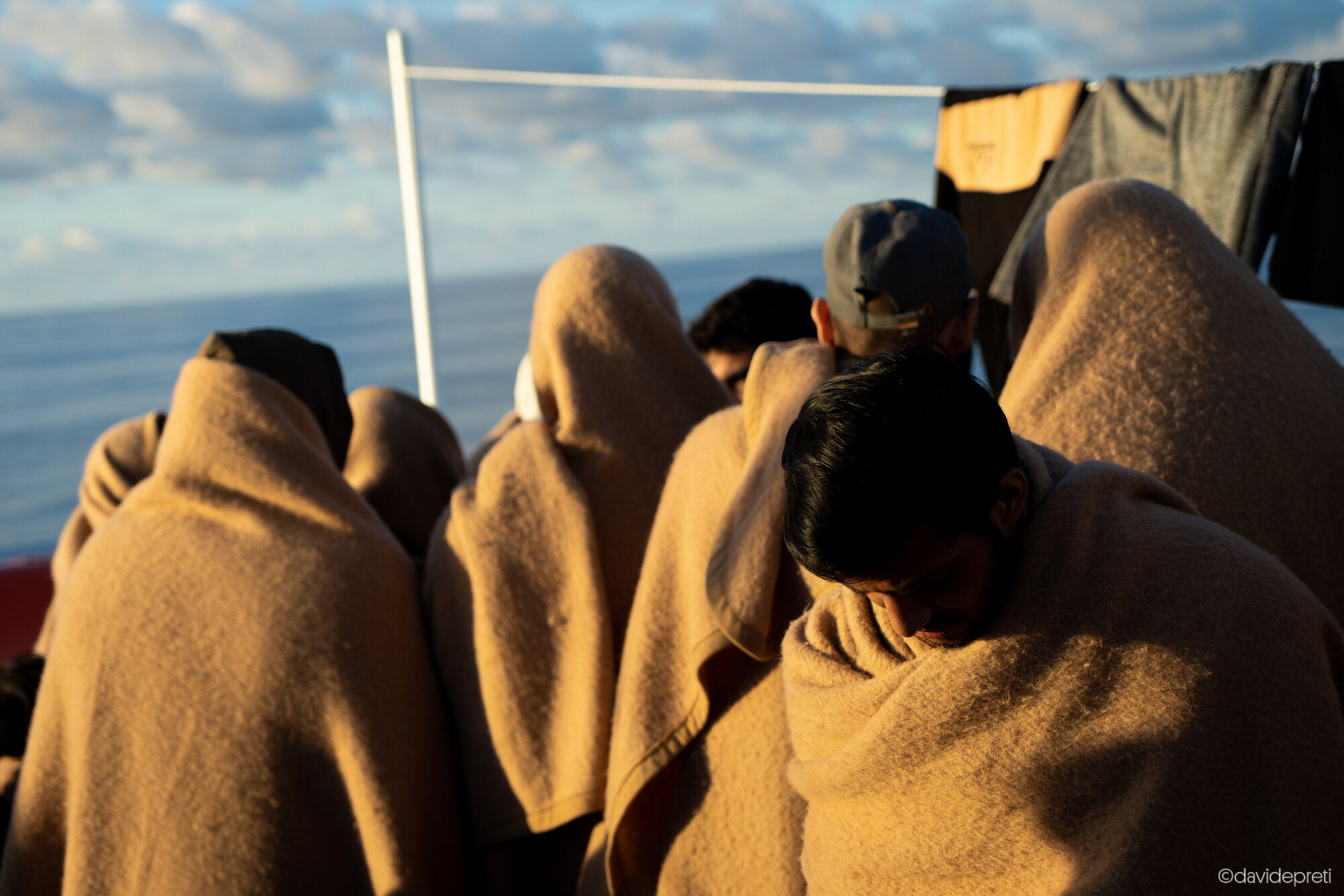
Central Mediterranean Sea — December 20, 2022.
R. is 29 years old and he's Pakistani. He left from Islamabad, made a stopover in Dubai, then Cairo and arrived in Benghazi by flight. In the distressed boat he was lucky because he was sitting on the deck and not in the hold. After about ten hours of journey, tired and a bit drowsy, he slipped into the water. R. cannot swim. Luckily one of his travelling companions managed to throw him an empty petrol can at him that he clung to. That way they were able to get him and bring him back to the boat. R. had to wait more than 20 hours before being rescued.
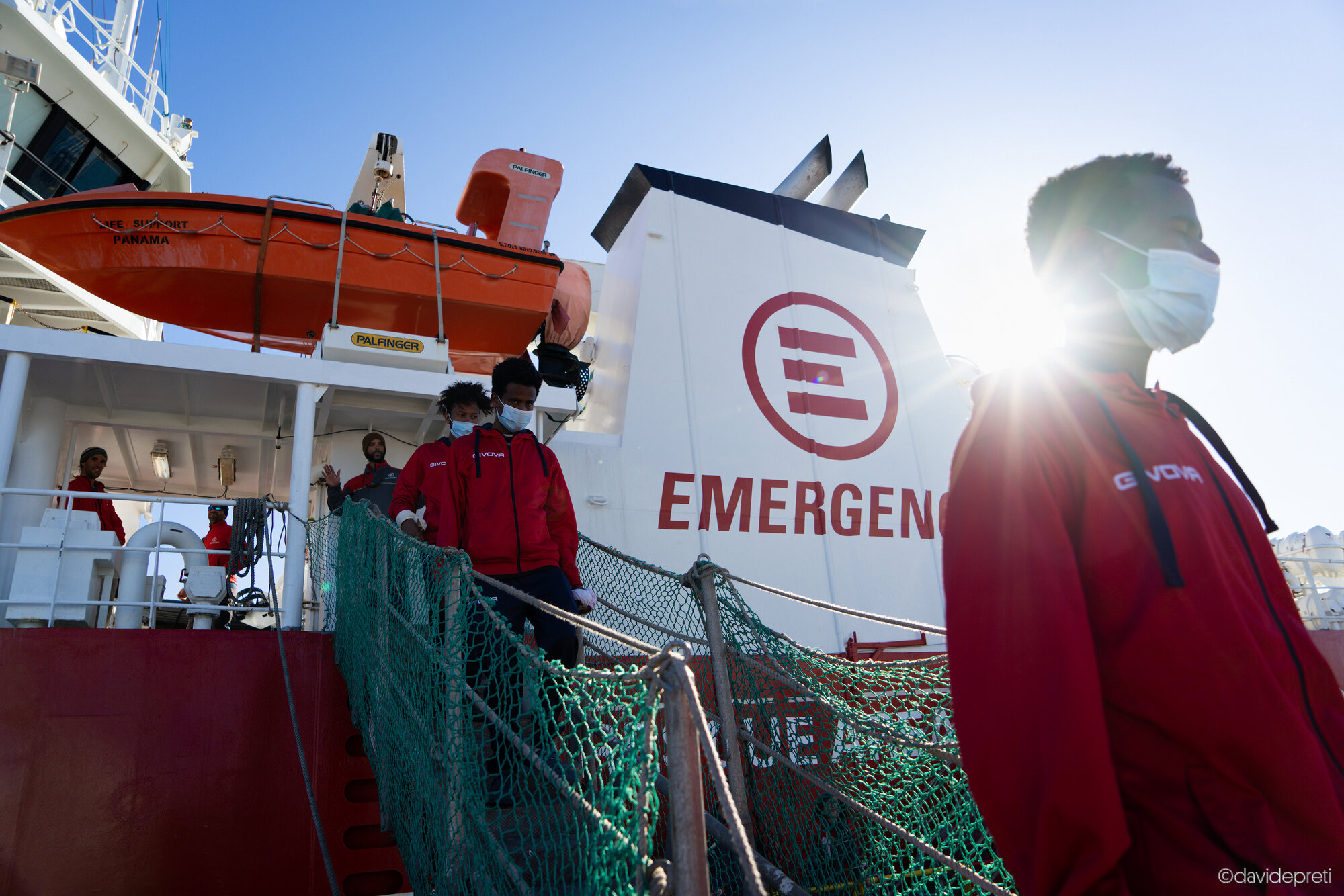
Central Mediterranean Sea — March 28, 2023.
The 161 castaways disembark in Ortona.
Scroll to continue →