Those Who Stayed
The last residents of Ukraine's frontline villages
April 2025
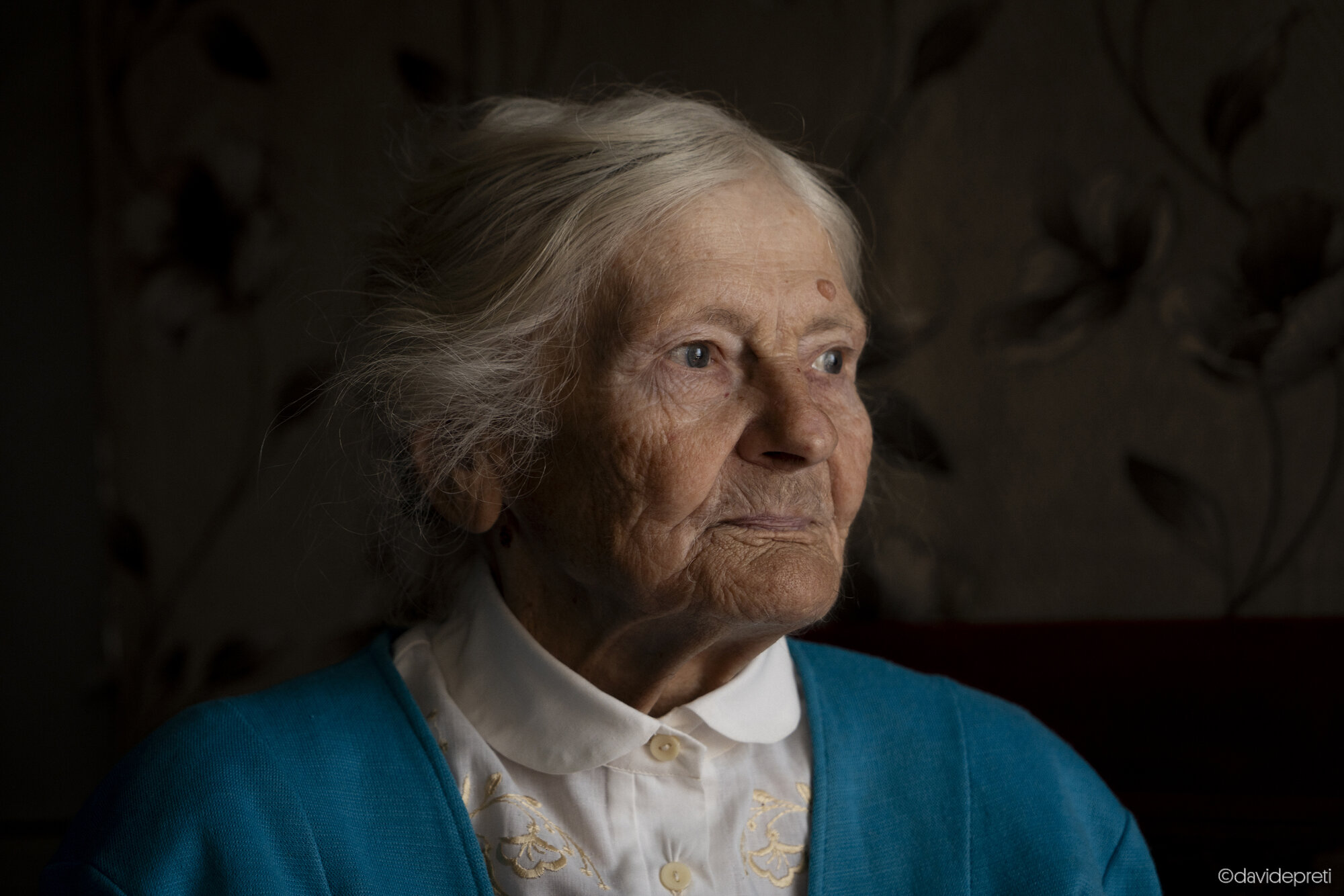
In the frontline villages of eastern Ukraine's Kharkiv and Donetsk oblasts, years of war have emptied entire communities. Those who remain are often the elderly, alone, and unable to leave — cut off from regular healthcare, with families scattered or gone.
EMERGENCY runs a network of community health workers who reach these isolated residents village by village, bringing medication, checkups, and often the only human contact of their week.
Visual journalist Davide Preti documented this work across two missions, in October 2024 and April 2025.
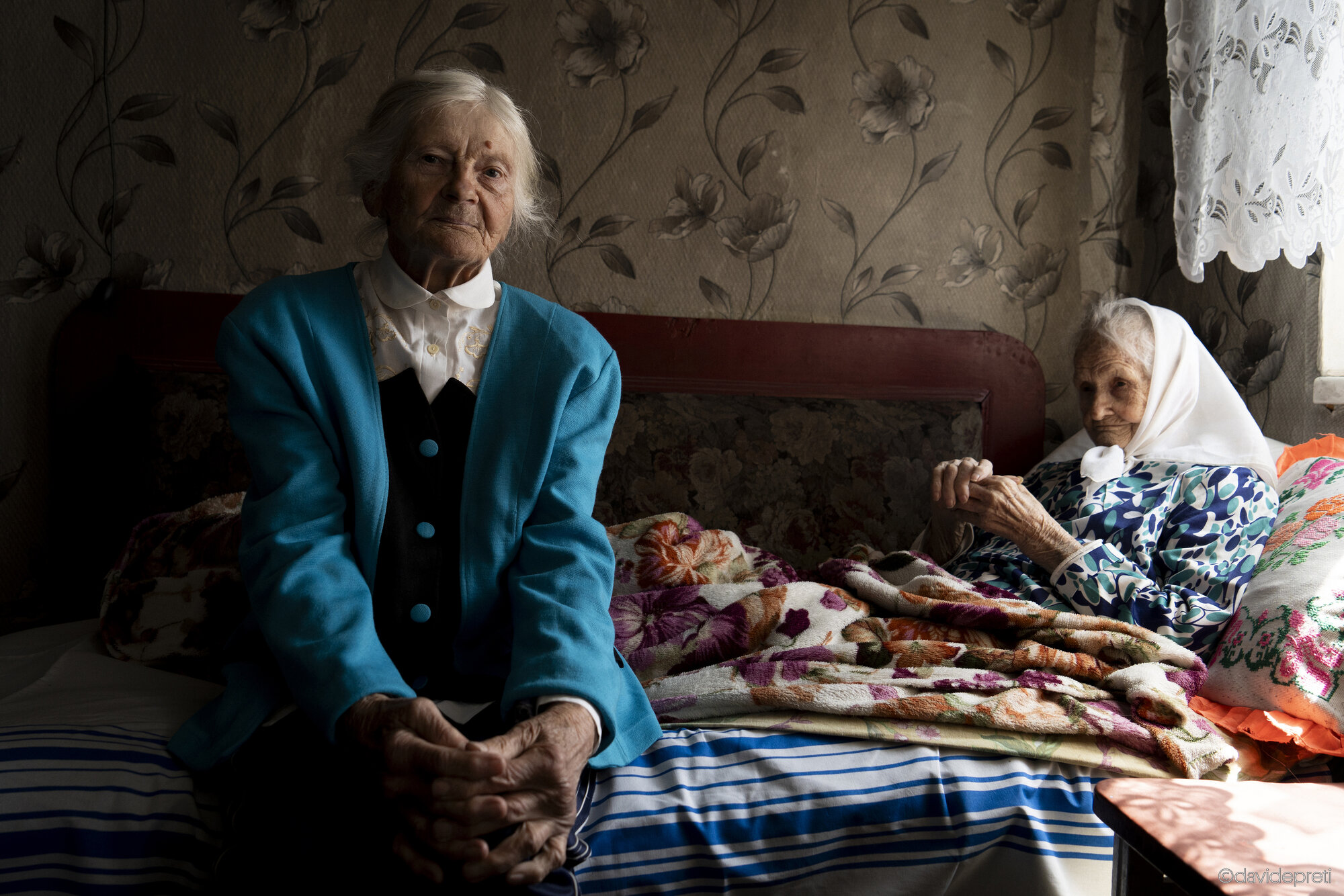
Dmytrokolyne, Ukraine — April 18, 2025.
OLGA - 100 yo, ANNA - 95 yo
I was born in 1925; there were five of us. In 1932, I lived through the Holodomor. I was only five years old, but I remember it well. By fifteen, it felt like things were getting better, but then in 1941, war broke out. I was sixteen. They took us to dig trenches, even though we were skeletal from hunger.
In 1942, a German took me to Germany by force. I remained there for four years. I returned at the end of '45 and found only my bedridden, paralyzed mother, my 14-year-old brother, and my 11-year-old sister. My father was gone. So I went to work at the kolkhoz. My mother died in '46. I was 21 years old, with two children to care for. In 1947, hunger returned. I worked all day, and in the evening my brother and sister would run to me crying: "We're hungry…" All we had to share were beets.
In 1948, I volunteered to go to Dnipro to rebuild the city destroyed by the war. The foreman didn't want to let me go, but in the end, the kolkhoz chairman gave me permission. We worked hard there: we laid 16 meters of railway track a day. Then we built a hospital, and finally, we helped divers from Moscow lay pipes in the Dnipro River. While working one day, a log fell on my left foot: shattered bones, torn skin. They performed emergency surgery and managed to save my foot. I stayed in the hospital for a month and a half.
When I recovered, I went to Kramatorsk because there was too much poverty in my village. I worked for four years at NKMZ (a large heavy engineering plant) as a painter. Then I got married and had a daughter, so I stayed home for two years. Afterwards, I returned to work at a large cement and slate factory. It produced the gray bricks you still see in buildings today. I worked there until 1977, and later found a job at the Kuibyshev factory, where I stayed until retirement.
Today I live here, in my village, about an hour and a half from Kramatorsk. This is where I was born, and where I always returned to help. I painted, repaired walls, and worked in the garden. Then my husband fell ill. He died in 1989, at only 57 years old. I was left alone with my daughter. She got married, and my grandson was born. But her husband drank too much and lost several jobs. In the end, he took his own life. So I stayed with them, always trying to help them however I could.
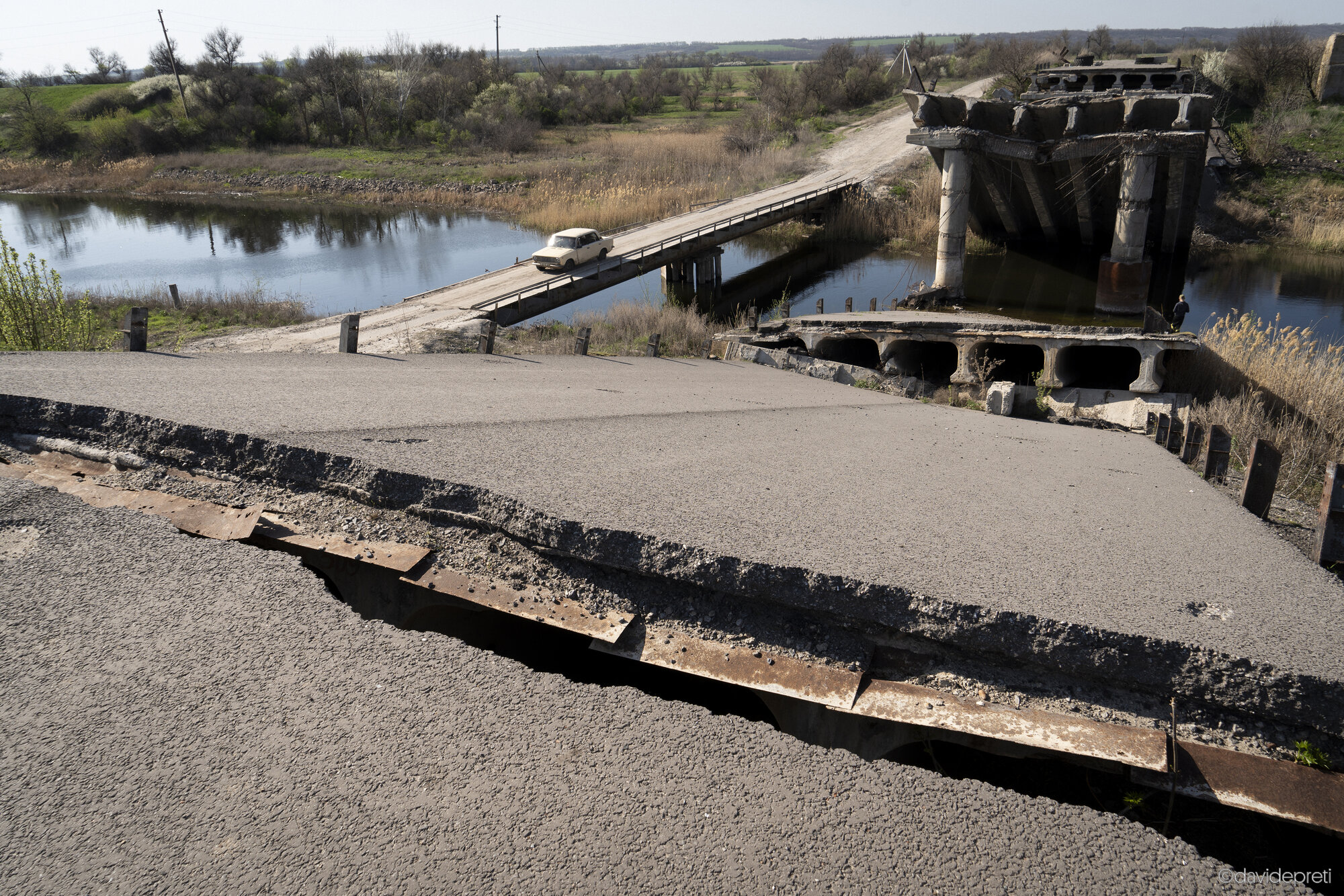
Barvinkove, Ukraine — April 18, 2025.
A classic Trabant car crossing a temporary bridge built after the main crossing was destroyed, connecting the Donetsk and Kharkiv oblasts in rural Ukraine.
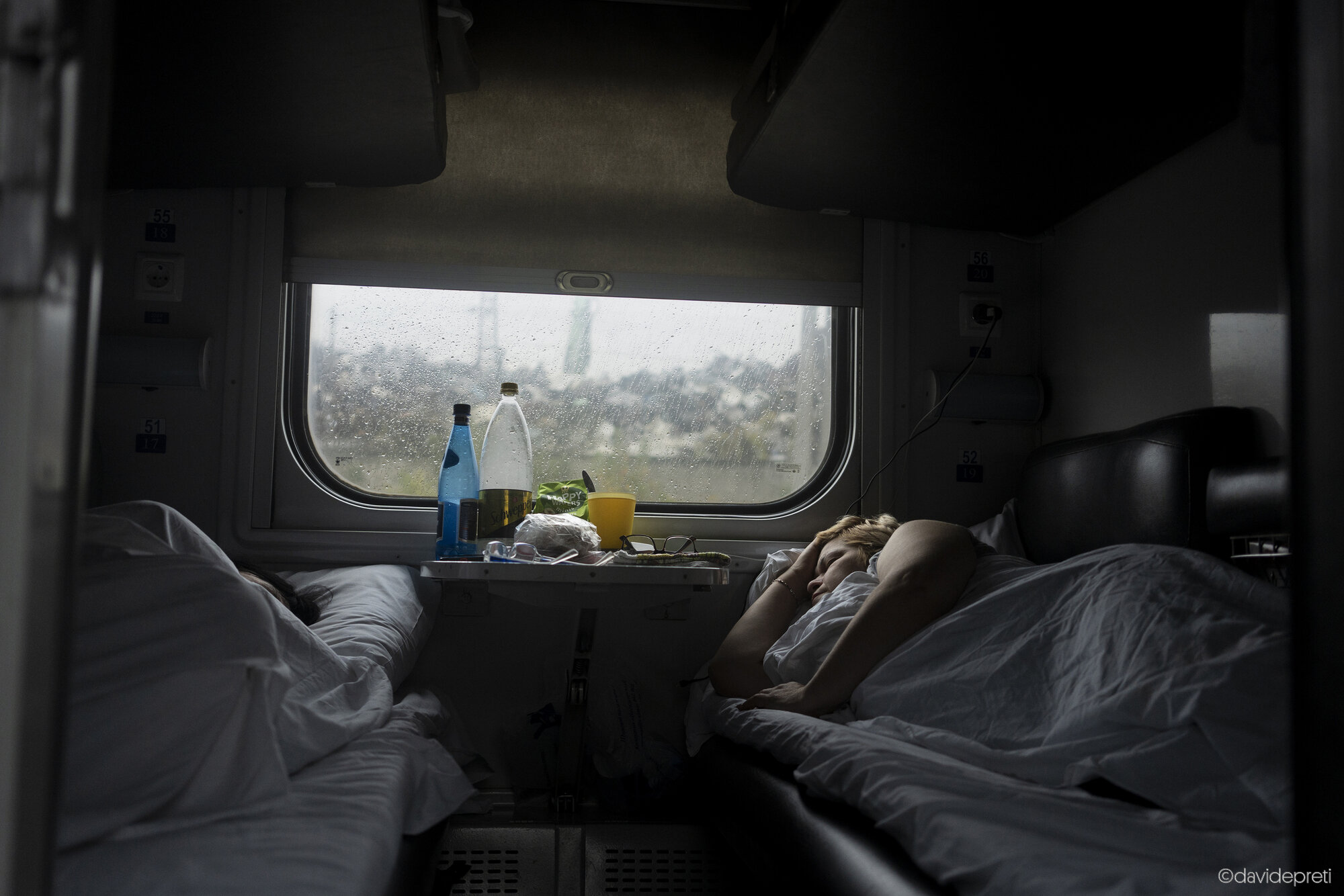
Lviv, Ukraine — October 12, 2024.
Two women resting during the long journey from Przemyśl to Dnipro.
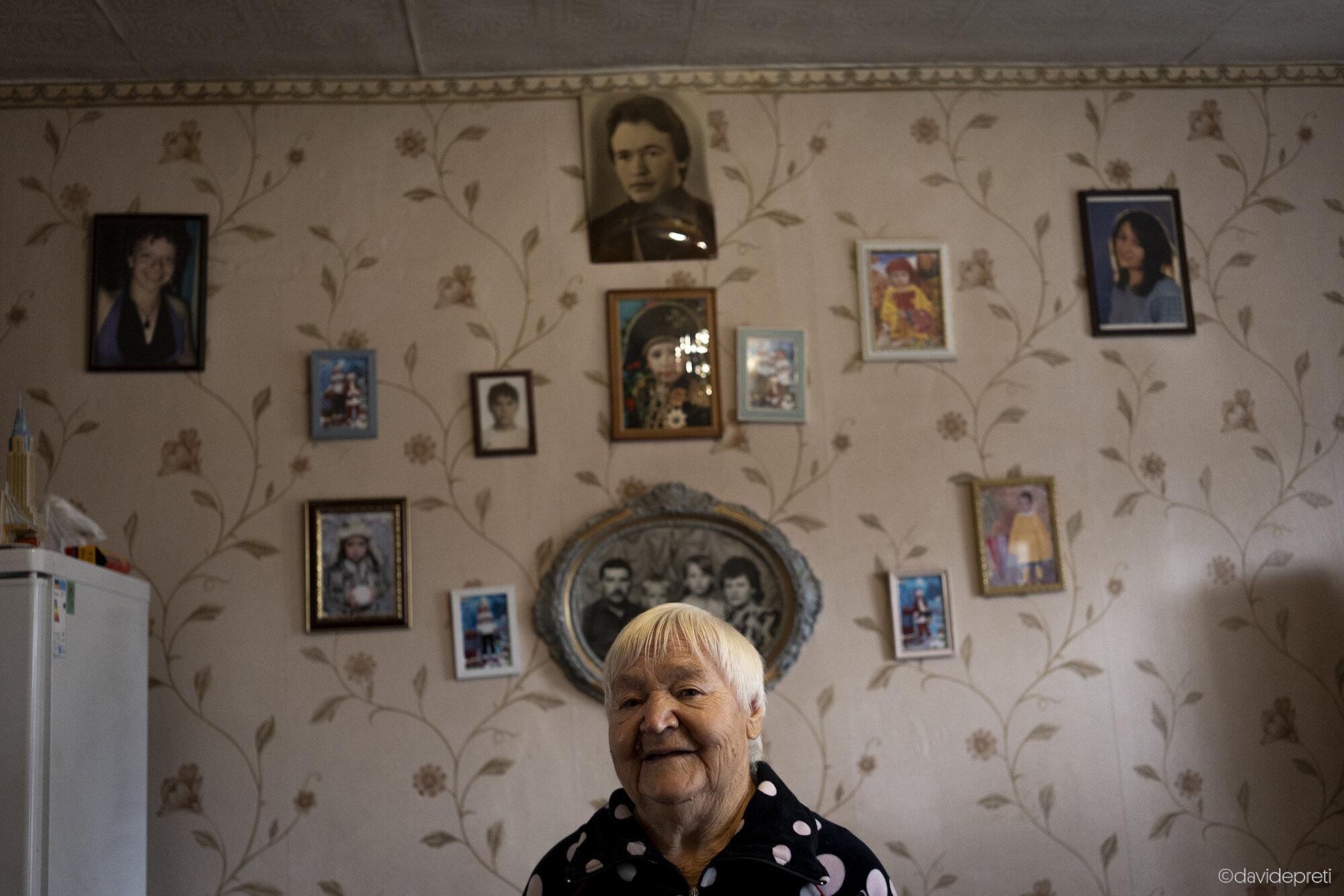
Dmytrokolyne, Ukraine — October 16, 2024.
KATERINA - 87 yo
"I was outside slaughtering chickens when my daughter told me you had arrived. I ran inside to wash up and put on my finest dress.
I'm 87 now, but luckily I don't have any major health issues. I live right across from the clinic EMERGENCY set up, so if I need anything, I go right over. This morning, for instance, I went to get my blood sugar checked.
I live alone, but I have a large family: two children, four grandchildren, and seven great-grandchildren. My son left for Lviv at the beginning of the war and hasn't returned since. My daughter fled to Kharkiv with the grandchildren, but she has come back now and lives nearby. She visits me every day, but for two years I was completely alone in this house. I tended the garden, cleaned, fed the chickens. It was hard, but you know what I missed the most? Talking to people. I know everyone here, from the youngest to the oldest.
Thank you so much for creating this clinic. It's right in front of my house, and it's wonderful! And Anna, the CHW, is fantastic. When she comes over, we sit and chat and spend a good deal of time together.
At 87, I never imagined I'd be chatting with Italians in my garden! I'll be waiting for you next year—I'm always happy to have guests!"
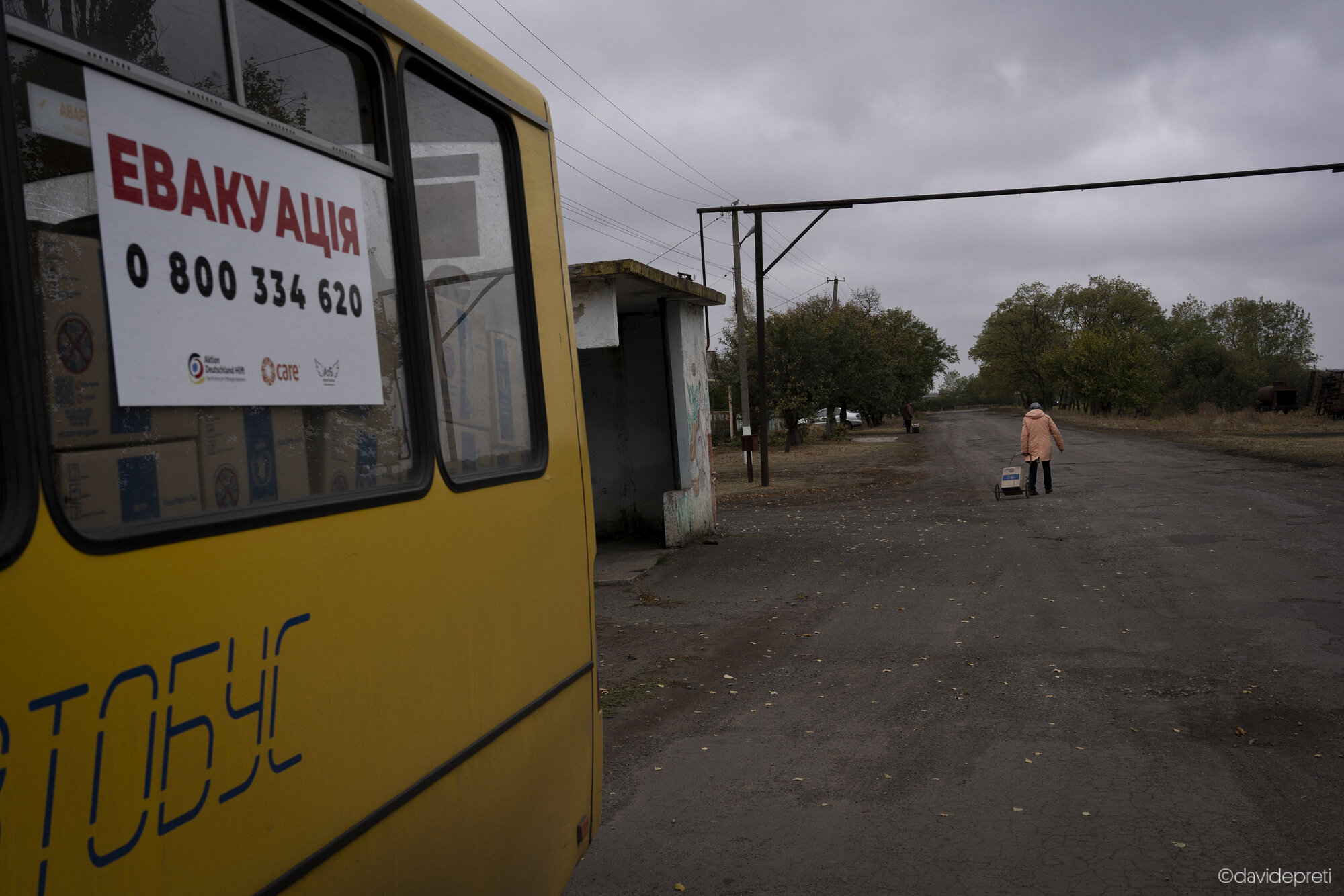
Myrna Dolyna, Ukraine — October 18, 2024.
An elderly woman returning home after collecting a food and hygiene kit provided by the World Food Programme.
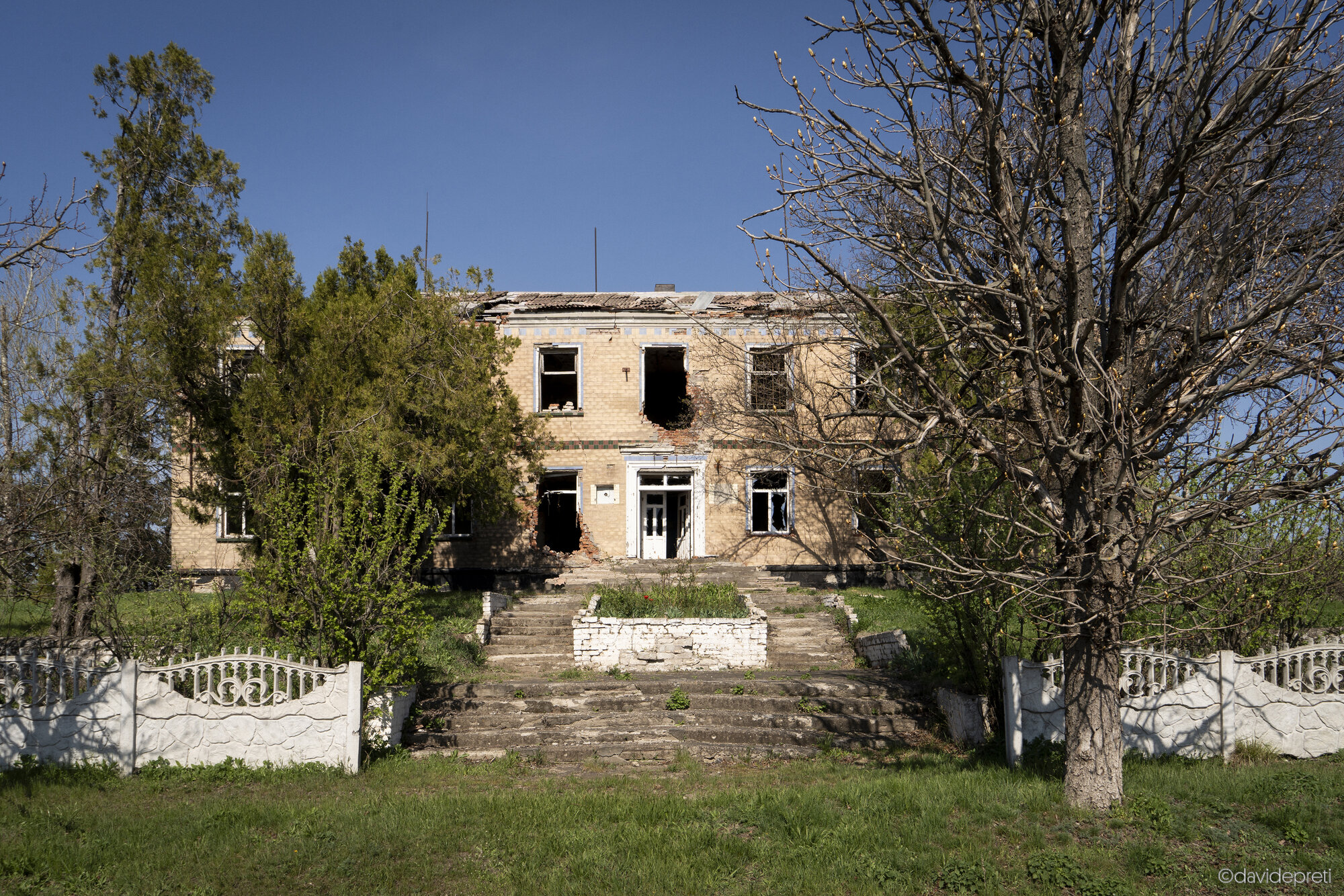
Barvinkove, Ukraine — April 18, 2025.
The gutted shell of a school building following heavy shelling in southern Kharkiv Oblast.
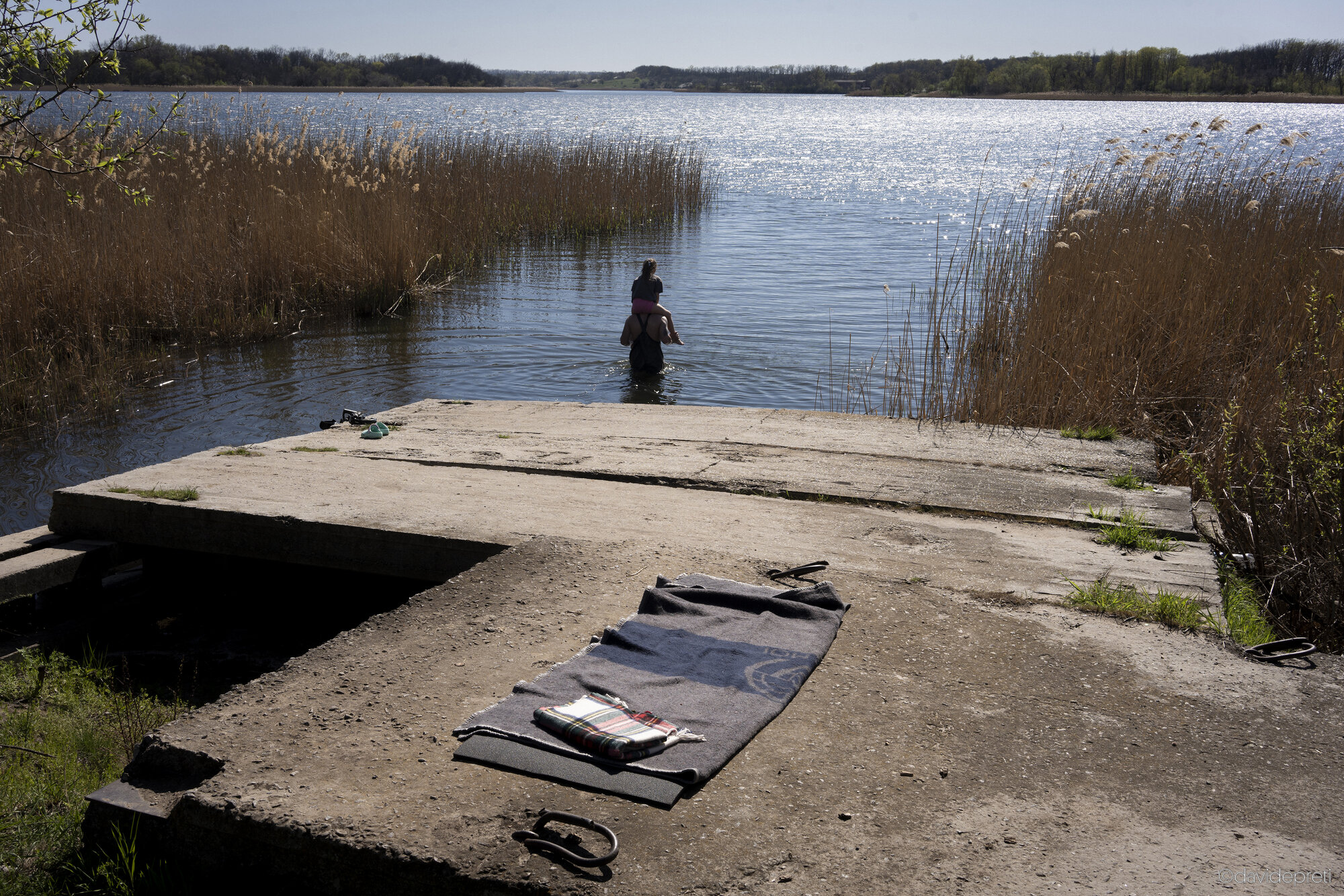
Lozova, Ukraine — April 19, 2025.
A father relaxing on the riverbank with his daughter.
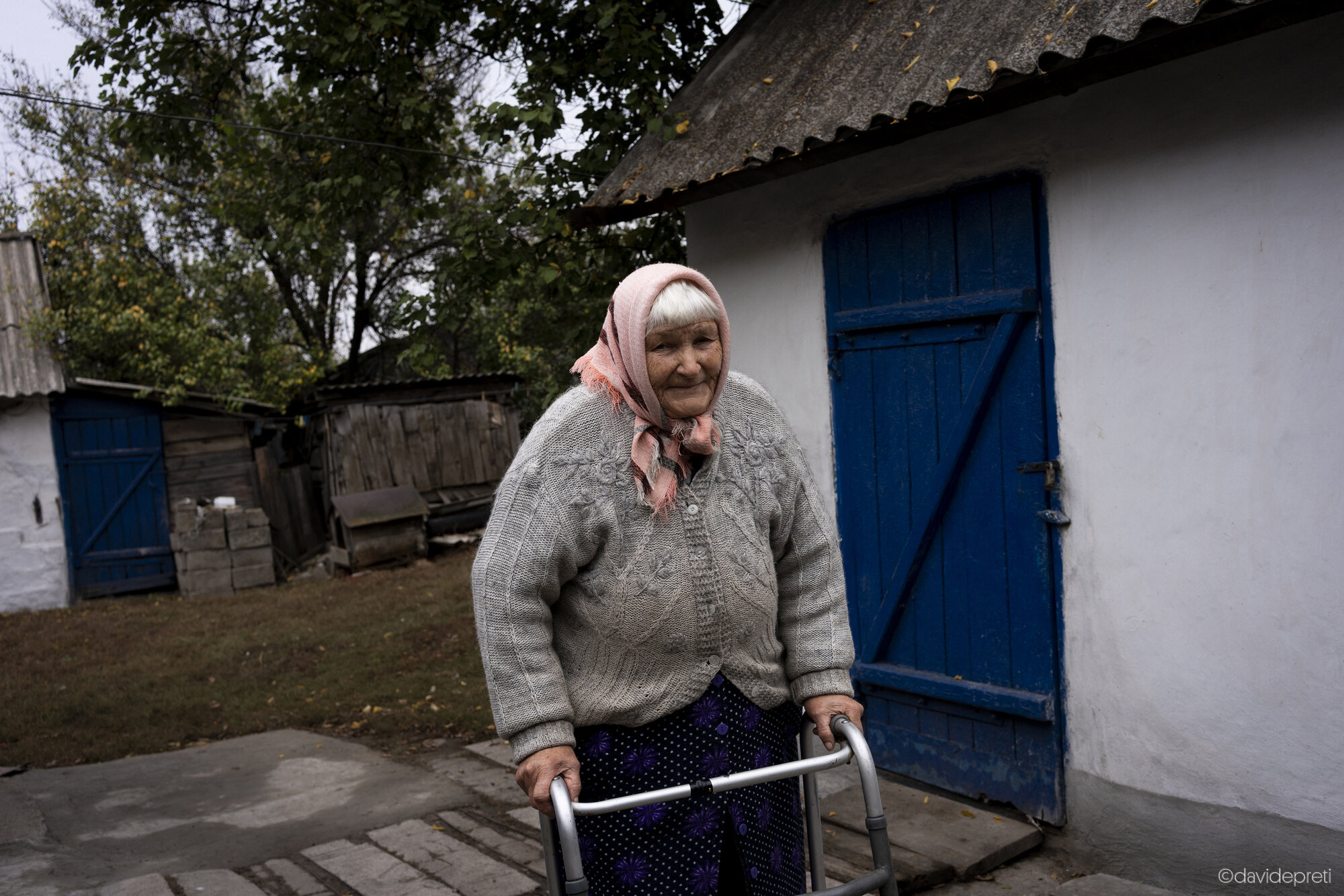
Myrna Dolyna, Ukraine — October 16, 2024.
LUDMILLA - 78 yo
"I feel a bit better today, but when it's cloudy, my bones ache and I have to take my medicine—otherwise the pain keeps me in bed. I'm really glad to have Natalia as my healthcare worker, and she's also my neighbor. I'm not just saying this because she's sitting right next to me, but truly, she's available for anything. I call her and she comes right away to help me.
These services are essential. I hope they continue for a long time, because people like me need care—someone to come visit us, even just to ask how we are."
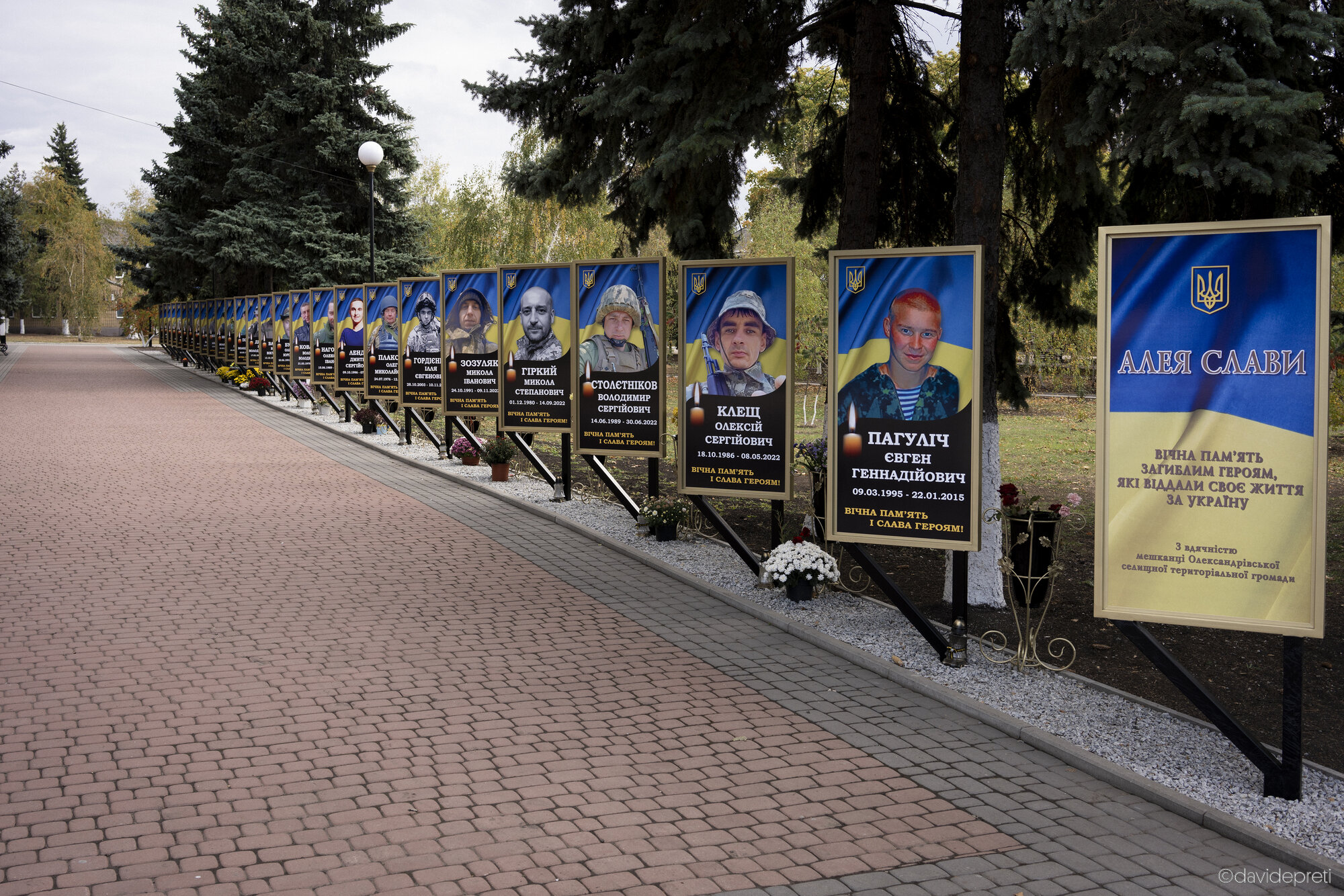
Blyznyuky, Ukraine — October 16, 2024.
A memorial inside the central park honoring those killed in the ongoing war.
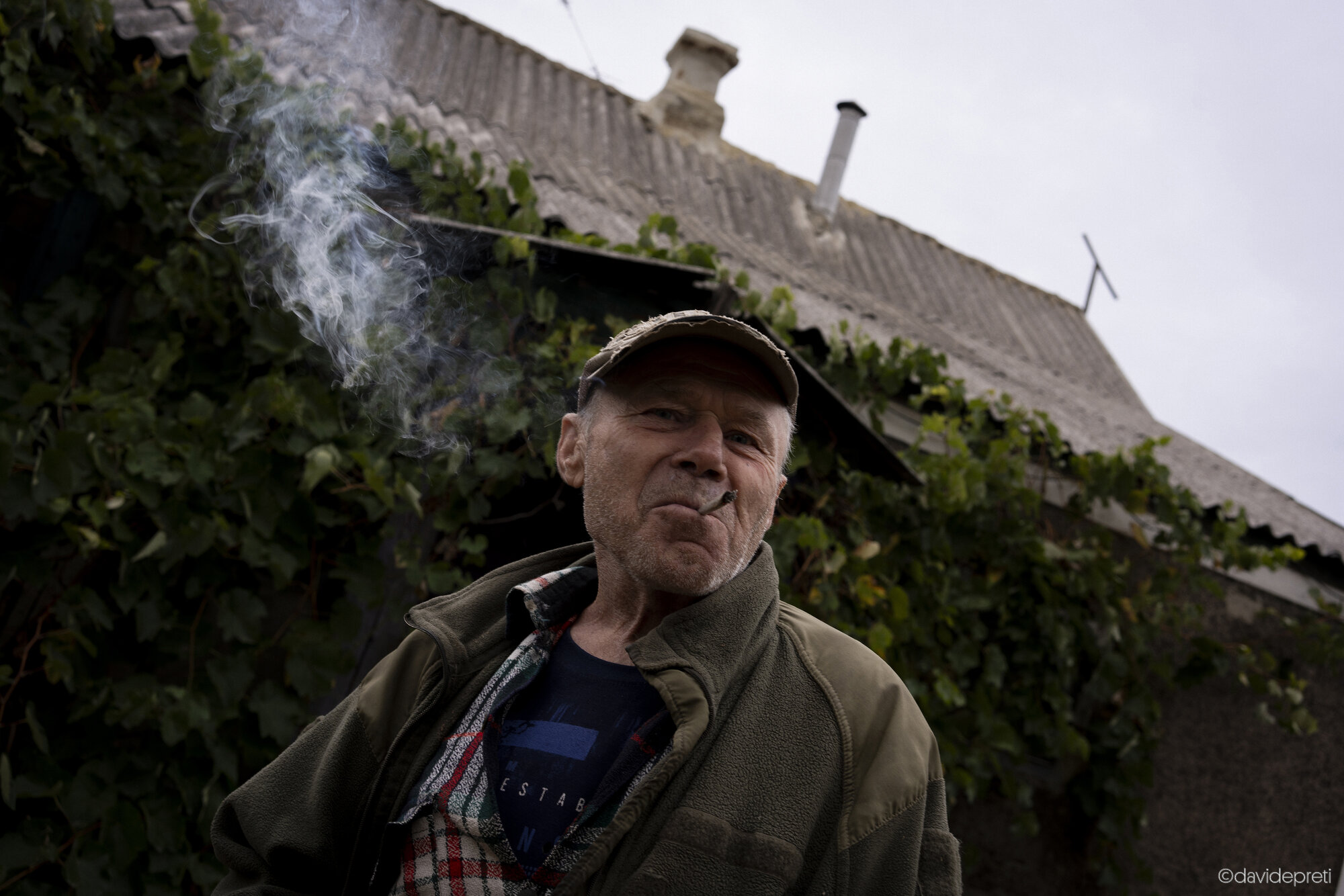
Maryevca, Ukraine — October 16, 2024.
VICTOR - 57 yo
"My husband has been disabled for twenty years. He had a severe accident while working in a workshop. When the weather is bad, like today, he suffers a lot: he can't move his arms, and he gets sad because he struggles even to eat or move. On days like this, I have to feed him myself, otherwise he won't eat. In the summer, though, he does a bit better.
This is my life—taking care of him. Now we are all alone. Our only daughter fled with her family to the Kharkiv region and hasn't returned yet. We haven't seen her for almost two years. We need someone like Natalia, someone to help us, because otherwise it's just the two of us facing all these hardships.
An old proverb says: 'If we stay alive, we won't die.' That's how we live, with the sole hope that peace will come soon."
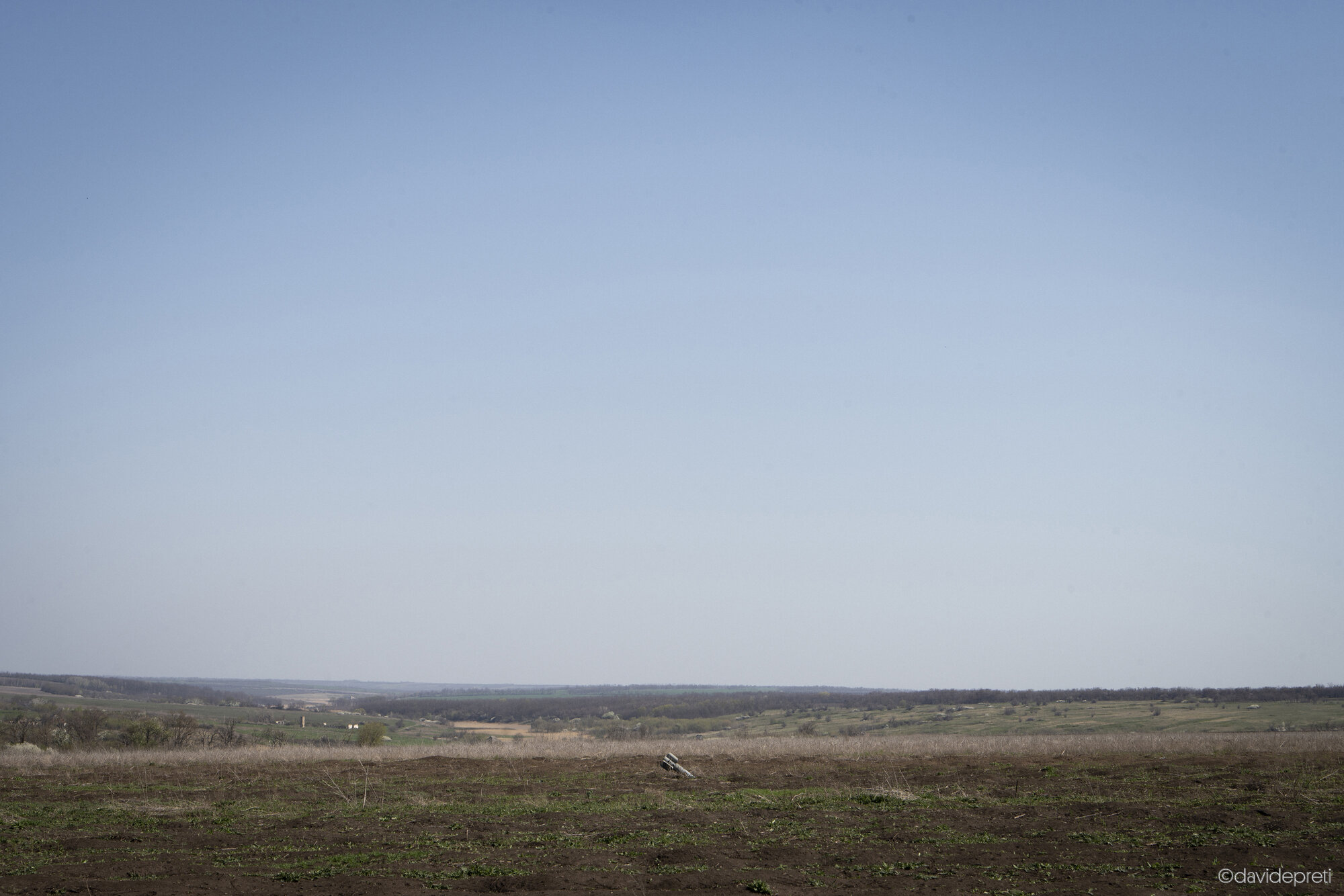
Barvinkove, Ukraine — April 18, 2025.
An unexploded missile lying in the countryside of Kharkiv Oblast.
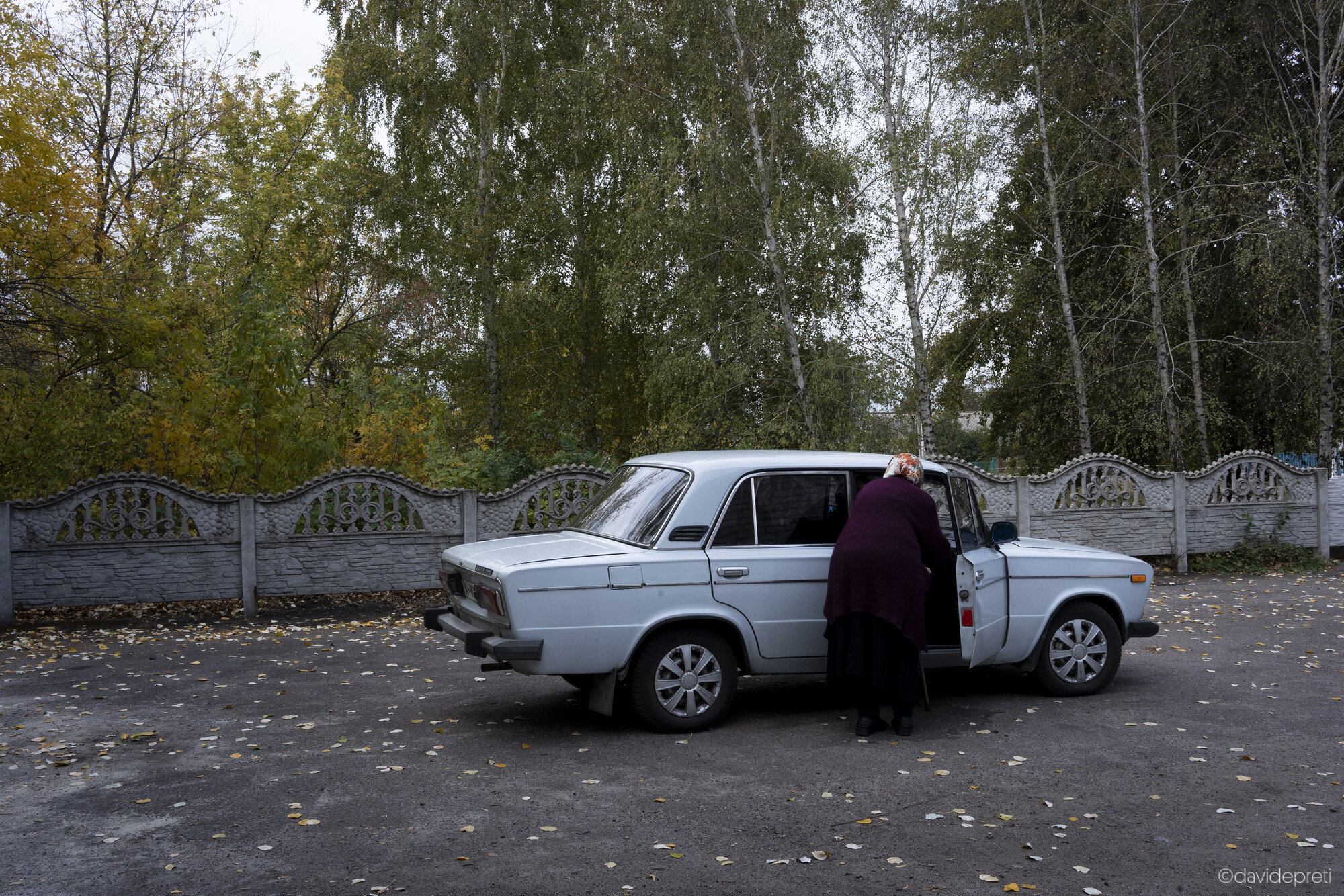
Novopodolvka, Ukraine — October 17, 2024.
An elderly woman returning home following a checkup at the EMERGENCY clinic in Nova Petrovska village.
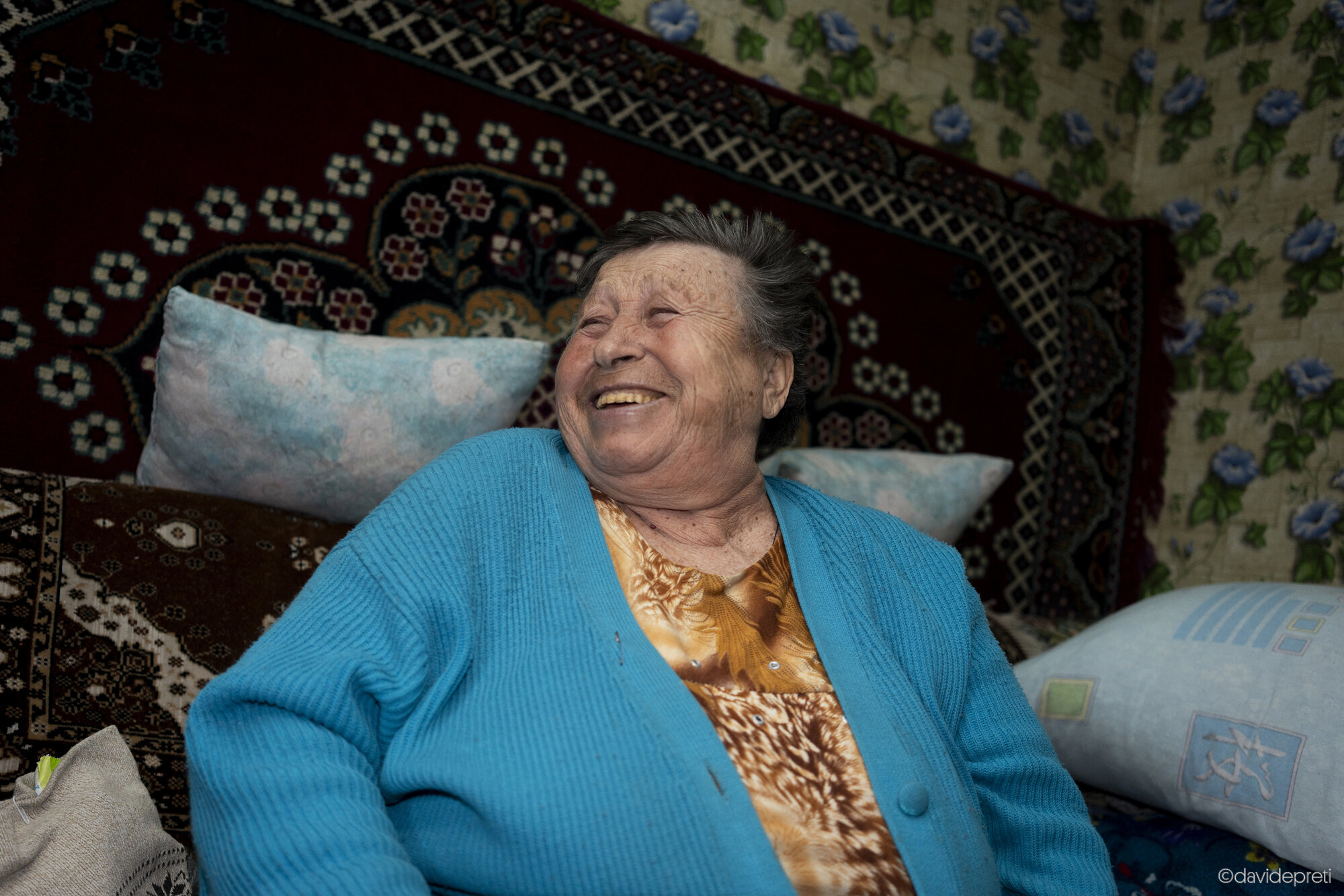
Maryevca, Ukraine — April 16, 2025.
ALINA - 80 yo
"When I was fifteen and a half, I went to Kostroma—which is even further than Moscow, near the Volga River—to study weaving at a vocational school. I graduated there and then went to university. During that time, I also took skydiving and precision shooting courses. I have a certificate and a special pin to prove it.
Once I finished university, I decided to go back home because I missed my parents. Initially, I went to Donetsk, where I found a job. But when Perestroika started, I lost my job, so I returned here to my village. At that time, my parents were sick, so I started working in a textile factory.
I never got married or had children. I'm single and childless. That's just how it went. Ever since my parents passed away, I've been living alone. I only have my sister, who lives nearby and is very old now.
I could kiss Olena every single day! She is such a huge help. The first time she knocked on my door, she came to get to know me and understand my situation. Then she came back again. She brought me medication and told me it was free. Tanya, the feldsher, told me I needed injections, so Olena and Zhenya (another feldsher) gave me a course of injections.
I always tell them: "Please, don't lock the door." I leave it unlocked so they can reach me easily. They know where everything is; they know where my things are. I am so grateful—they are always helping me. I needed medicine for my leg and a walker. As you can see, I can't walk. I also needed crutches and adult diapers. They brought me everything. We got along so well with them because they were from Donetsk too, just like me. That's why we feel so connected.
When people die, they die. I could say it differently, but it wouldn't change anything. That is the reality. Who wants all this? It's madness. There should have been a ceasefire long ago. Does he stop fighting? No, he keeps attacking. How many children have died? How many adults? How many civilians? How many people have been forced to flee? It's pure madness. It hurts, it makes you angry, it's heartbreaking. How can I describe it in just one word? It's tragic."
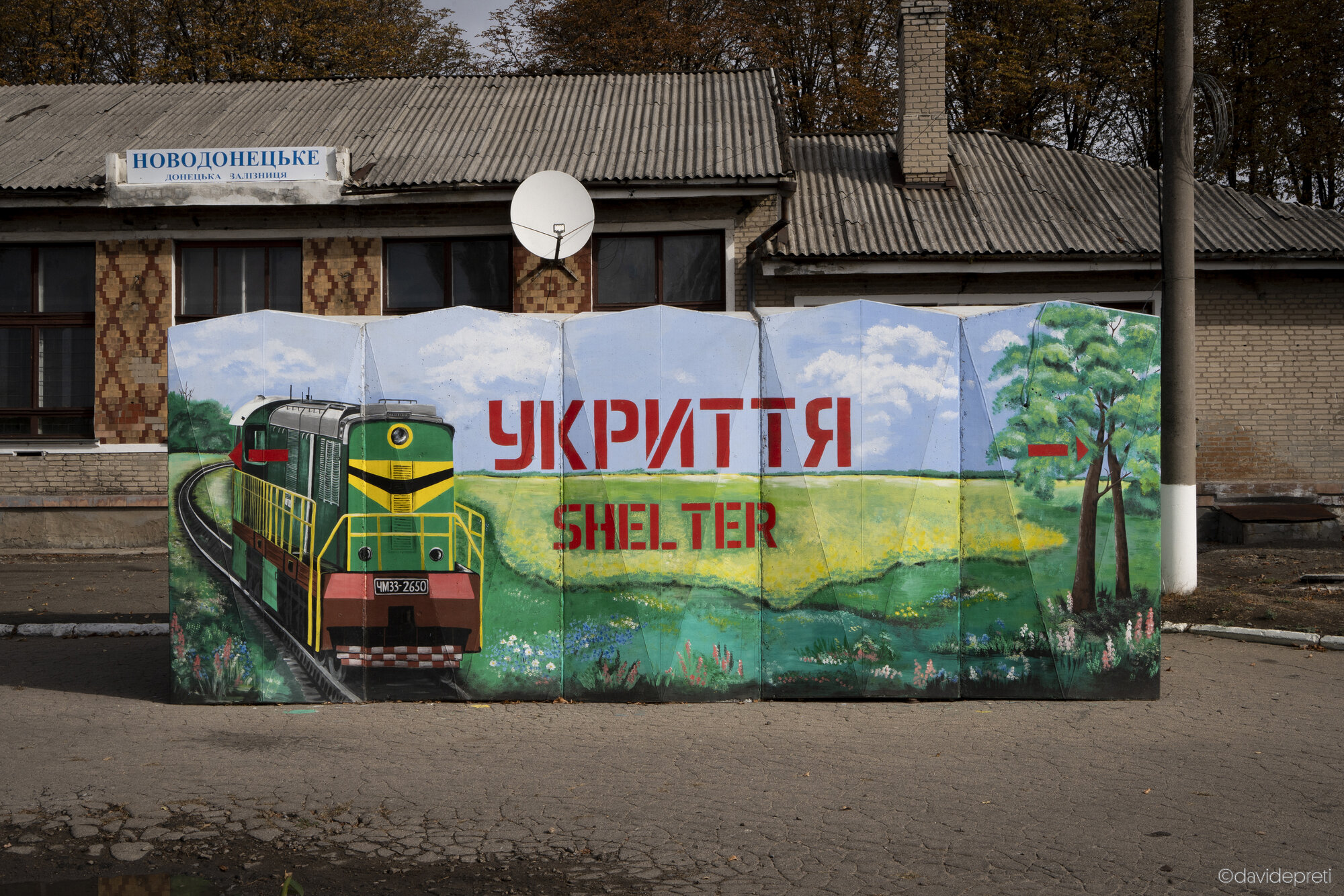
Novodonetske, Ukraine — October 16, 2024.
The entrance to a public air raid shelter located outside the local train station.
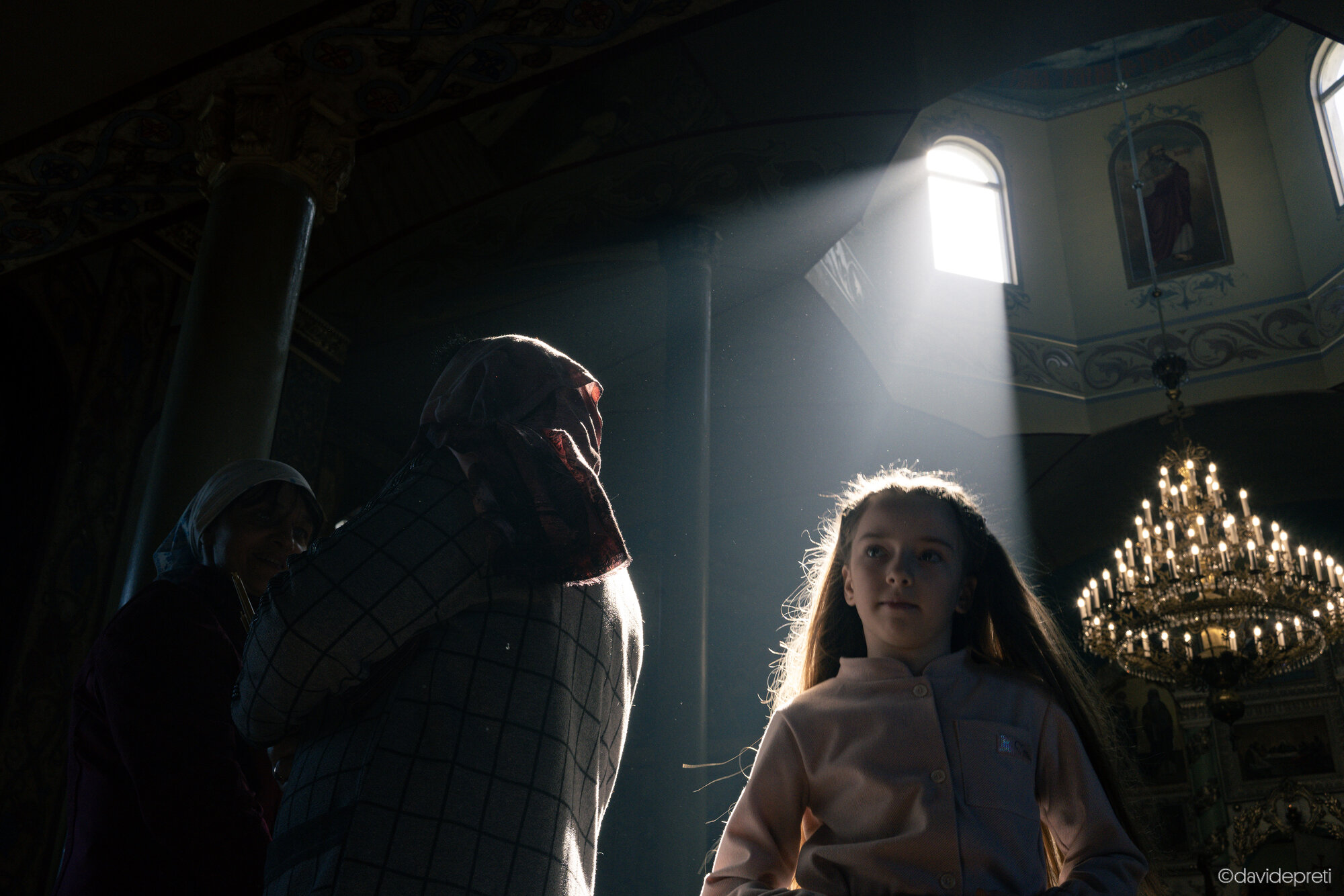
Blyznyuky, Ukraine — April 20, 2025.
A child exits the Orthodox church in Blyznyuky after the ceremony.
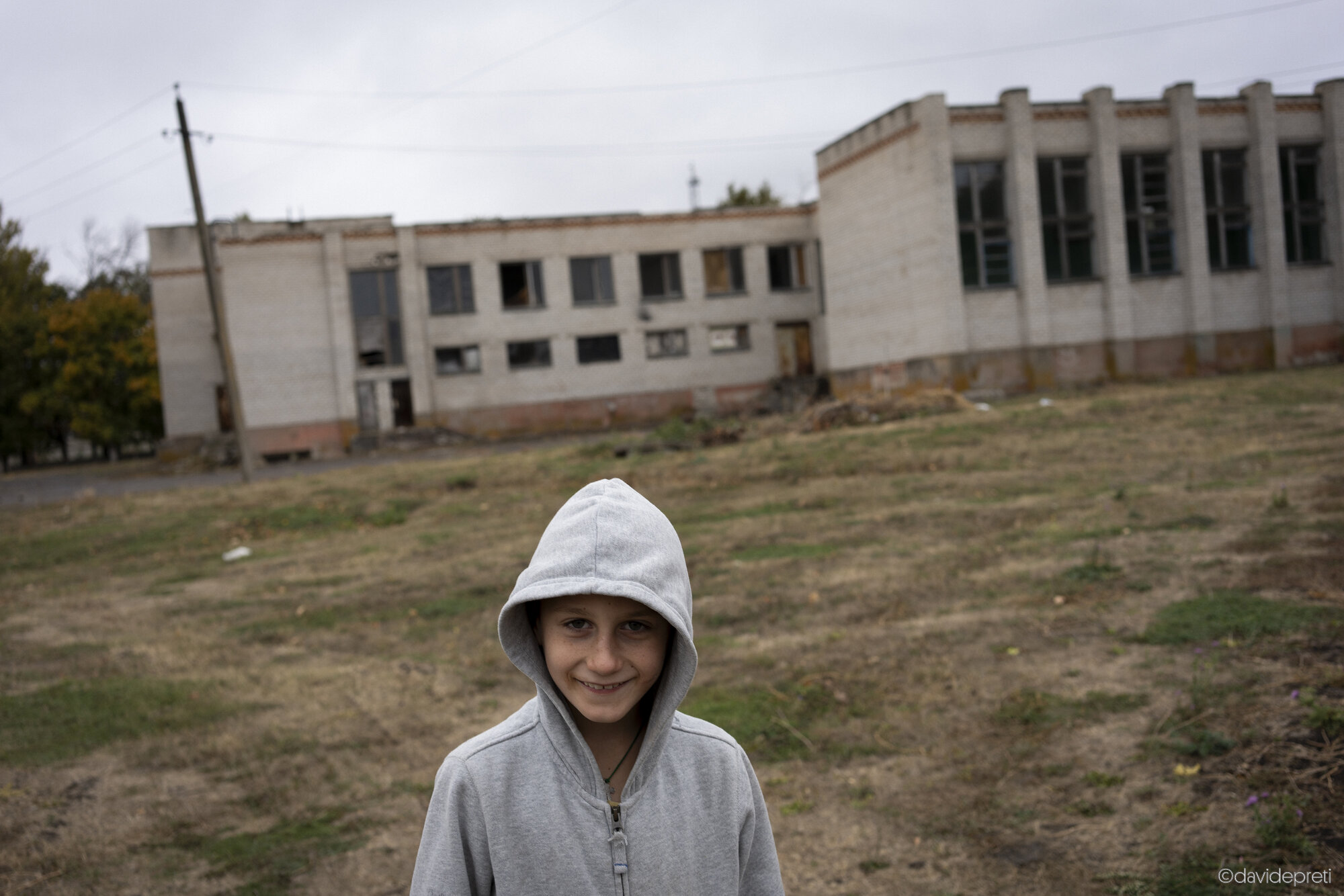
Mar'ivka, Ukraine — October 18, 2024.
A child standing outside his school, which was deemed unsafe following heavy bombardment.
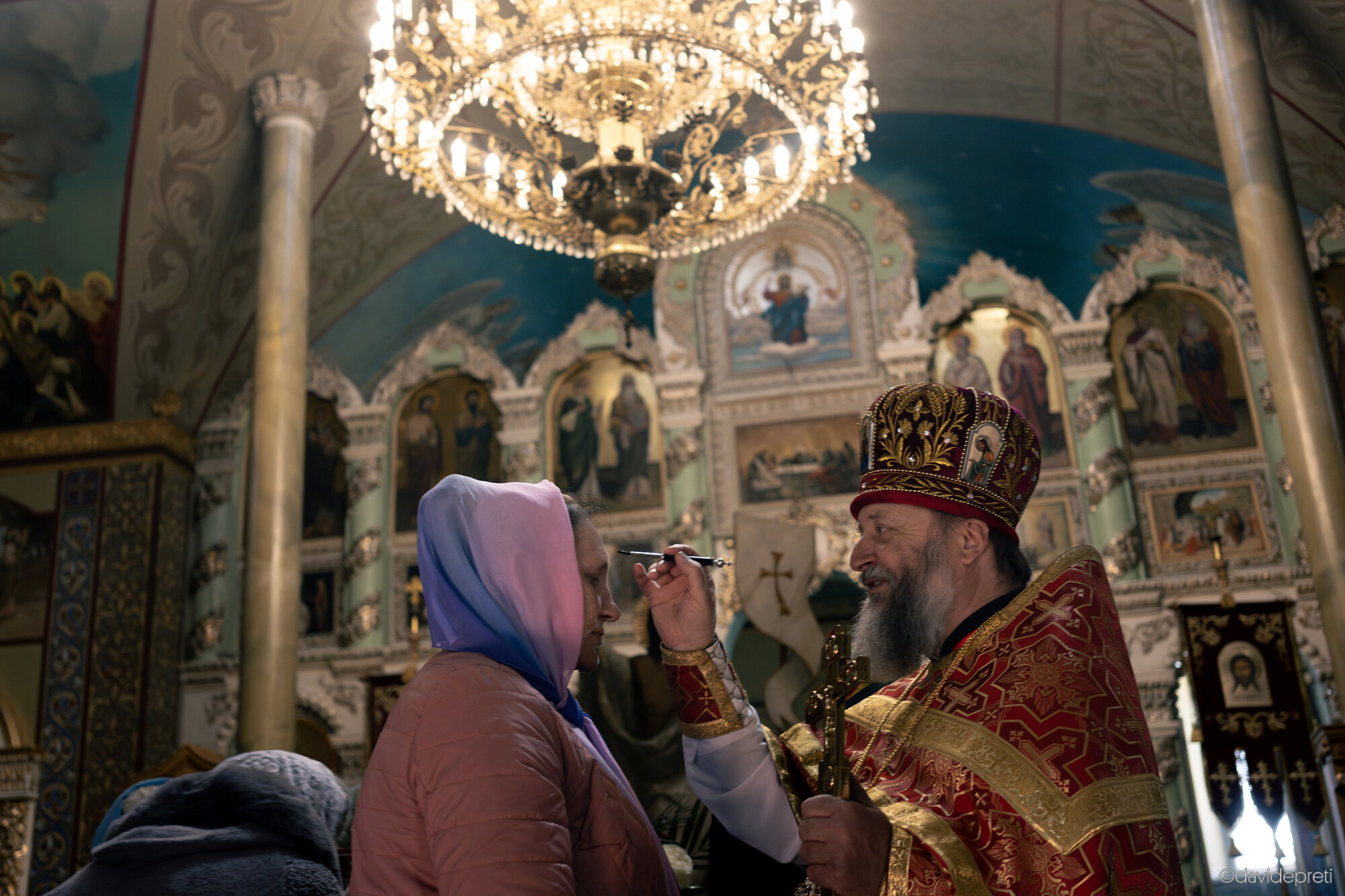
Blyznyuky, Ukraine — April 20, 2025.
An Orthodox priest blesses members of the local community during Easter service in Blyznyuky. Following three years of severe wartime restrictions, the 2025 Orthodox Easter was celebrated amidst a brief, mutually agreed ceasefire between Russia and Ukraine.
Scroll to continue →