The Days at the Hospital Were Happiness
Inside Sudan's only hospital that never closed
November 2025
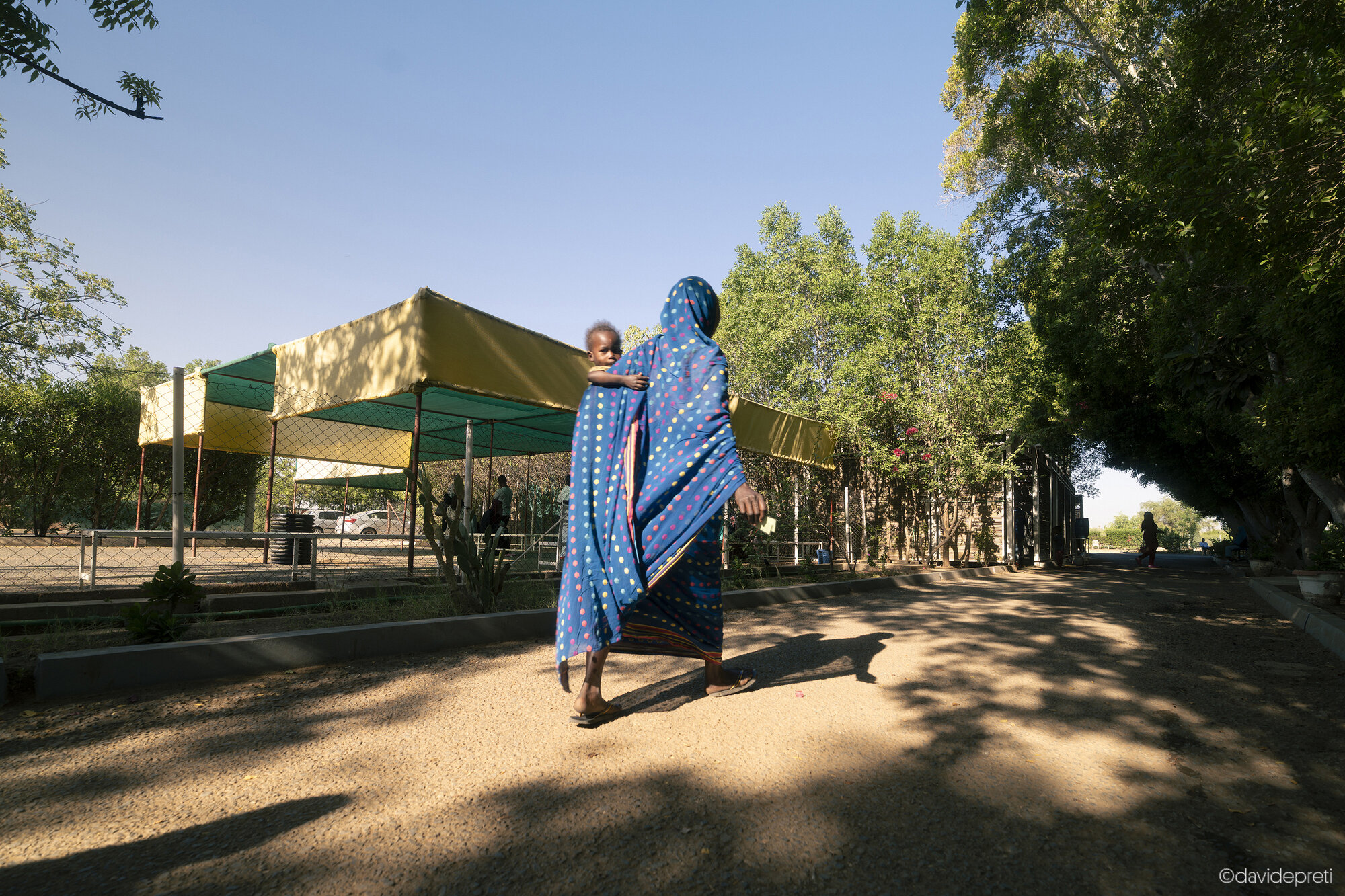
"The Days at the Hospital Were Happiness" chronicles the stories of those who have reached EMERGENCY's Salam Centre for Cardiac Surgery in Khartoum amidst the ongoing war in Sudan. According to the United Nations, the conflict has caused an estimated hundreds of thousands of deaths and displaced over 13 million people, creating the world's worst humanitarian crisis.
Since the outbreak of war on April 15, 2023, the Salam Centre has been the only hospital in the capital to remain open every single day. The project inhabits this space to document, from the inside, the microcosm of a nation under siege.
"The Days at the Hospital Were Happiness" seeks to map out daily acts of resilience through intimate portraits and firsthand testimony. Patients arrive from across the country, particularly from western regions like Darfur and Kordofan, which remain under the control of RSF paramilitaries. In the hallways and waiting areas, some await Warfarin, a lifesaving blood thinner nearly impossible to acquire in the country, while others wait to be called for specialized heart surgeries that cannot be performed anywhere else in modern Sudan. Nearby, in the pediatric clinic opened to respond to the crisis, another silent emergency unfolds: severe malnutrition, which has reached catastrophic levels in parts of the country — with UN surveys finding nearly one in two children acutely malnourished in the hardest-hit areas of Darfur.
Giving voice to this space are the people who inhabit it: Ousmane, a logistician who crossed frontlines to ensure his daughter was born in safety; Samir, a receptionist who was among the key figures of the 2018 "December Revolution"; or H., a 21-year-old woman who fled the violence in North Kordofan. Together, they offer a close-up, authorial perspective on a conflict that has remained almost entirely closed to international media over the past three years.
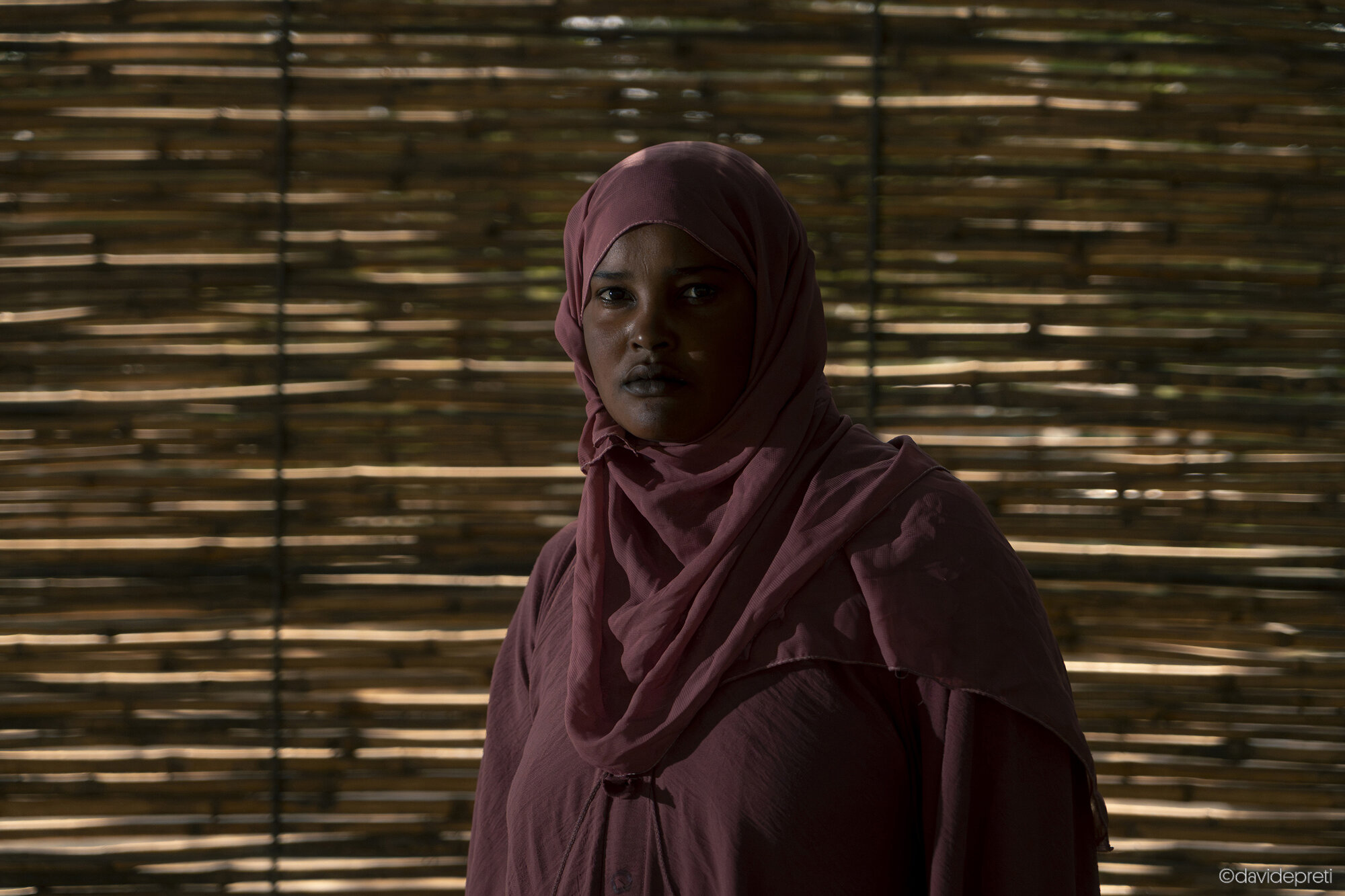
Khartoum, Sudan — November 16, 2025.
H. - 21 yo
"I'll never be as happy as I was before," she says. She is at the Salam Centre in Khartoum to check her blood coagulation levels. She had heart surgery here in 2012.
Now, she lives in a tent outside the gates with her father, who sells produce at the market. Every day she takes Warfarin to keep her mechanical heart valve from failing.
H. comes from a farming village in North Kordofan. In February 2025, RSF paramilitaries stormed her family's land, occupied the farm, and beat her father. During the assault, H. was raped. She fled with her family, leaving her medication behind. She and her father began the long journey towards the capital.
In Omdurman, she discovered she had become pregnant as a result of the assault and chose to have an abortion. She is back on her medication now. If the therapy works, she will avoid another surgery.
But the despair in her eyes remains. "I will never be as happy as I was before."
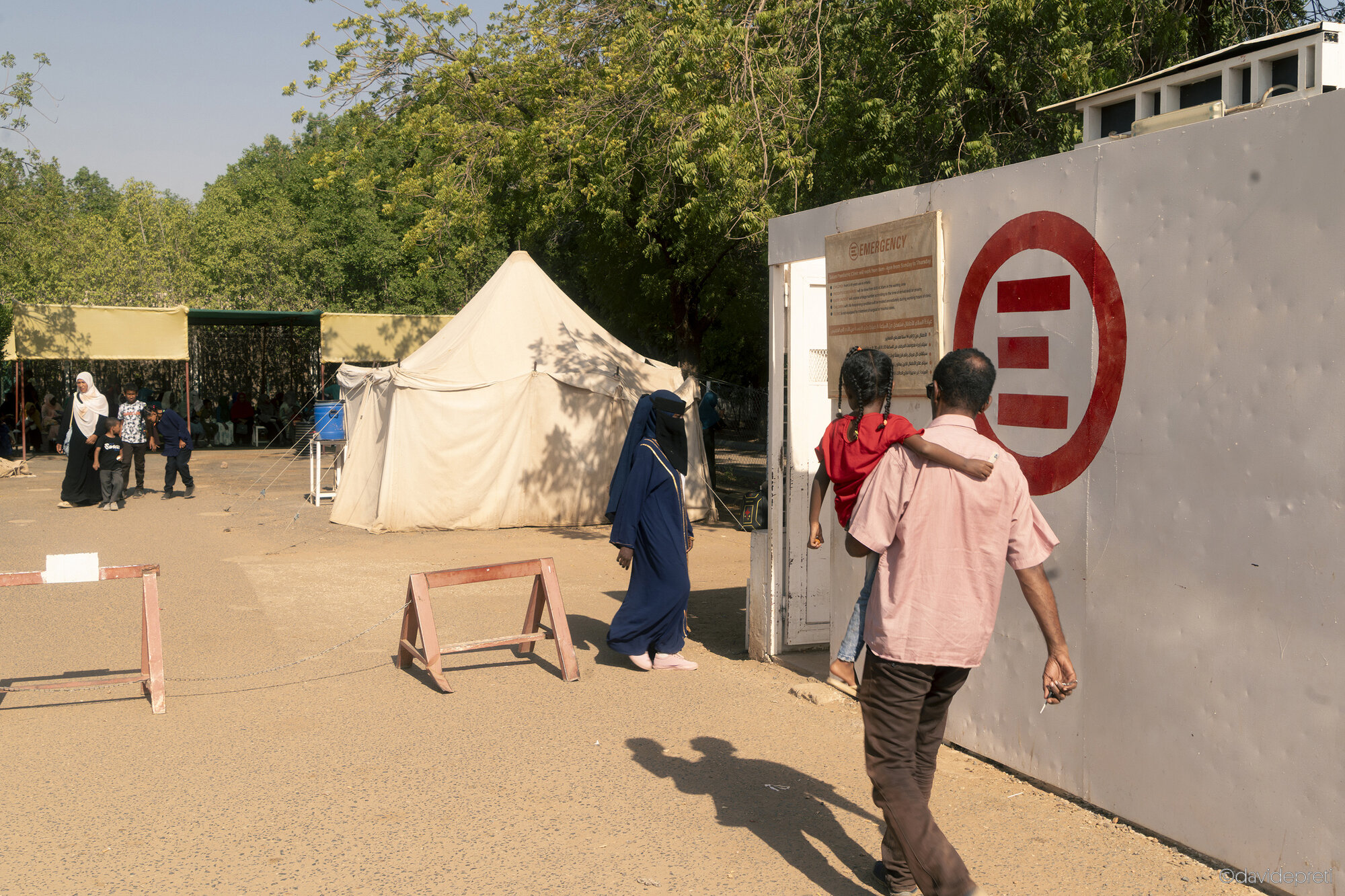
Khartoum, Sudan — November 23, 2025.
Patients enter through the main gates of EMERGENCY's Salam Centre for Cardiac Surgery.
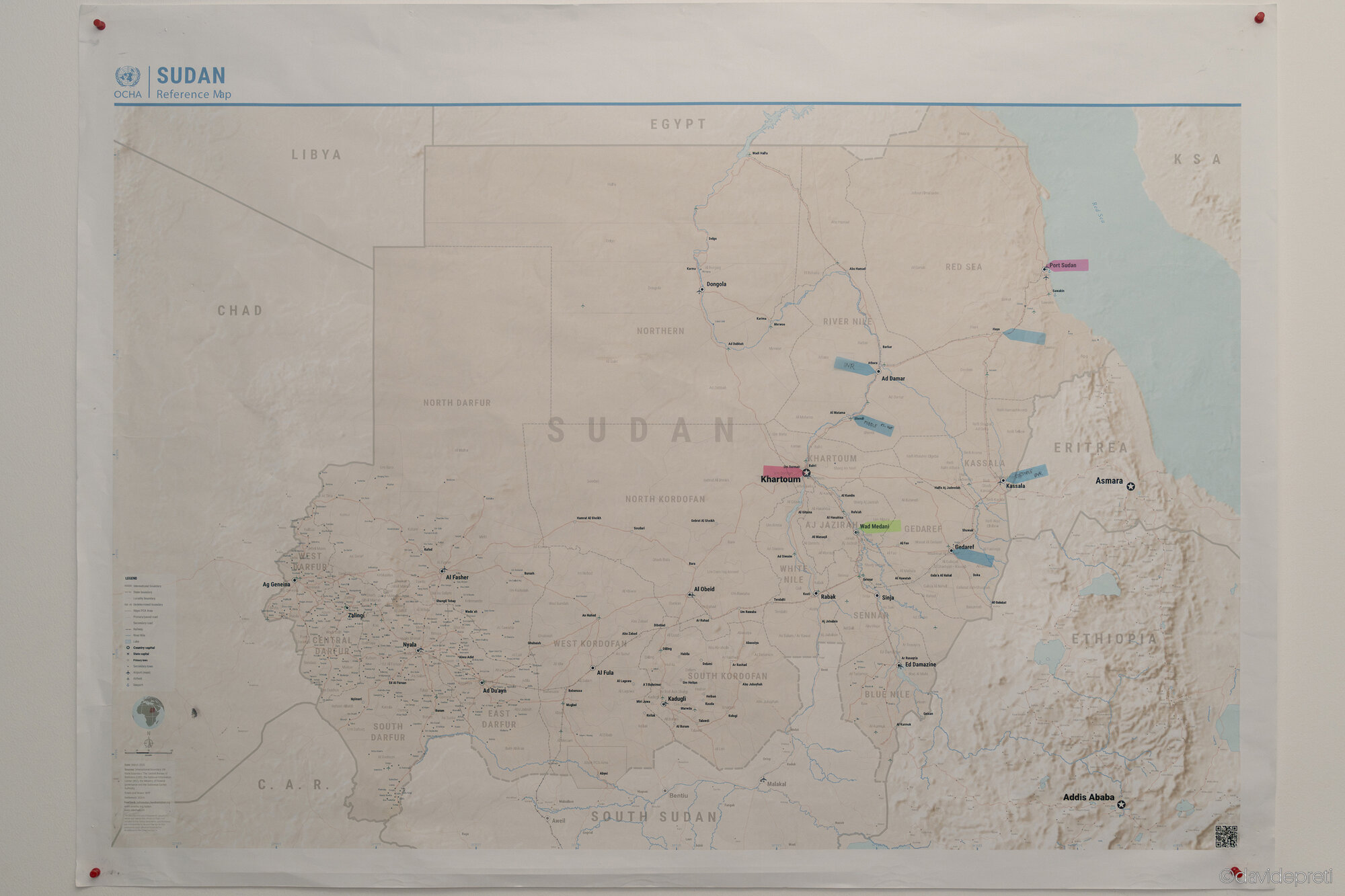
Khartoum, Sudan — November 25, 2025.
A United Nations OCHA reference map hangs on the wall of the logistics office at EMERGENCY's Salam Centre for Cardiac Surgery. The map outlines the operational network across a country divided by conflict between the Sudanese Armed Forces (SAF) and the Rapid Support Forces (RSF). While facilities in the central and eastern regions are coordinated from Khartoum, western outposts — including the hospital in Nyala and clinics across Darfur — remain isolated by frontlines and accessible only via cross-border humanitarian corridors from neighboring Chad.
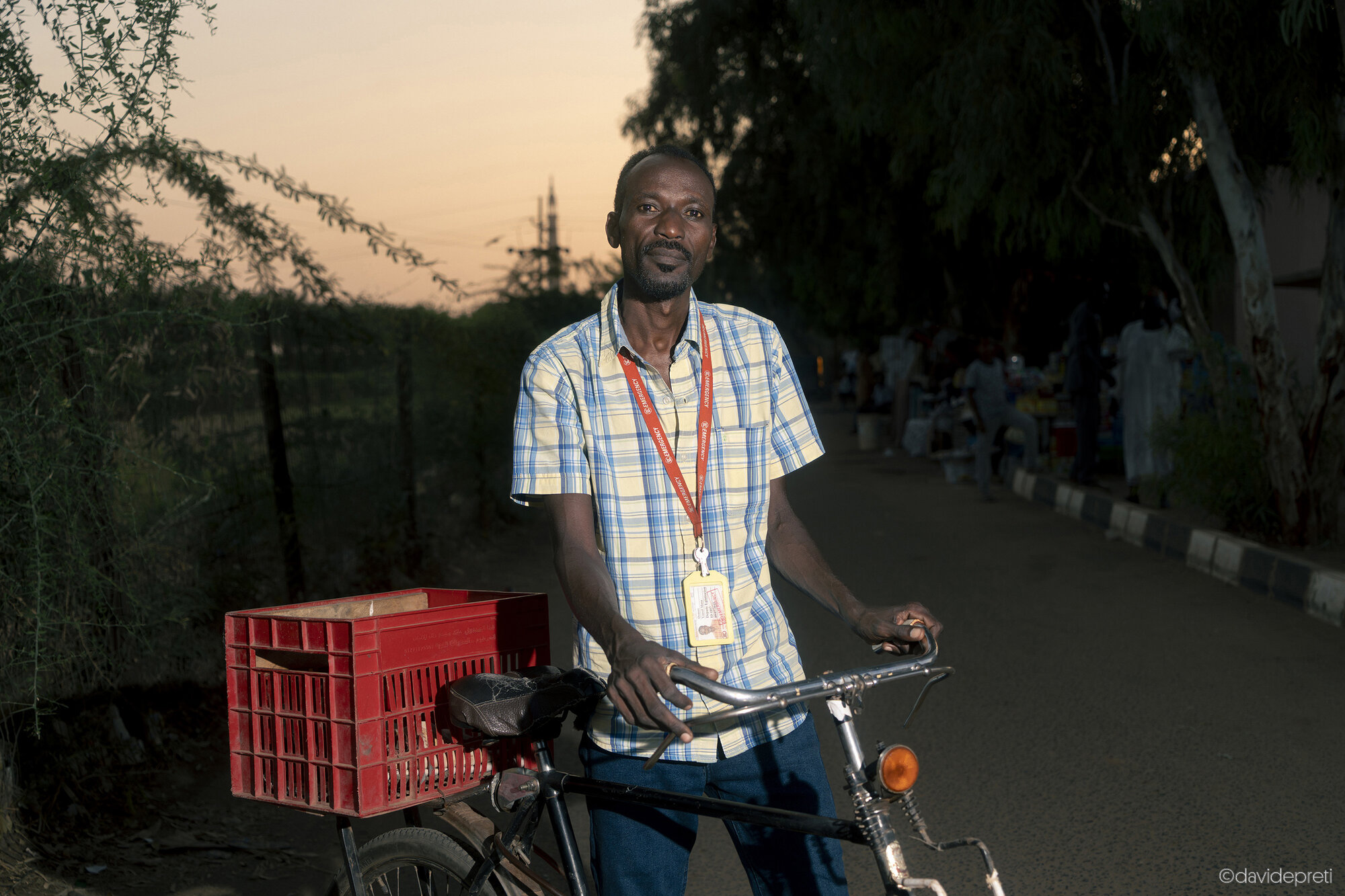
Khartoum, Sudan — November 23, 2025.
OUSMANE - 41 yo
He has never left EMERGENCY's Salam Centre in Khartoum in two years of war. Since 2015, he has been working as a logistician, managing supplies, transport, and staff. In early 2025, with the conflict encircling the hospital, he coordinated the movement of patients and staff to the basement during the shelling.
Today food is scarce and prices have skyrocketed; he often delivers essential goods by bicycle, navigating checkpoints and blockaded streets. "This hospital is the only one that has remained open since April 15, 2023," he says.
His youngest daughter, Fatima, was born during the war. The pregnancy was monitored at a neighborhood clinic, but for the birth, the family had to navigate treacherous roads and multiple checkpoints. After hours of travel and waiting, Fatima was born in the late afternoon. "Now I hope the war ends," he says, "and that children will stop playing at being soldiers."
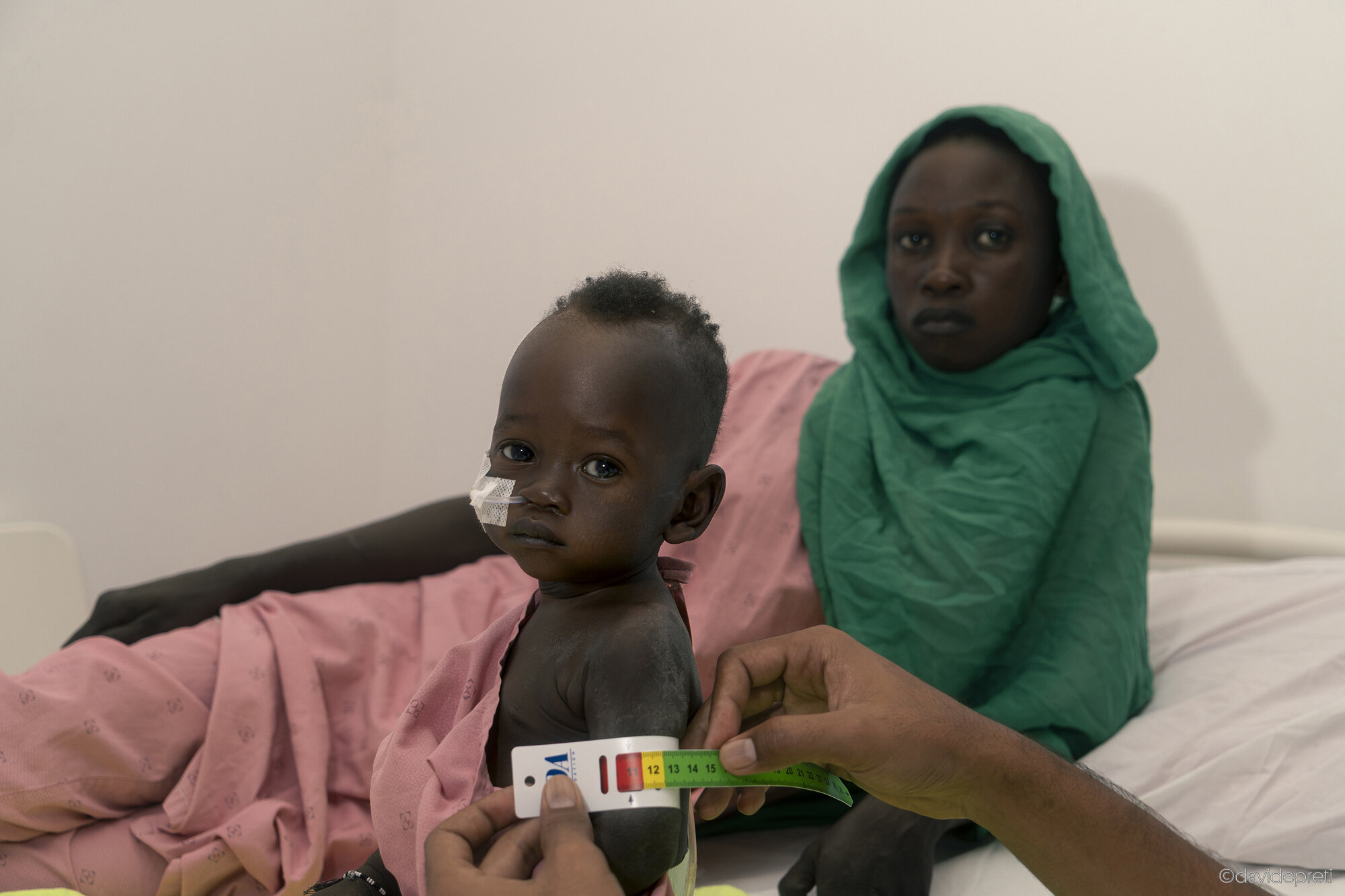
Khartoum, Sudan — November 21, 2025.
M. - 9 months old
He weighs 5,150 grams and is 66 centimeters tall. According to the WHO, a child of his age and height should weigh at least 7,100 grams — he is nearly two kilograms underweight. His mother, H., 18, watches as the nurse measures his mid-upper arm circumference: less than 11 centimeters. The diagnosis is severe acute malnutrition complicated by pneumonia.
At EMERGENCY's Salam Centre pediatric ward, the protocol began immediately: antibiotics and therapeutic milk delivered intravenously every two hours. M. and H. come from a village twenty kilometers outside Khartoum. Before arriving here, a local doctor had dismissed the case, simply telling the mother to eat more. But malnutrition requires gradual clinical rehabilitation; food alone is not enough.
After just one day of treatment, M. has already gained 365 grams. "I didn't think places like this existed in Sudan," H. says. The road ahead remains long: to be considered out of danger, he must gain another kilogram and a half.
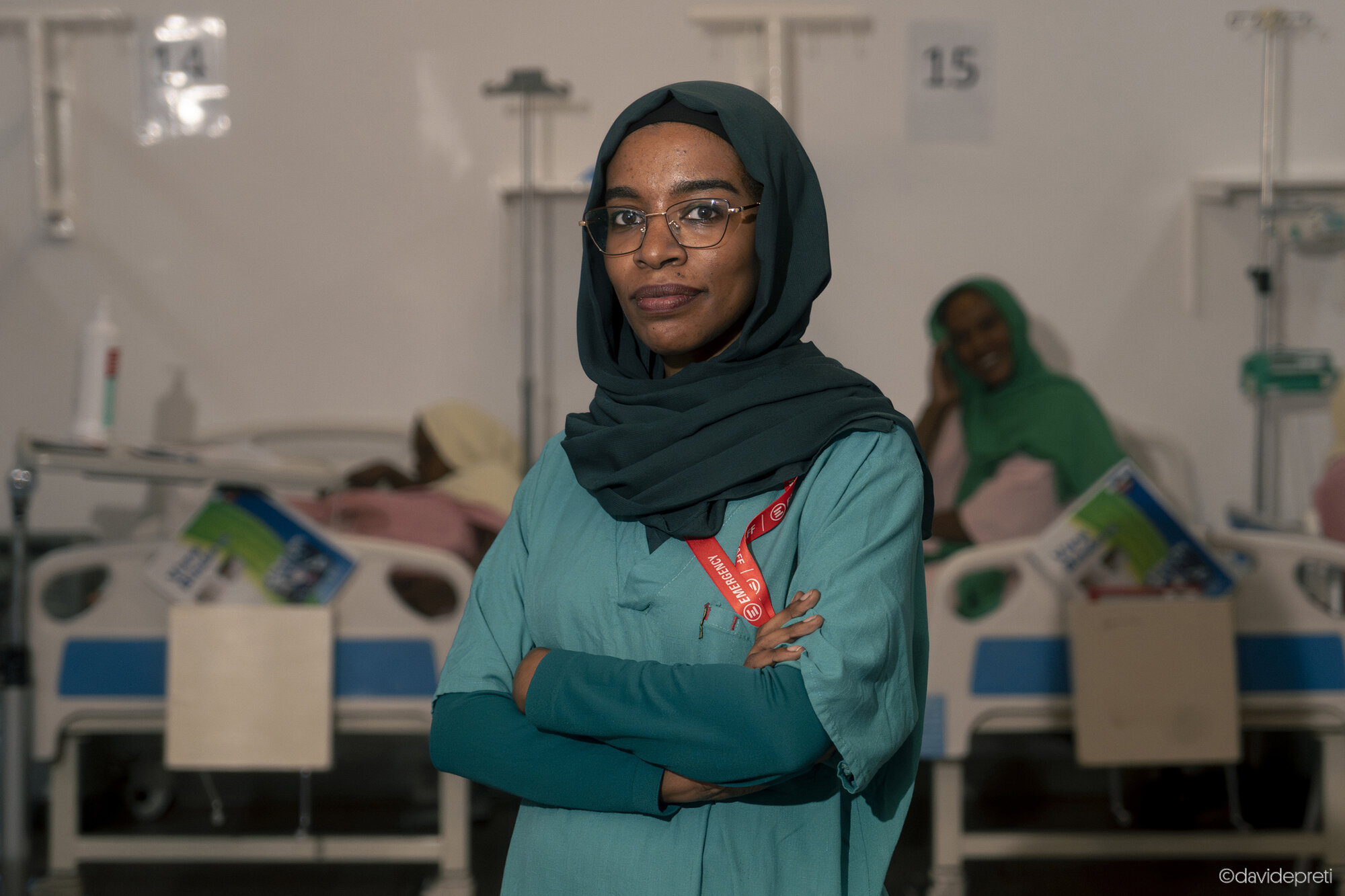
Khartoum, Sudan — November 18, 2025.
FADWA - 33 yo
She is a pediatrician. She grew up among her father's medical books and remembers a professor's advice: "Pediatrics is not just about the child; you must treat the entire family."
On April 15, 2023, the war upended her life. "Soldiers passed by, firing weapons; a bullet shattered our window." With a father and two brothers who are doctors at risk of forced recruitment by the RSF, the whole family fled to El Goled, her father's village near Dongola. The journey took sixteen hours and passed through 66 checkpoints. Her brothers found a job abroad; Fadwa stayed. She worked in El Goled for two years before returning to Khartoum to join EMERGENCY's Salam Centre.
"Omdurman showed some signs of life," she says, "but central Khartoum was ghostly." The greatest shock came near the cemetery: "There were so many dead that they began burying them outside the fence. That was when I started to cry."
"Today, treating children is the only way I can help my country," she says. She struggles with the guilt of having been away from her city for two years.
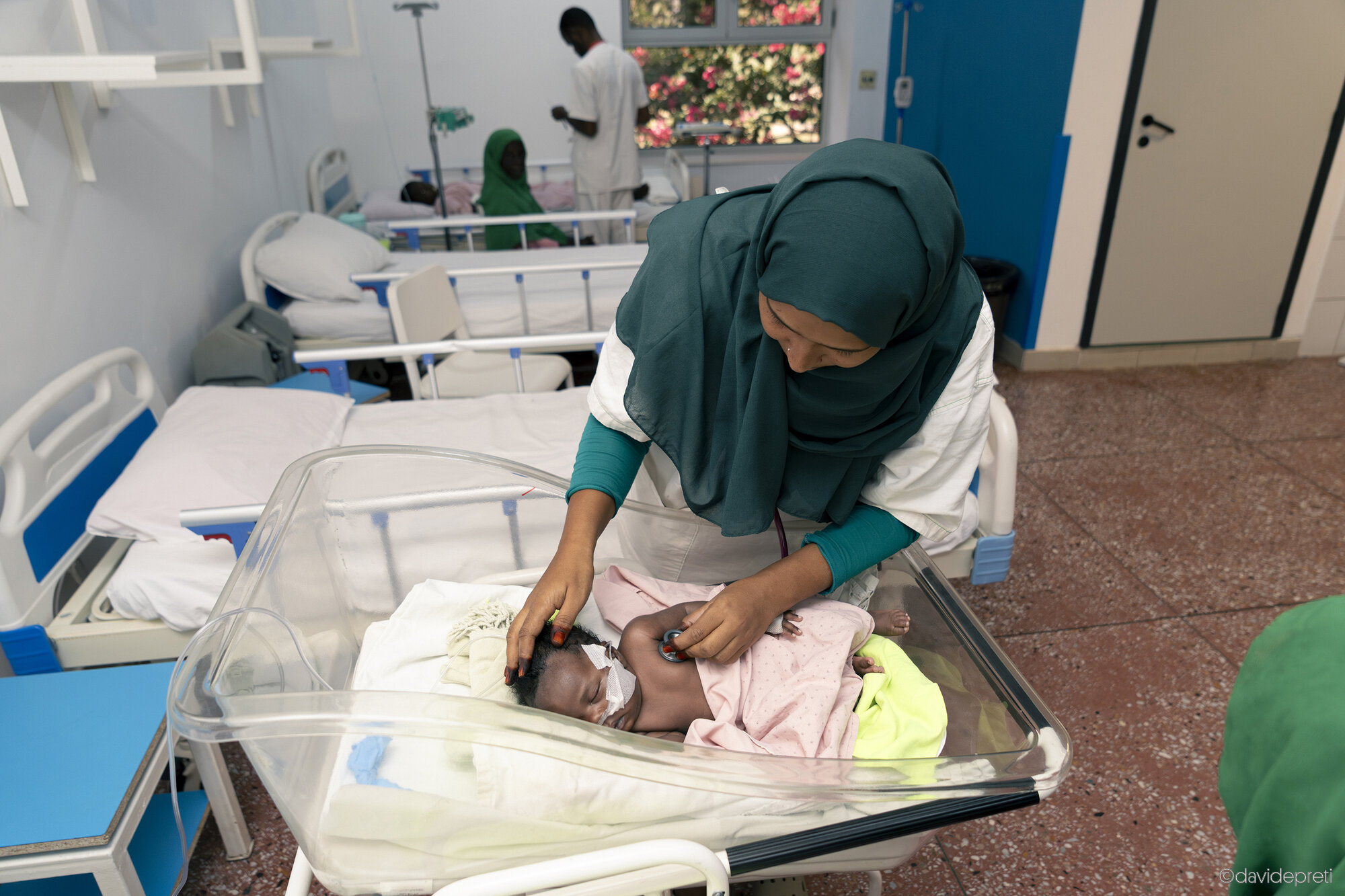
Khartoum, Sudan — November 18, 2025.
A nurse checks the vital signs of an infant in the pediatric ward at EMERGENCY's Salam Centre.
Khartoum, Sudan — November 20, 2025.
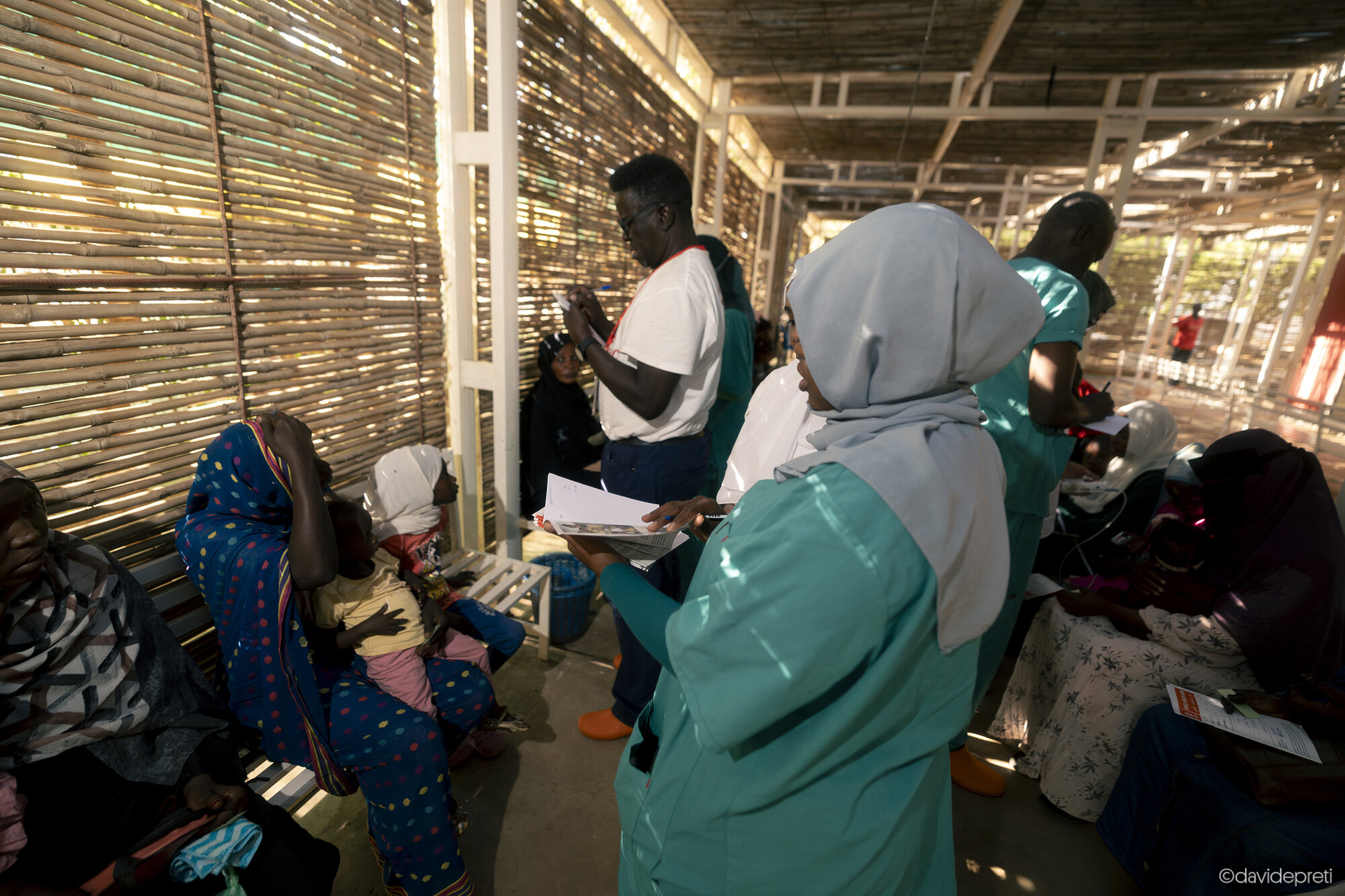
Nurses and healthcare workers conduct medical triage in the outdoor waiting area of the pediatric ward at EMERGENCY's Salam Centre.
Khartoum, Sudan — November 18, 2025.
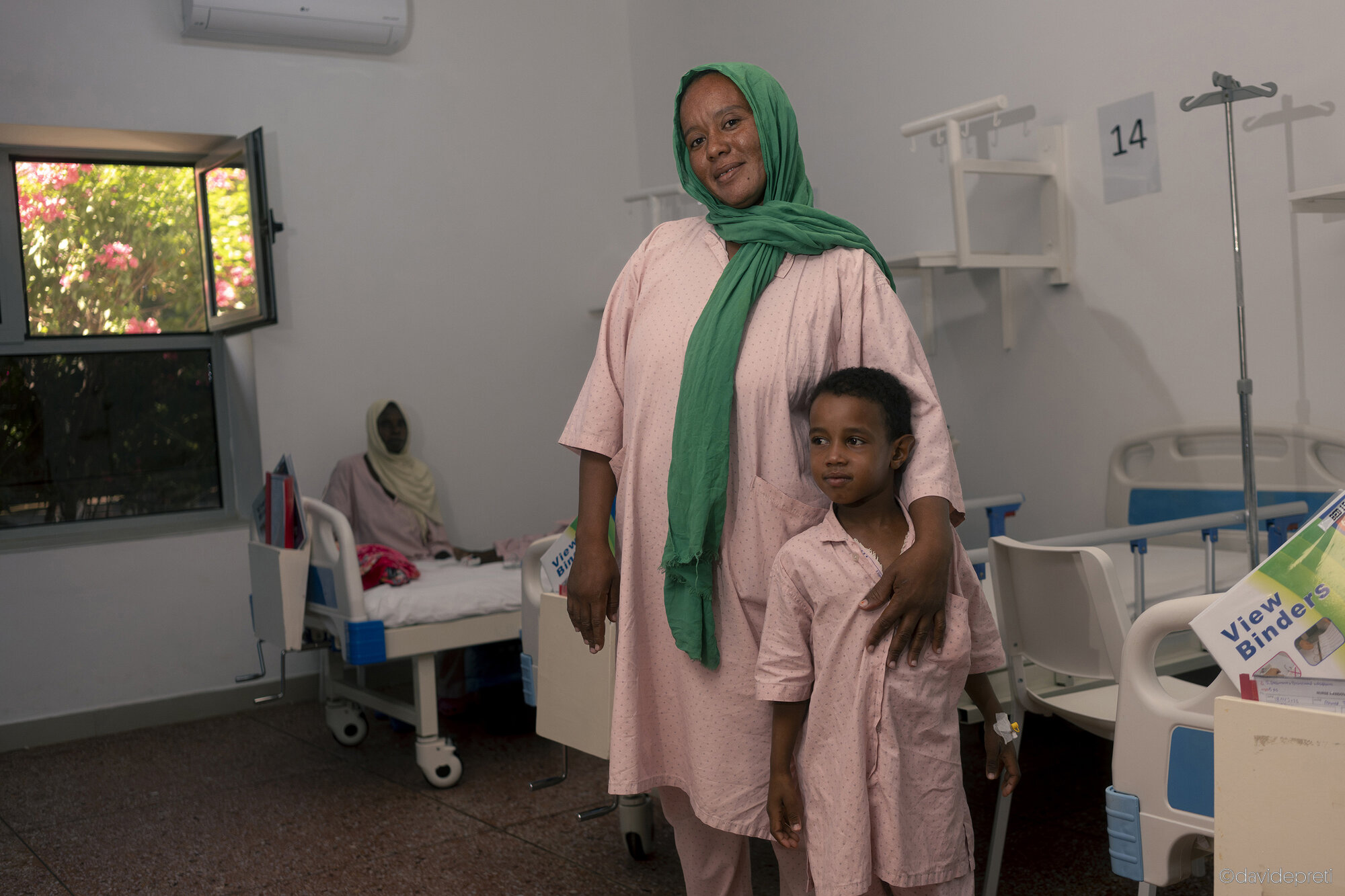
M. - 34 yo
She is a mother of seven and a cook at a Khartoum police station. Before April 15, 2023, hers was a happy family: the children attended school, and the older ones worked. The situation shifted in December 2024, when RSF paramilitaries killed her husband at the central market for resisting the theft of his daily earnings.
A few days ago, her youngest son, A., developed chest pains and a severe cough. "None of my children had ever been sick before the war," M. says from the pediatric ward of EMERGENCY's Salam Centre, where the boy is now receiving therapy.
Here, after more than two years of war, she is calm and safe. "If Khartoum does not return to what it once was, I will look for a safe place for my children," she says. "Even in Europe, if necessary."
Khartoum, Sudan — November 23, 2025.
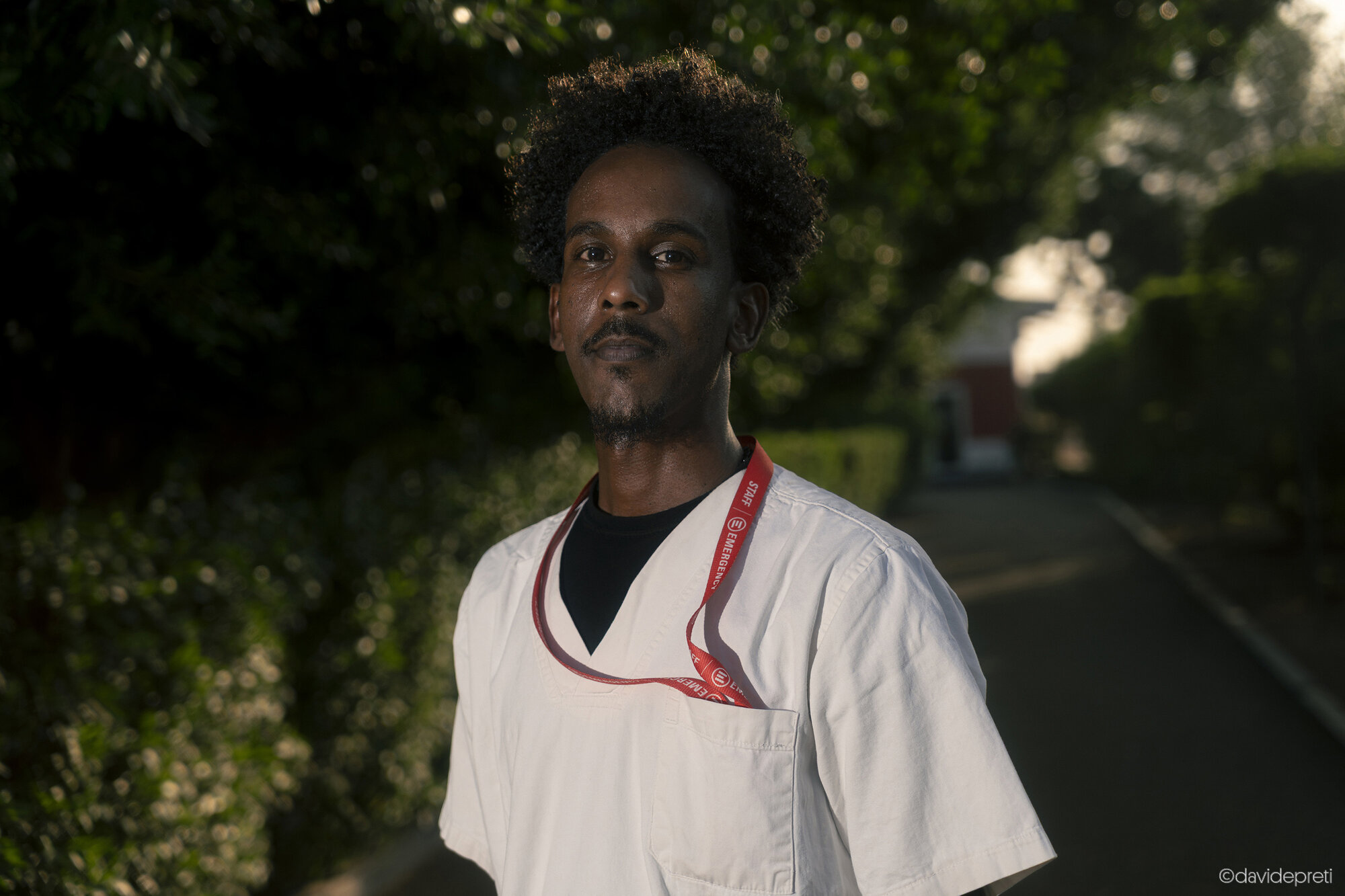
SAMIR - 33 yo
He is now a receptionist at EMERGENCY's Salam Centre. Before the war, he worked for an export company. The conflict forced his family to flee, but he chose to remain in Khartoum alone.
His decision is rooted in the "December Revolution" of 2018. Samir lived through every phase of the protests, from the first march to the permanent sit-in that led to the fall of dictator Omar al-Bashir in April 2019. "We were happy to be there together," he recalls. "In Sudan, we are divided on everything, but that time we were united for change." On June 3 of that year, he survived the "Khartoum Massacre," barricaded for eleven hours inside a hospital while security forces crushed the uprising. "We laid the dead out in rows, covered in white sheets, while outside they beat our friends and burned everything," he says.
Today, many accuse the activists of triggering the war by toppling the old regime. "They claim that if we had not protested," Samir says, "the conflict would never have started."
Khartoum, Sudan — November 25, 2025.
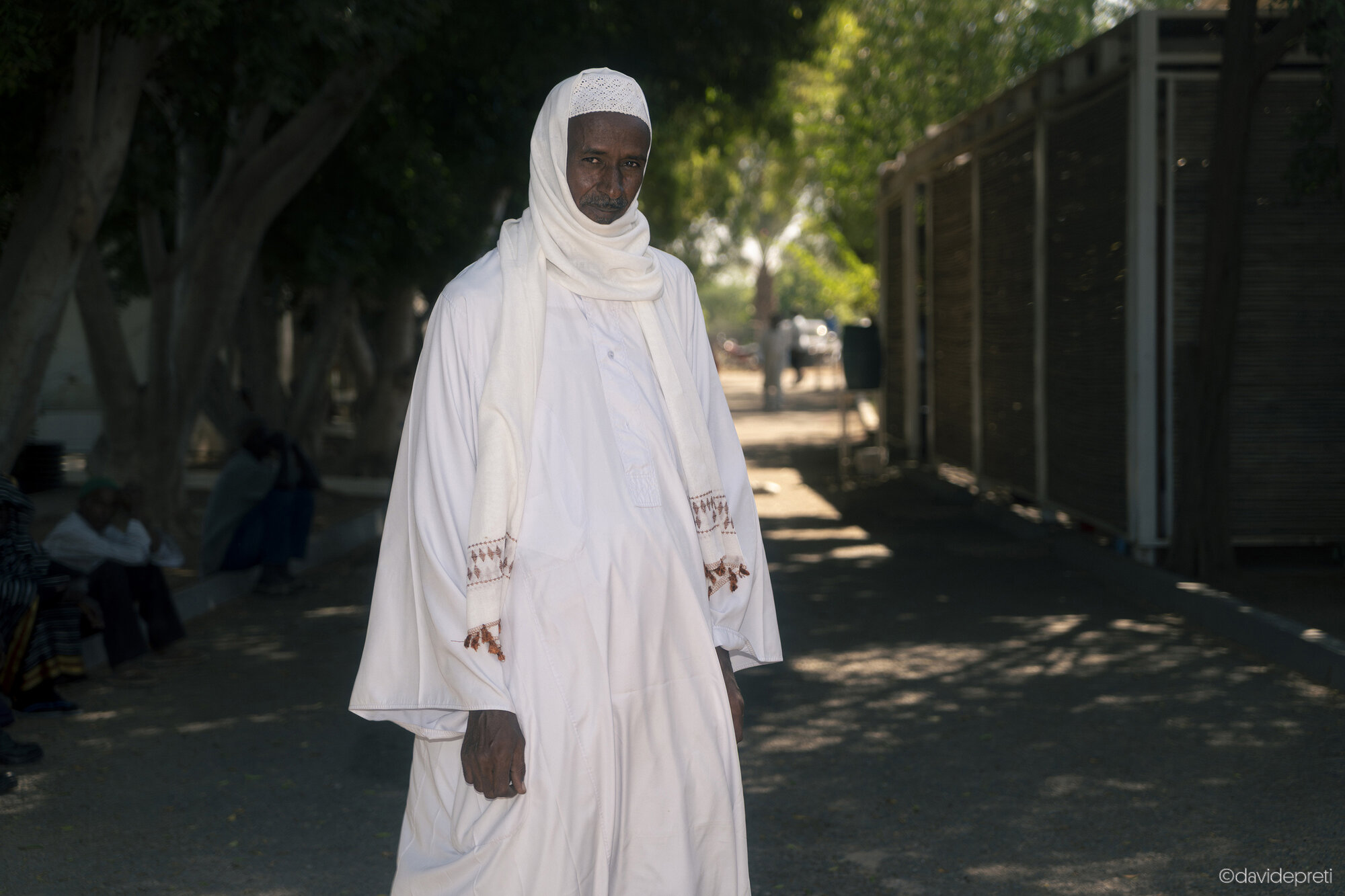
D. - 46 yo
He underwent heart surgery at EMERGENCY's Salam Centre in 2019. Before the war, he taught the Quran at one of Omdurman's most prominent mosques. In April 2023, he sought refuge in Gezira. "I thought the fighting would end quickly," he says. "I was wrong." To survive there, he turned to farming. When the RSF occupied the village, the looting began; militiamen killed his uncle for trying to prevent the theft of his truck.
In April 2024, D. accompanied his mother to Kosti for an operation. During those same days, the army launched an offensive to retake Gezira. D. lost all contact with his family. "I didn't know if they were alive," he recalls. After two days of silence, he learned they had survived the fighting. Today, he is back at the Salam Centre for a cardiac check-up.
Despite his damaged mosque and his scattered students, he continues to look forward. "My task will be to find them and bring them back together," he says. "They will be the future doctors and engineers of this country."
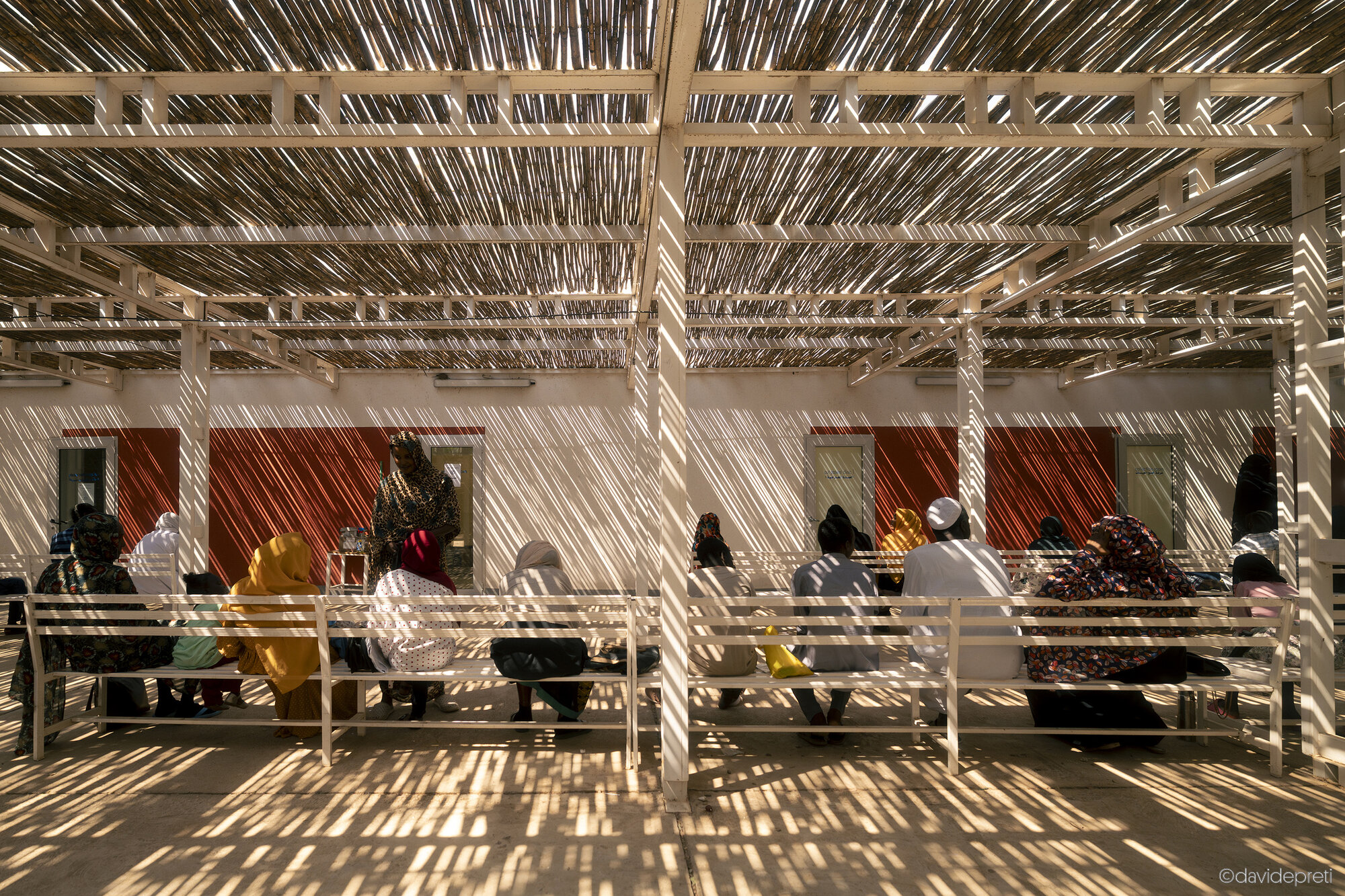
Khartoum, Sudan — November 23, 2025.
Patients wait in the covered outdoor area designated for follow-up consultations and the pharmacy at EMERGENCY's Salam Centre for Cardiac Surgery. Most are queued to receive their periodic supply of Warfarin, a lifesaving anticoagulant essential for patients with mechanical heart valves — frequently required due to complications from rheumatic heart disease — which has become extremely scarce and exorbitantly priced on the black market due to the conflict.
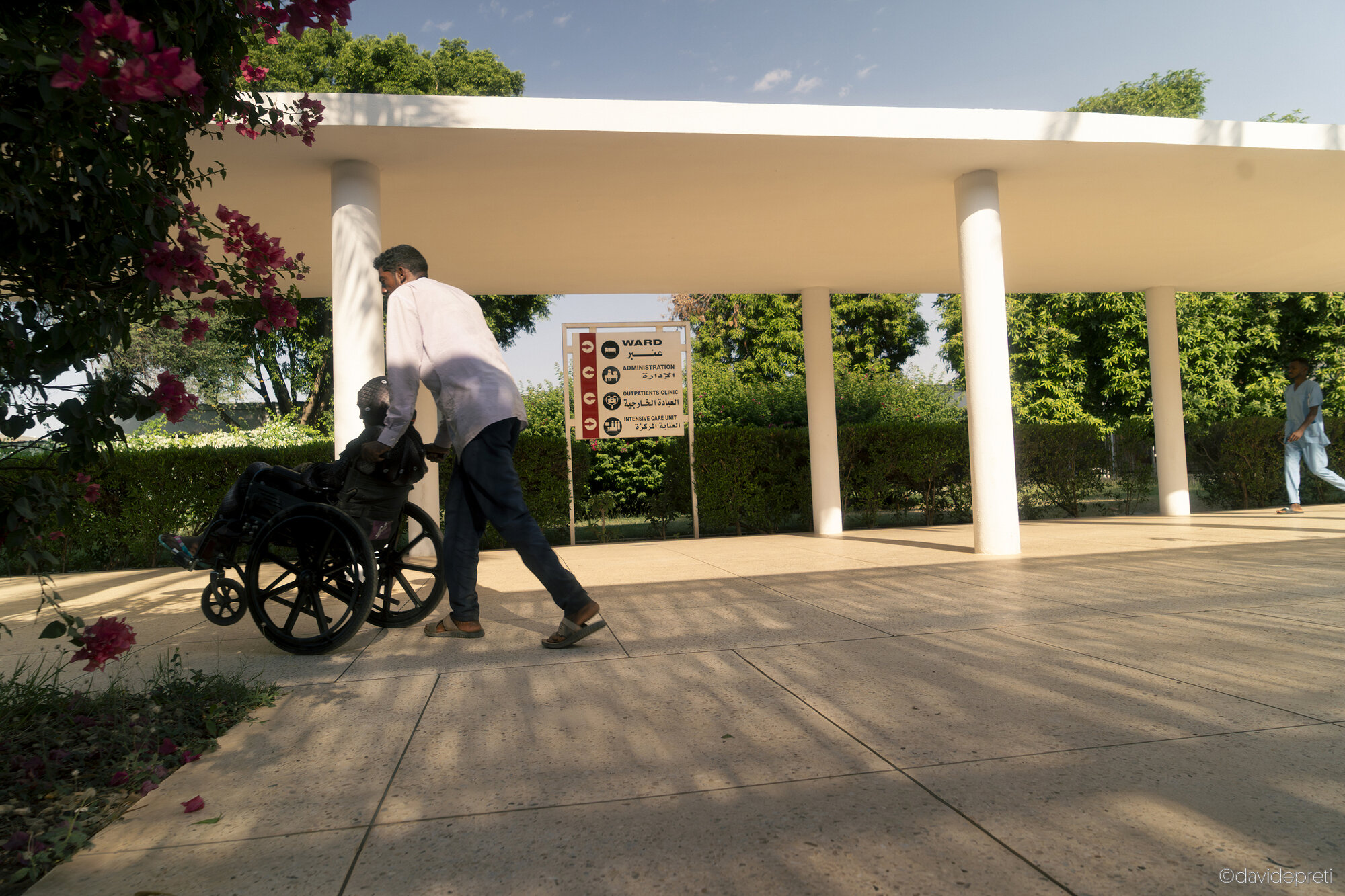
Khartoum, Sudan — November 23, 2025.
A patient in a wheelchair and a companion head toward the inpatient wards at EMERGENCY's Salam Centre for Cardiac Surgery.
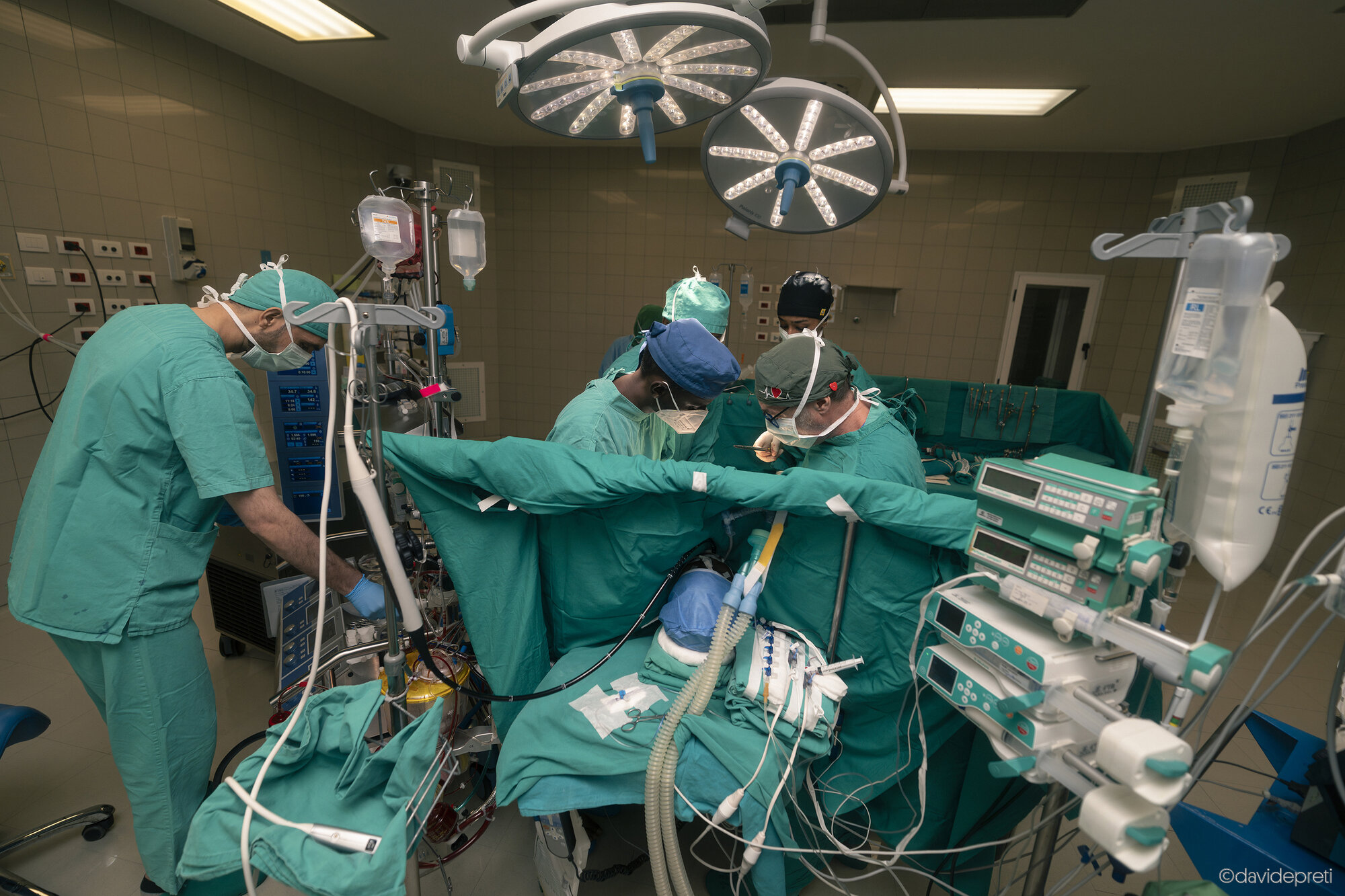
Khartoum, Sudan — November 19, 2025.
A medical team performs heart valve replacement surgery in one of the three operating theaters at EMERGENCY's Salam Centre for Cardiac Surgery.
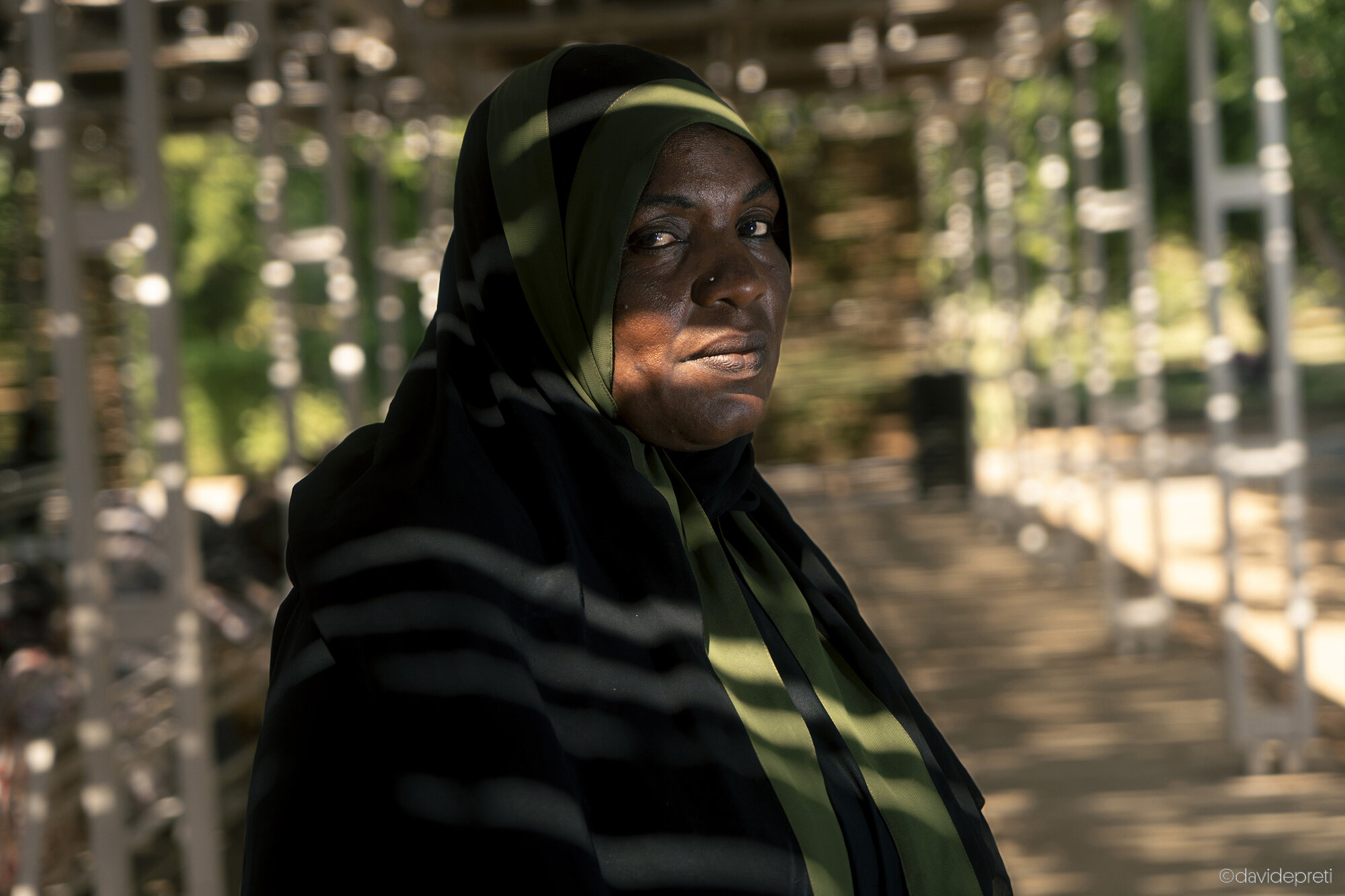
Khartoum, Sudan — November 16, 2025.
M. - 41 yo
She lives in Omdurman and is a mother of five. During the war, RSF paramilitaries killed two of her brothers. In August 2024, she was diagnosed with a severe heart condition. She set out for EMERGENCY's Salam Centre, navigating secondary roads to bypass RSF blockades. "An acquaintance told me about the Salam," she says. "They told me they treat everyone there, for free." She underwent surgery in November.
One month later, the fighting intensified in Soba, the district housing the hospital. The staff began evacuating patients for their safety. M. tried to reach a cousin's house on foot, but she was stopped at a checkpoint after an hour of walking. Despite showing her discharge papers, the militiamen accused her of lying. They tore the surgical dressing from her chest and left her bleeding on the street. They forbade anyone from helping her, calling her the "wife of a traitor." A passerby eventually saved her and helped her reach her cousin's home.
"My children no longer go to school," she says. "After two brothers killed, it is hard to hope for the future."
Khartoum, Sudan — November 16, 2025.
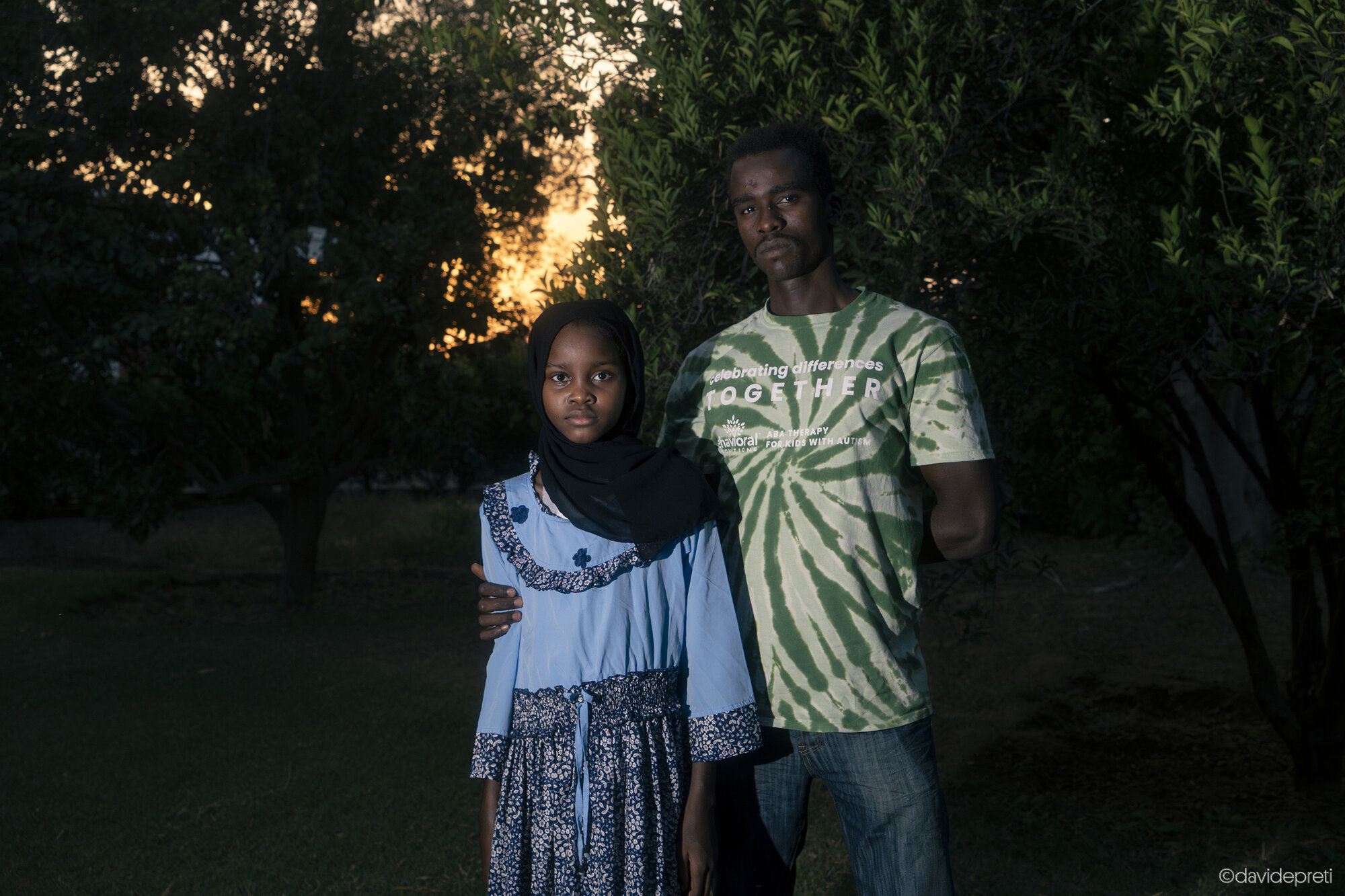
A. - 26 yo, I. - 11 yo
A. and her sister I. left their village near Nyala in April 2024. They fled a settlement occupied and looted by the RSF to treat I.'s severe heart condition. Their father died in the Darfur war; their mother and brothers remained behind.
The journey lasted twelve days. At a checkpoint, militiamen stopped the bus and dragged all the men to the ground. "My brother too," I. recalls. "I stayed on the bus, alone. I could hear the voices, the questions. Then one of the militiamen looked toward the bus and saw me. They let my brother back on." Moments later, the other passengers left on the ground were shot.
They reached EMERGENCY's Salam Centre in Khartoum, and I. underwent surgery on October 28. "Our life is in Darfur. In our land, with our family," A. says. "As soon as the doctors give us clearance, we will set out again. The RSF will still be there, but we want to go home."
Khartoum, Sudan — November 20, 2025.
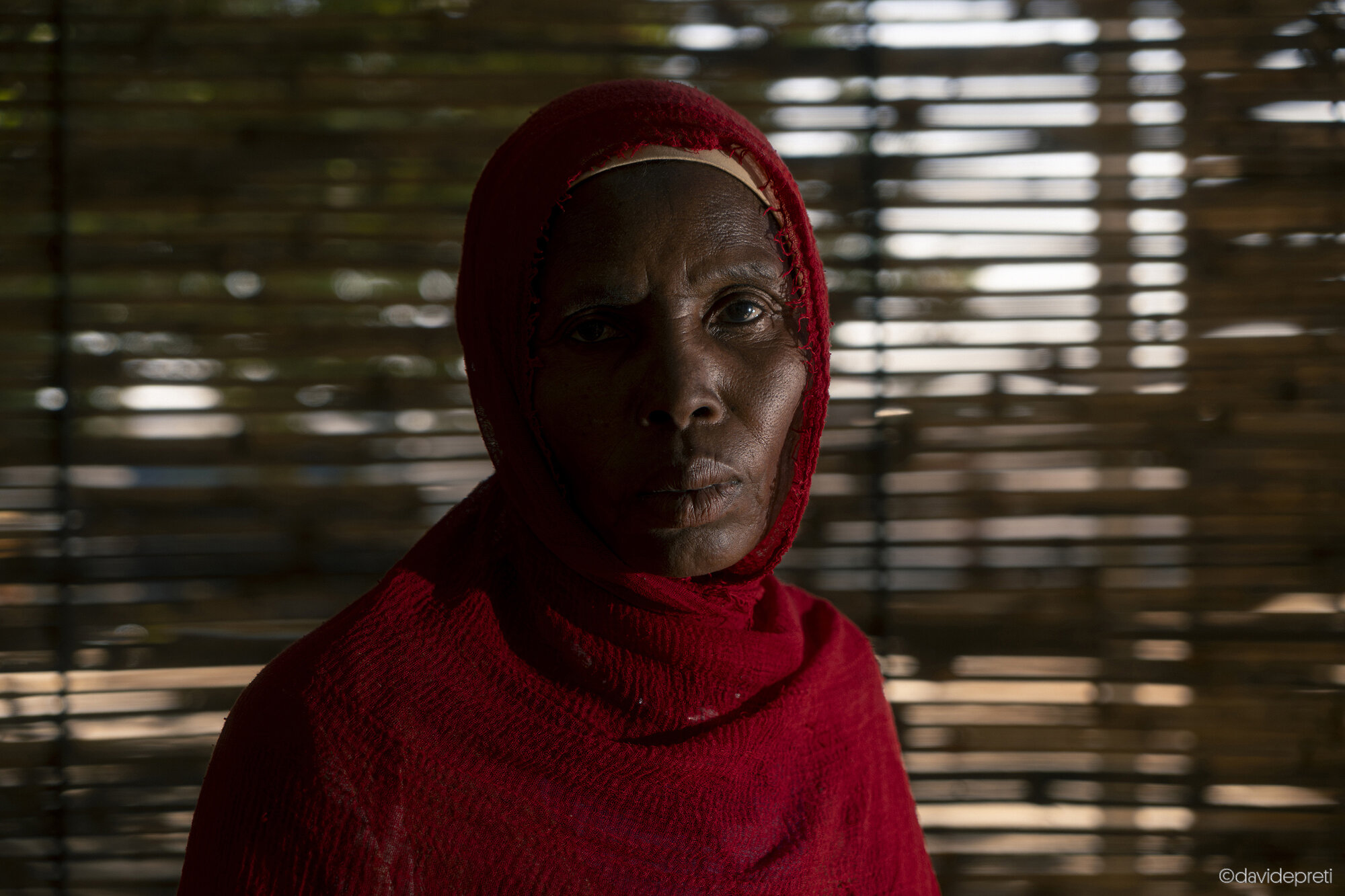
D. - 46 yo
She lives with a heart operated on at EMERGENCY's Salam Centre. Her life depends on Warfarin, a drug the war has made impossible to find. When shelling hit her neighborhood in El Fasher in May 2024, she began a flight through refugee camps and besieged cities. Her family scattered: one daughter ended up in Chad, while her husband and a son reached Egypt.
Left alone with three children, she decided to reach Khartoum in August 2025. It was the only way to obtain the medication and the check-ups her heart required. The journey for four people cost 3,000,000 dinars — before the conflict, it would have cost 80. Today she lives in Omdurman, dreaming of her home. "I used to make tea for my grandchildren after school and we would talk about the day," she says. "That is what I miss the most."
Khartoum, Sudan — November 20, 2025.
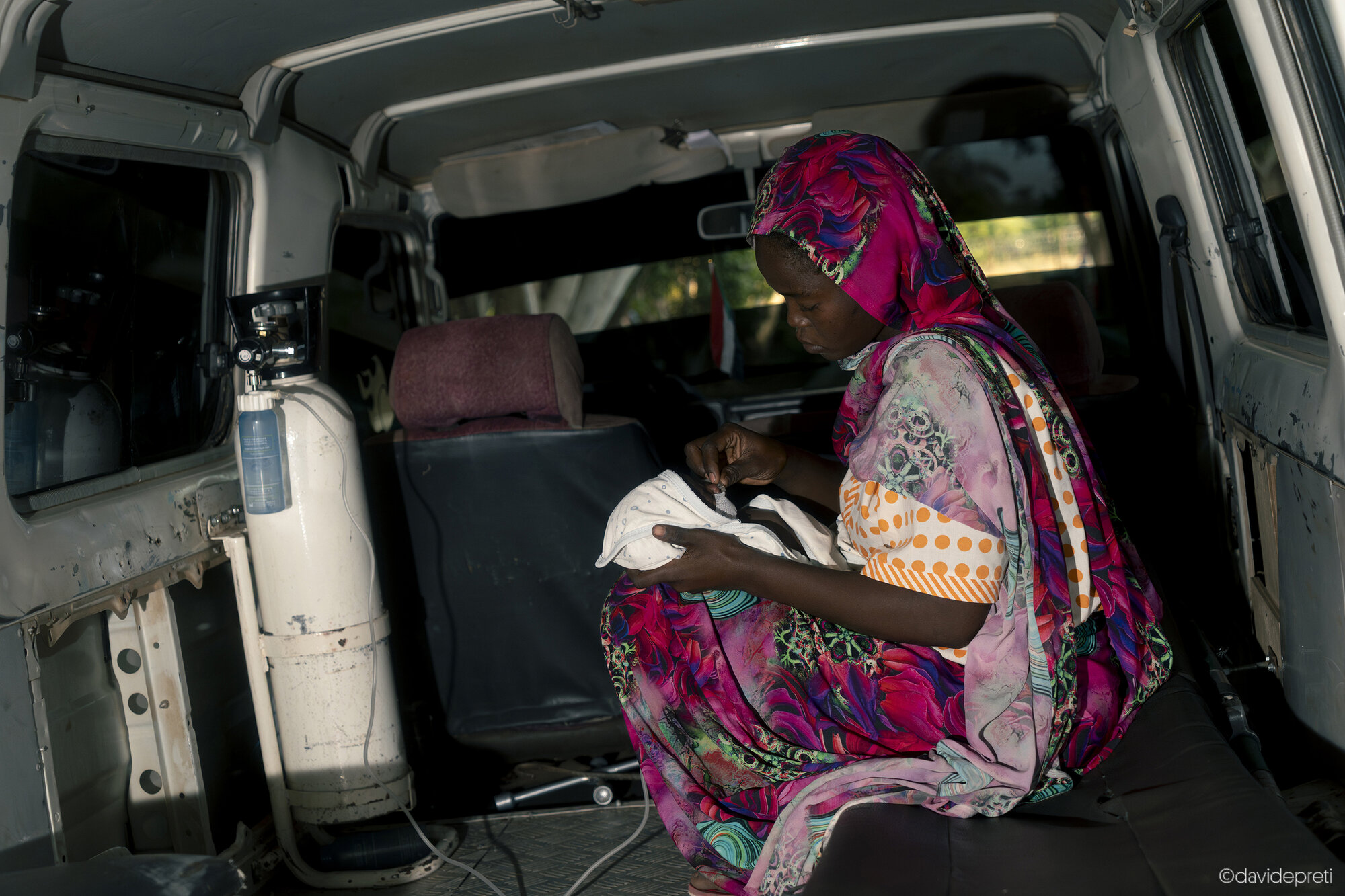
A mother tends to her newborn infant inside an ambulance during a transfer from EMERGENCY's Salam Centre for Cardiac Surgery to another healthcare facility in the capital. The infant was transferred to undergo specialized diagnostic tests unavailable at the center.
Khartoum, Sudan — November 20, 2025.
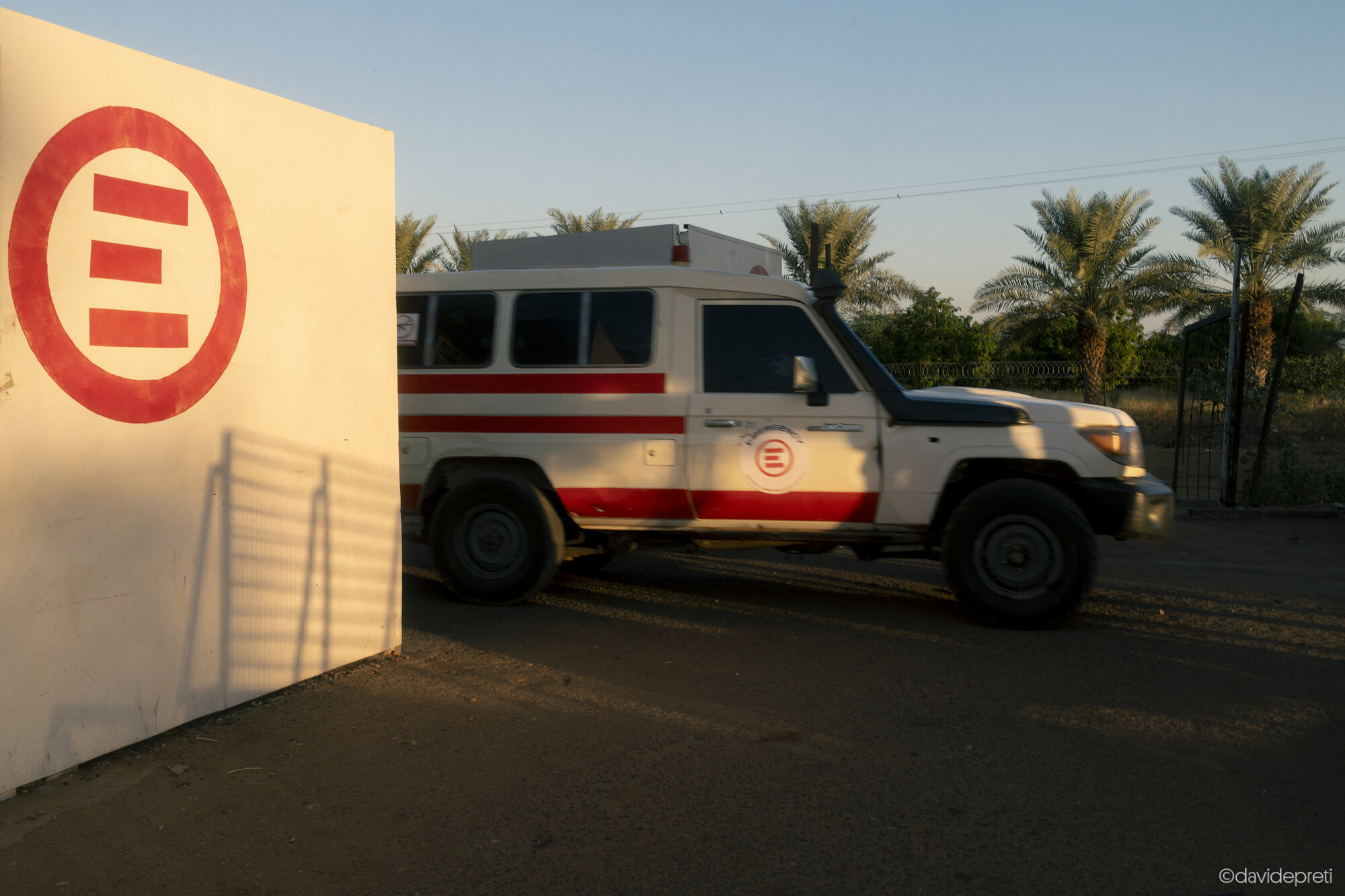
An ambulance passes through the main gate of EMERGENCY's Salam Centre for Cardiac Surgery to navigate the streets of the capital.
Scroll to continue →